 AI
AI
AI
AI




AI

Google Cloud’s artificial intelligence onslaught gained more momentum today, as the company announced a couple of interesting new capabilities today aimed at data scientists and medical professionals.
For the former, it announced a new AI agent that promises to turbocharge data analysis for data science and machine learning projects, while the latter are getting some expanded multimodal search capabilities to assist with patient diagnosis and treatment planning.
First up is Google LLC’s Google Labs incubator for experimental projects, which announced that it’s launching a new Data Science Agent in Google Colab to help software developers analyze their data.
Google Colab is a free, cloud-based Jupyter Notebook that developers use to write and execute Python-based code for data science and machine learning-based tasks. With the Data Science Agent now available at their fingertips within Colab, developers will be able to reduce the time it takes to research and analyze data from weeks to a matter of minutes, helping them build applications much faster than before, the company said.
It’s powered by Google’s most advanced large language model, Gemini 2.0, and it’s designed to eliminate tedious setup tasks for data analysis, such as importing libraries, loading data and writing the boilerplate code required. Instead, users can simply describe the analysis they wish to perform in plain language, and sit back and watch as the artificial intelligence-powered Data Science Agent surfaces the insights they’re looking for.
“Today, we’re excited to bring Data Science Agent to all Colab users,” Google Labs wrote in a blog post. “This feature allows you to generate complete, working Colab notebooks from simple natural language descriptions.”
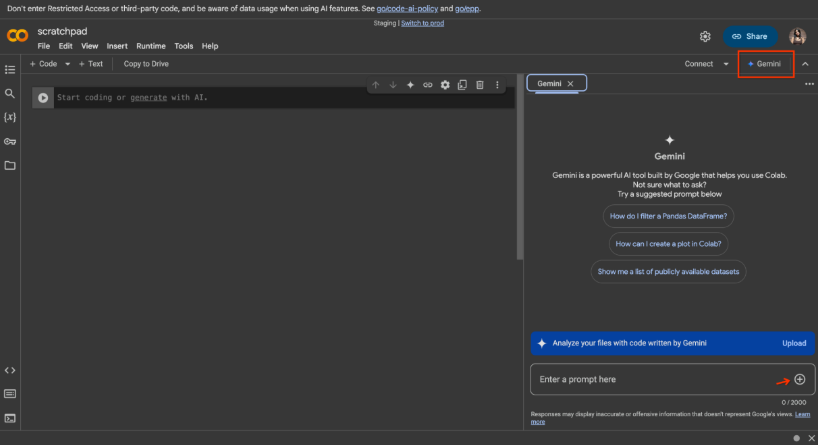
Google Labs explained how easy it is to get started. Users simply open a blank Colab notebook, upload their data, and finally describe either the analysis they want to carry out or the prototype they’re aiming to build in the Gemini side panel. It’s as simple as stating “visualize trends” or “build and optimize a prediction model,” the company said.
Once done, the Data Science Agent will generate a fully functional, executable Colab notebook with easily customizable code that can be adjusted to suit specific needs.
According to Google Labs, the Data Science Agent has received great feedback from early testers. They include a data scientist at Lawrence Berkeley National Laboratory, who estimated that it helped condense almost a week’s worth of data analysis work into just five minutes, while working on a project studying global tropical wetland methane emissions.
In other AI news today, Google Cloud said it’s updating its Vertex AI Search tool for healthcare platform with a new feature called Visual Q&A, enabling users to search tables, charts and diagrams more easily and ask questions of the data within them.
The company explains that the new multimodal search feature in Vertex AI Search for healthcare will aid doctors, nurses and other medical professionals by providing them with a more comprehensive view of their patient’s health.
Vertex AI Search for healthcare is a custom-made AI search tool for the medical industry, designed to help clinicians retrieve information from complex health records. Multimodal AI refers to technology that’s able to process and integrate information from diverse sources, including images, videos and text.
Google argues that this is vital in healthcare, where almost 90% of medical data comes in image form, such as x-rays, scans and photos. By combining data from images with written notes and text in traditional medical files, Vertex AI Search for healthcare can help to make more accurate diagnoses and help to suggest more personalized treatment plans, improving patient outcomes.
Google Cloud’s global director of Healthcare Strategy & Solutions Aashima Gupta said the new multimodal capabilities are all about helping clinicians work more efficiently. “Multimodal analysis processes diverse sources of patient data, like medical images and genetic information, for a more comprehensive understanding and improved decision-making,” she said.
Support our mission to keep content open and free by engaging with theCUBE community. Join theCUBE’s Alumni Trust Network, where technology leaders connect, share intelligence and create opportunities.
Founded by tech visionaries John Furrier and Dave Vellante, SiliconANGLE Media has built a dynamic ecosystem of industry-leading digital media brands that reach 15+ million elite tech professionals. Our new proprietary theCUBE AI Video Cloud is breaking ground in audience interaction, leveraging theCUBEai.com neural network to help technology companies make data-driven decisions and stay at the forefront of industry conversations.