

 AI
AI
AI
AI
AI

Deepgram Inc., the developer of an artificial intelligence platform specializing in speech synthesis and conversational technologies for the enterprise, today announced a voice-powered “operating system” designed specifically for developers.
The new tool is called Saga and it acts as a universal voice interface that embeds directly into developer environments, allowing them to control their tools and code with just the sound of their voice. The company said the new assistant, or copilot, sits atop their existing tools, allowing them to transform their rough ideas into AI coding prompts without having to switch between windows.
Modern developers use numerous different tools, often with multiple monitors, skipping between imports and files to rough out their ideas. They pull in code while they’re trying to figure out why the interpreter can’t see the context of what they’re working on.
Deepgram calls this switching a “quiet tax” on productivity, generated by alt-tabbing, glancing between monitors, looking between files, testing and finally deploying code only to watch errors pop up.
“You can talk faster than you can type, and you can read faster than you can write. The modern developer stack has still yet to be reimagined with AI as a first-class operating mode,” said Scott Stephenson, chief executive and co-founder of Deepgram. “Developers spend too much mental energy switching between tools instead of building.”
Stephenson said that by reimagining the development process with speech, instead of just key presses, developers can have a completely different experience in front of the computer. Perhaps to some who grew up in other environments where hotkeys are the norm, that seemed to operate at speed, but voice feels more natural — although, in an open office, it might turn some heads.
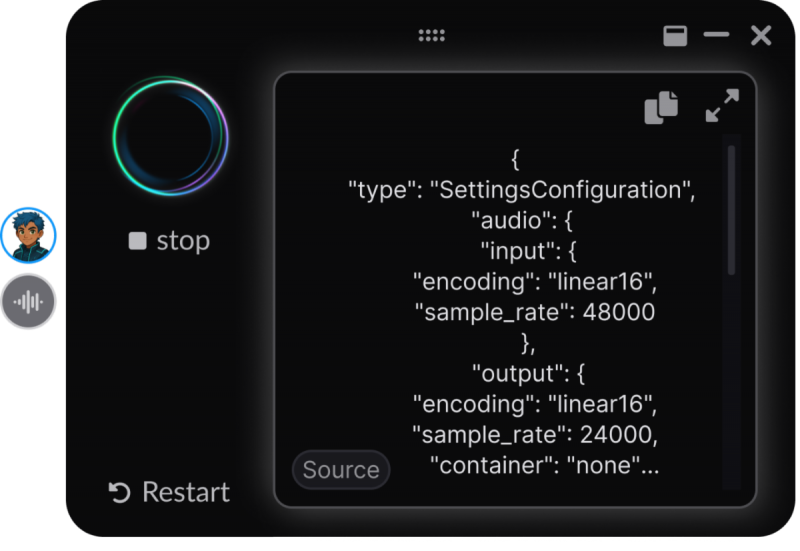
According to Deepgram, Saga integrates easily with numerous AI-native coding environments, including Cursor and Windsurf, and it can maintain status updates in project management software such as Linear, Asana, Jira or Slack. Users can also use it for day-to-day tasks by asking it to extract information from their Google Docs, Gmail or Google Sheets to incorporate that information into their code or just tell them what they need to know.
Developers can express their ideas to the assistant, for example, by saying, “Create a Slack bot that responds to an emoji.” In response, Saga will convert their idea into a one-shot prompt that can be used with tools like Cursor.
The tool can also be used to speed up documentation, tickets or descriptors, allowing developers to breeze quickly through what are otherwise laborious typing sessions at the end of a long coding period.
The company said Saga is designed not just as an assistant, but a “programmable operating system” that integrates into their entire workflow. To that end, Saga interfaces through the Model Context Protocol, which connects AI models to datasets and tools, and various standard interfaces. That allows teams to hook it up easily to any setup, developer environment or integration.
“Saga represents a fundamental shift — picking up where traditional voice assistants end and delivering voice as interface,” said Sharon Yeh, senior product manager of Deepgram. “We’re not asking developers to learn new commands or change their tools. We’re giving them a natural way to orchestrate full workflows by turning speech into the fastest path from idea to execution.”
Support our mission to keep content open and free by engaging with theCUBE community. Join theCUBE’s Alumni Trust Network, where technology leaders connect, share intelligence and create opportunities.
Founded by tech visionaries John Furrier and Dave Vellante, SiliconANGLE Media has built a dynamic ecosystem of industry-leading digital media brands that reach 15+ million elite tech professionals. Our new proprietary theCUBE AI Video Cloud is breaking ground in audience interaction, leveraging theCUBEai.com neural network to help technology companies make data-driven decisions and stay at the forefront of industry conversations.