


 AI
AI
AI
AI

AI

Agentic infrastructure is fast becoming the backbone of artificial intelligences’ next leap — not just enabling intelligence but orchestrating how it works safely, efficiently and at large scale.
While the spotlight often lands on flashy new models, a quieter revolution is happening underneath. Cloud leaders are rethinking the stack — building resilient systems designed to support agents that can reason, collaborate and drive action. This shift to agentic infrastructure is changing everything from developer workflows to enterprise adoption, requiring new tools, protocols and messaging that connect artificial intelligence’s potential to real business value. It’s less about showing off the latest model and more about making AI work, sustainably and securely.
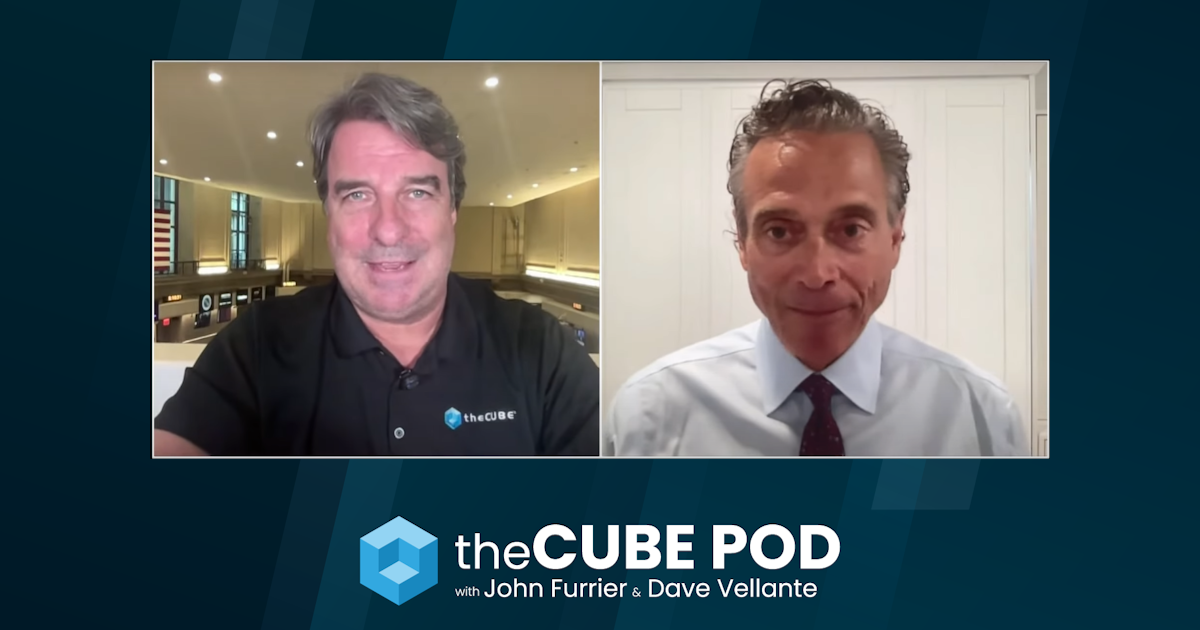
In this week’s episode of theCUBE Pod, theCUBE Research’s John Furrier (pictured, left) and Dave Vellante (right) dig into this transformation, focusing on Amazon Web Services Inc.’s new tools such as AgentCore and Kiro, the evolving developer experience and the critical role of protocol standards such as MCP. They debate how Amazon’s product-led DNA helps — and sometimes hinders — its ability to speak to the C-suite, and they unpack the infrastructure arms race driving everything from agent ecosystems to IPO strategy.
“This agentic wave, which is essentially service as a software or software that’s being done and prompted and built differently … they definitely are stacking up a run here to not be like, we’re catching up. They’re definitely transformed,” Furrier said. “My takeaway: They’re transforming at a pace I’ve never seen before with the size that they have.”
AWS’ recent product launches marked a strategic deepening of its AI capabilities — but with a practical, developer-first mindset. AgentCore, introduced at the AWS Summit NYC, is a managed service that simplifies how developers build, deploy and manage autonomous agents. Meanwhile, Kiro, Amazon’s IDE-like coding platform, was rolled out as a foundation for co-creating with agents across prototype to production. These tools signal AWS’ intent to move beyond generic AI hype and toward the real-world plumbing that makes agentic systems work.
“AgentCore clearly was the big news because they’re helping builders more simply build and deploy and manage agents,” Vellante said. “That’s to me, the most consequential announcement at the summit. And it’s a big leap in operationalizing AI, so that’s good.”
Despite this progress, AWS still faces communication gaps with the executive tier. Compared to competitors such as Salesforce Inc. and Microsoft Corp., who offer clear messaging around agents and business transformation, Amazon tends to rely on developer-centric language. However, Furrier and Vellante argue this may be intentional — a bet that delivering real business value will ultimately matter more than polished soundbites.
“If you think about the size of Amazon as a company, AWS particularly, it’s massive,” Furrier said. “To make that bureaucracy work and what they just delivered in the first half of the year, it’s pretty significant. Kiro is significantly stronger than any vibe coding platform out there.“
Underneath the tooling announcements lies a deeper truth: Enterprises don’t want more demos — they want production-grade software that runs efficiently and generates ROI. That’s where agentic infrastructure makes the difference. Systems such as Kiro and AgentCore don’t just help teams build AI applications — they enable them to do so with architectural discipline, cost awareness and reliability, according to Furrier. From avoiding wasteful token usage to managing post-training complexity, agentic infrastructure allows builders to design with production in mind.
“The models are great to talk to … but if you have a model and you want to train it again, it is expensive and hard,” Furrier added. “You have a new kind of flywheel developing and things like MCP server, AgentCore; this is what Amazon started.”
The conversation also acknowledged the broader ecosystem implications. As AWS contributes to open protocols such as MCP and A2A, it’s positioning itself not just as a platform but as a hub for interoperable, multi-agent systems. This shift also puts pressure on competitors with less open postures, especially as third-party integrations, ISV tools and SaaS marketplaces become vital components of agentic scale, Vellante explained.
“AWS’ posture is clearly more inclusive in the recognition that not everything is going to go into the AWS cloud,” he said. “I think the strong messaging that I heard at the summit was AWS wants to be the best place to build and deploy and manage agents.”
This week’s theCUBE Pod episode also broadened its lens to explore how other tech giants are competing for control of the agentic stack. Oracle Corp., Microsoft, Meta Platforms Inc. and Google LLC are all laying down massive bets — from sovereign AI strategies to chip innovation and sprawling data center campuses. With funding rounds hitting $2 billion for infra startups, the race is on to create not just the best models but the most efficient, sovereign and intelligent AI backplanes, according to Furrier.
“The geopolitical landscape is going to be reset in the next 10 years by power and data center output,” he said. “Sovereign cloud will be the first wave … and once sovereignty gets nailed down, then borderless crypto will come in.”
Despite all the innovation happening under the hood, one of the biggest opportunities for AWS lies in up-leveling its message. As enterprise buyers look to AI for strategic outcomes, they’re not necessarily seeking more APIs — they want clarity on value. Amazon’s insistence on practicality may win the hearts of developers, but as Furrier and Vellante pointed out, connecting with business leaders requires more than great tooling.
“Amazon starts with developer speak,” Vellante said. “They don’t start with wallet speak … I think they are bringing in more C-level execs to help with that, and I think it just takes time.”
The tension is clear: While AWS offers some of the most advanced infrastructure in the industry, it still risks being perceived as “just the pipes” in a market hungry for revenue-driving platforms. Companies such as Oracle, Salesforce and Microsoft have built software businesses with broader boardroom resonance. To fully capture its agentic opportunity, AWS must do more to connect the dots between agentic infrastructure, apps and enterprise value, Furrier explained.
“Amazon’s message to the C-suite is, if you’re trying to build applications to serve your customers, we have the best products for you to do it today,” he said. “It doesn’t cost as much, and it delivers revenue. That’s got my attention.”
Andy Byron, former CEO of Astronomer
Brian J. Baumann, founder of NYSE Wired and director of capital markets, technology at NYSE
George Gilbert, principal analyst at theCUBE Research
Swami Sivasubramanian, vice president of database, analytics and machine learning at AWS
Satya Nadella, chairman and CEO of Microsoft
Julia White, VP and CMO of AWS
Deepak Singh, VP, developer agents and experiences at AWS
Marc Benioff, chair and CEO of Salesforce
Andy Jassy, president and CEO of Amazon
Here’s the full episode of this week’s theCUBE Pod:
Don’t miss out on the latest episodes of “theCUBE Pod.” Join us by subscribing to our RSS feed. You can also listen to us on Apple Podcasts or on Spotify. And for those who prefer to watch, check out our YouTube playlist. Tune in now, and be part of the ongoing conversation.
Support our mission to keep content open and free by engaging with theCUBE community. Join theCUBE’s Alumni Trust Network, where technology leaders connect, share intelligence and create opportunities.
Founded by tech visionaries John Furrier and Dave Vellante, SiliconANGLE Media has built a dynamic ecosystem of industry-leading digital media brands that reach 15+ million elite tech professionals. Our new proprietary theCUBE AI Video Cloud is breaking ground in audience interaction, leveraging theCUBEai.com neural network to help technology companies make data-driven decisions and stay at the forefront of industry conversations.