
 AI
AI
AI
AI
AI

Mozilla.ai, the open-source AI lab established in 2023 with $30 million in funding from the Mozilla Foundation and a mission to promote trust and transparency in artificial intelligence, is entering a new phase marked by balancing a commitment to openness with the need to make a profit.
Chief Executive John Dickerson arrived six months ago with credentials in academia and entrepreneurship. He’s steering the company toward a refreshed product lineup and its first commercial products coming this fall. What hasn’t changed, he said, is Mozilla.ai’s commitment to building a trustworthy, decentralized, and open‑source AI ecosystem as a counterbalance to Big Tech’s proprietary pull.
“Mozilla.ai was initially launched as more of a pure R&D lab,” Dickerson said in an interview with SiliconANGLE. “My coming on in mid-March was meant to basically transition the company into a sustainable business that has revenue streams, attracts external capital and doesn’t just rely on the Mozilla Foundation.”
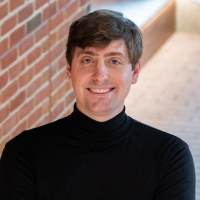
Mozilla.ai CEO Dickerson Photo: Mozilla Foundation
Mozilla.ai’s product suite up to this point has been developer‑focused. Its four main products are any-agent, a unified interface for building and testing across different agent frameworks; any-llm, a Python library that provides a single interface to multiple large language models; Blueprints, a collection of templates and tools for building open‑source AI applications; and Lumigator, an evaluation platform for selecting AI models.
This week, it launched a curated registry of Model Context Protocol servers called MCPD in an effort to get out in front of the raging popularity of MCP. It’s a standardized way for AI systems to integrate and share data with external tools, systems and data sources.
While praising Anthropic PBC and Google LLC for releasing MCP and the related Agent2Agent Protocols to open source, Dickerson said the irrapid adoption has created trust issues. “At the end of the day, when you go on to some registry of MCP servers, you have no idea if you can trust them or how secure they are,” he said. “This is a big concern, and we want to have an opinion about what MCP servers should be used for particular tasks.”
Next week, Mozilla.ai will announce any-guardrail to bridge governance incompatibilities between different AI models. And in October, the company plans to roll out its first commercial product and the first aimed at a non-developer audience.
The as-yet-unnamed product is targeted at “tech-savvy, but non-developer employees who want to automate away some of the repetitive processes that aren’t adding value to their job, but are necessary components of what they have to do every day,” Dickerson said. Though not technically no-code, it will allow users to develop agents using natural language commands.
The commercial platform will use Mozilla.ai’s open-source components under the hood, but will not itself be open source. The plan is to offer it as a software-as-a-service platform initially, with the potential for on-premises deployments for customers with strict data protection requirements.
Dickerson brings a hybrid resume to a firm that’s trying to balance openness with profitability. He was co‑founder and chief scientist at ArthurAI Inc., an AI observability and performance optimization company that raised $55 million in funding. Before that, he was a tenured professor at the University of Maryland and a lab leader in machine learning and economics.
“I miss parts of academia for sure, but the place to be if you’re in AI right now is industry,” he said.
Mozilla.ai hasn’t sought funding beyond the $30 million startup investment by the Mozilla Foundation, but Dickerson said that’s likely to change. He plans to pursue a Series A fundraising round in early 2026 while also building out go-to-market operations that include solutions engineers and account executives.
Whether Mozilla.ai can turn a principled stance into a viable business remains to be seen. The October launch will provide an early test — not just of the product itself, but of the company’s broader strategy to combine open-source ideals with commercial ambition.
Support our mission to keep content open and free by engaging with theCUBE community. Join theCUBE’s Alumni Trust Network, where technology leaders connect, share intelligence and create opportunities.
Founded by tech visionaries John Furrier and Dave Vellante, SiliconANGLE Media has built a dynamic ecosystem of industry-leading digital media brands that reach 15+ million elite tech professionals. Our new proprietary theCUBE AI Video Cloud is breaking ground in audience interaction, leveraging theCUBEai.com neural network to help technology companies make data-driven decisions and stay at the forefront of industry conversations.