

 EMERGING TECH
EMERGING TECH
EMERGING TECH
EMERGING TECH

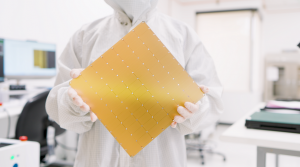
Google LLC’s quantum division today released research showing that its Willow quantum chip can provide elegant and accurate simulations about the physical properties of molecules much faster than classical computers.
Furthermore, the algorithm the team developed is verifiable, which means that the same algorithm can be run on a similarly powerful computer and get the same answer.
Google Quantum AI Principal Scientist Vadim Smelyanskiy said this new algorithm offers “a valuable tool to understand the nature of quantum systems from molecules, to magnets, to potentially black holes.”
Just published in Nature, the Google team’s findings demonstrate what it says is the first-ever verifiable capability by a quantum computer, outperforming the ability of classical computers, for a problem known as the out-of-time-order correlator, which the company calls Quantum Echoes.
Quantum Echoes is a new quantum-computing algorithm developed by Google’s Quantum AI team that works a bit like playing a piece of music forwards and then backwards in an echo chamber to reveal hidden harmonics. In this case, the “music” is the simulation of quantum motions of molecules, and the “echo” is a clever reversal of those motions inside the quantum processor so that software can pick out the subtle quantum effects.
Imagine you have a gigantic orchestra playing in a symphony, but you can only listen to one instrument at a time. Classical computers operate by focusing on instrument to instrument and piecing the final picture together afterward. A quantum computer, capable of massively parallel calculations, can pick up many instruments at once and discover patterns in ways classical computers would find extremely slow.
This kind of simulation can be applied to data from nuclear magnetic resonance experiments, a scientific technique that uses strong magnetic fields and radio waves to probe the nuclei of atoms. NMR works by putting molecules into a magnetic field, forcing atomic nuclei to align either with or against it; then radio waves are used to “flip” the atoms to a higher energy state. When the atoms “flip back,” they release energy that can be measured.
The types of atomic nuclei and the surrounding nuclei change how each atom is affected by different frequencies of radio waves, thus providing a spectrum of data that provides clues to a molecule’s structure.
Google’s Quantum Echoes algorithm effectively recreates that process inside a quantum computer, simulating how a molecule’s atomic nuclei would behave in an NMR experiment. Researchers then compared their quantum simulations with real NMR data, confirming that the quantum model reproduced the same underlying atomic interactions observed in the laboratory.
Because the method is verifiable — meaning the quantum machine’s answer can be checked — it offers a trusted way to explore complex molecular systems that could one day help in materials design or drug discovery.
To verify the accuracy of its new algorithm, Google ran a proof-of-principle experiment in partnership with the University of California at Berkeley. In the experiment, the research team studied two molecules, one with 15 atoms and one with 28 atoms. The company said the results of the experiment matched those of traditional NMR and unveiled information not normally accessible to NMR.
This finding is significant because, while classical computers can model the structure and quantum interactions within molecules, their accuracy quickly breaks down as molecular size and complexity grow. Google’s team believes that with continued progress, quantum computers could one day provide direct, verifiable insights into the structure and behavior of much larger and more intricate molecules.
Google said this validated that quantum-enhanced NMR could become a prevailing tool for drug discovery and materials science. In these fields, the specific structure of molecules helps describe how they will interact with one another and other materials. This can lead to the discovery of novel drug interactions and characterize new materials such as polymers, battery components or materials to construct quantum bits — the fundamental component that makes up quantum computer logic.
“The shape of molecules is critical in determining how they work,” said Nicholas Rubin, chief quantum chemist at Google Quantum AI. “Our hope is that we could use the Quantum Echoes algorithm to augment what’s already possible with traditional NMR.”
The company said its quantum chip ran the algorithm 13,000 times faster than the world’s fastest supercomputer.
Google’s Willow chip, unveiled in October 2024, represents the company’s state-of-the-art in quantum computing with key capabilities that solve challenges with error correction at a large scale. Although quantum chips are powerful, they have a problem: errors caused by external noise. This “noise” can be virtually anything from microvibrations, heat fluctuations, errant radio waves and cosmic rays. Even slightly perturbed by noise, a qubit can have its information destroyed.
The larger that quantum chips get, the more errors they face. To tackle this, Google came up with a specialized architecture that cut error rates by half each time the number of qubits was increased. This allowed the company to build and release a 105-qubit processor, almost double the 59 housed in the previous Sycamore chip released in 2019.
Support our mission to keep content open and free by engaging with theCUBE community. Join theCUBE’s Alumni Trust Network, where technology leaders connect, share intelligence and create opportunities.
Founded by tech visionaries John Furrier and Dave Vellante, SiliconANGLE Media has built a dynamic ecosystem of industry-leading digital media brands that reach 15+ million elite tech professionals. Our new proprietary theCUBE AI Video Cloud is breaking ground in audience interaction, leveraging theCUBEai.com neural network to help technology companies make data-driven decisions and stay at the forefront of industry conversations.