




 INFRA
INFRA
INFRA
INFRA
INFRA

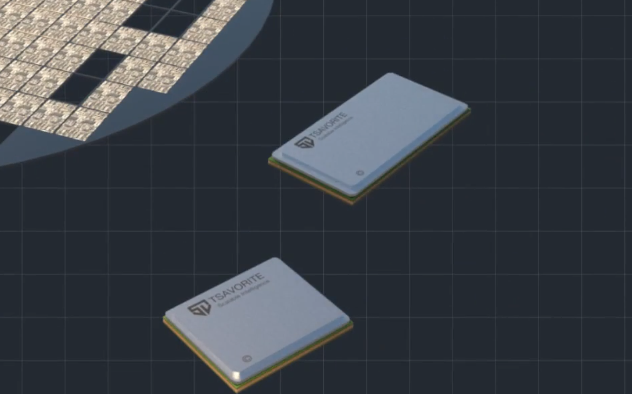
Semiconductor startup Tsavorite Scalable Intelligence Inc. is looking to reinvent the system-on-chip computing architecture for artificial intelligence workloads with its new Omni Processing Unit.
It’s a new kind of chiplet that combines a graphics processing unit with a central processing unit, memory and scale-out connectivity on a single, composable device that can be configured for everything from clusters to edge AI use cases.
The startup, founded by a group of chip and software industry veterans with years of experience in building semiconductor products, says it wants to eliminate the performance and cost bottlenecks of AI infrastructure, which hinder adoption of the technology.
To that end, the company has built on the concept of the SoC, a small integrated chipset that’s often found in mobile devices and contains all of the required components and circuits to run a computing system. In addition to the basic GPU, CPU and memory elements, Tsavorite’s OPUs feature a newly designed interconnect technology known as MulitPlexus fabric.
That’s compatible with everything from individual chip dies to server racks to enable rapid networking at scale. The company said it’s the key technology that enables the OPU’s modular architecture, allowing the system to be deployed in almost any form factor, including servers or robots, to support AI deployments at the edge, in the cloud or on-premises.
In addition, the company has developed a full-stack, open-source software platform that makes it simple to port applications built with Nvidia Corp.’s CUDA, or Compute Unified Device Architecture, to run on its systems. It’s called the Tsavorite Agentic Operating Stack or TAOS, and it allows for one-click application deployment without any code changes, quantization adjustments or proprietary software dependencies, the company promised. It supports numerous leading AI and application frameworks, including Kubernetes PyTorch, Ray, Triton, vLLM and HuggingFace.
Tsavorite founder and Chief Executive Shalesh Thusoo said the combination of the MultiPlexus fabric and TAOS is what makes the OPU the first truly composable, developer-friendly compute platform for AI. “[It delivers] step-change gains in efficiency, cost and scale from edge to hyperscale,” he said.
The big selling point is scalability, Thusoo said. He explained that the unique flexibility of its MultiPlexus AI fabric allows it to connect individual chiplets with packages, systems and racks, with the potential to scale to support thousands of devices or servers. It provides ultra-low latency, distributed gigabyte caches and petabyte-scale bandwidth to create unified memory pods that can handle the most powerful of AI models with up to trillions of parameters.
The OPU is not entirely the startup’s own work, and a lot of its performance stems from the fact that it’s based on Arm Holding Plc’s Neoverse compute subsystem. That’s what enables its high performance per watt and compatibility with multiple deployment environments, Thusoo explained.
“By building on Arm Neoverse, Tsavorite is delivering a platform that brings together its own specialized innovation and Arm’s proven high performance and energy efficiency,” said Arm Vice President of Product Solutions Dermot O’Driscoll.
According to Thusoo, the company is planning to start mass-manufacturing its silicon OPU chiplets and a Helix AI data center appliance by early next year, and has already secured more than $100 million worth of orders for its hardware. Its first customers include a number of Fortune 500 companies, he said, as well as leading American systems integrators and sovereign cloud infrastructure providers in the U.S., Europe and Asia.
One of those early adopters is Eviden SAS, a subsidiary of the server maker Atos SE, which said it will leverage Tsavorite’s OPU to enhance performance across AI training, inference and agentic workflows.
Cambrian-AI Research analyst Karl Freund said Tsavorite’s launch comes at a time when the semiconductor market seems to be entering a new phase of architectural innovation driven by the need to support data-intensive AI applications. “With its prototype systems already in customer evaluation and multiple design-ins, Tsavorite’s chip-based architecture demonstrates real-world value and the potential to improve performance and efficiency at scale,” the analyst said.
Support our mission to keep content open and free by engaging with theCUBE community. Join theCUBE’s Alumni Trust Network, where technology leaders connect, share intelligence and create opportunities.
Founded by tech visionaries John Furrier and Dave Vellante, SiliconANGLE Media has built a dynamic ecosystem of industry-leading digital media brands that reach 15+ million elite tech professionals. Our new proprietary theCUBE AI Video Cloud is breaking ground in audience interaction, leveraging theCUBEai.com neural network to help technology companies make data-driven decisions and stay at the forefront of industry conversations.