 APPS
APPS
APPS
APPS

APPS

Artificial intelligence is rewiring the high-performance computing space, with HPC cluster management getting a usability overhaul as organizations demand simpler operations that don’t come at the cost of capacity.
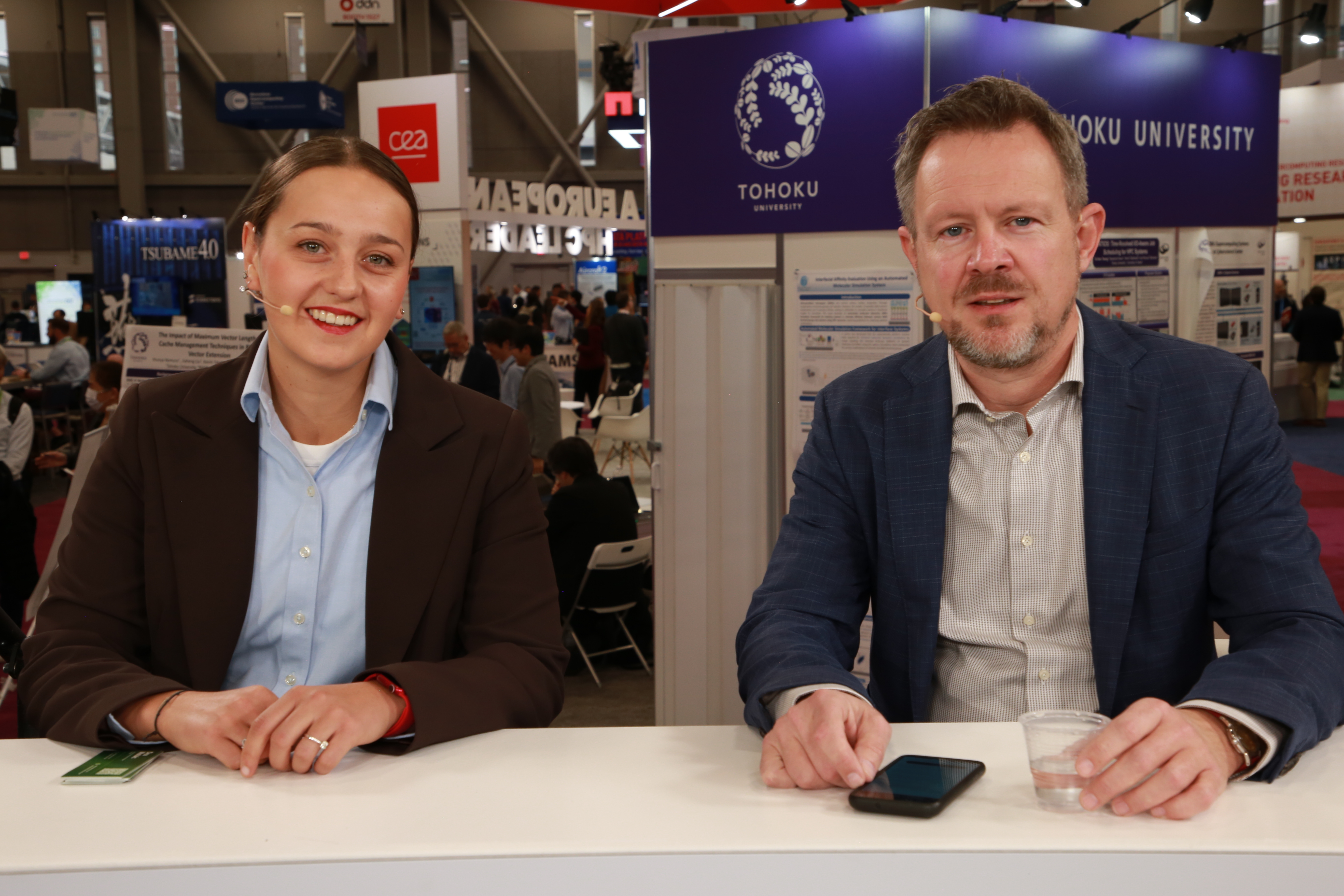
Teams want the flexibility of open source, the convenience of a graphical user interface and the assurance that core services — provisioning, scheduling, monitoring and storage — work together out of the box. Those streams form the philosophy behind ClusterVision Solutions BV’s TrinityX, integrating proven open-source components and adding in-house tooling so that admins can manage modern HPC and AI workloads with less friction and lock-in, according to Fabian Nowee (pictured, right), EMEA strategic account manager at ClusterVision.
“If you look at our philosophy, we are open source,” Nowee told theCUBE. “You can download it for free and you can try it. You just go to GitHub, download it, play around with it — you have full functionality and then if you want to have support, of course you can.”
Nowee and Dea Mataic (left), HPC/AI account and channel manager and TrinityX cluster manager at ClusterVision, spoke with theCUBE Research’s Dave Vellante and Savannah Peterson at SC25, during an exclusive broadcast on theCUBE, SiliconANGLE Media’s livestreaming studio. They discussed TrinityX’s open-source, streamlined approach to HPC cluster management, the important role of storage and real-world use cases spanning healthcare, life sciences and finance. (* Disclosure below.)
“Everything has to be convenient and it has to be easy,” she explained. “In this HPC world, people are still doing a lot on the command line … it seems like in that sense we are 50 years back almost.”
As clusters scale to support graphics processing unit-heavy AI and simulation, the quiet workhorse is storage — until it fails. Protecting scientific data and speeding I/O across controller, login, storage and compute/GPU nodes is foundational to reliability and time-to-results, Nowee noted.
“Storage is very important,” he said. “If you look at the research, they usually say ‘Yeah, it’s not scratched, it’s not important’ — it’s not important until it’s gone. Then people are screaming, ‘Oh yeah, didn’t you make a backup?’”
While many HPC users still live on the command line, enterprise teams expect intuitive, visual workflows. That’s why TrinityX invests in a GUI experience while keeping the code and ecosystem accessible to community collaboration, Mataic said.
“I think that is the challenge that we are trying to overcome: by developing and creating a nice GUI in a way that it becomes very intuitive and very easy to just use it and create the smaller applications, which are open source. Because … being open source, bringing back to the community, we see that this is the only way forward,” she said. “We fully committed ourselves to being open source, to our product being open source, because that’s another thing — it has to be available, it has to be there. If we want to move with technology, we have to give technology to people. We have to build a community around our product and that’s the only way we can solve all these challenges together.”
Here’s the complete video interview, part of SiliconANGLE’s and theCUBE’s coverage of SC25:
(* Disclosure: Solidigm sponsored this segment of theCUBE. Neither Solidigm nor other sponsors have editorial control over content on theCUBE or SiliconANGLE.)
Support our mission to keep content open and free by engaging with theCUBE community. Join theCUBE’s Alumni Trust Network, where technology leaders connect, share intelligence and create opportunities.
Founded by tech visionaries John Furrier and Dave Vellante, SiliconANGLE Media has built a dynamic ecosystem of industry-leading digital media brands that reach 15+ million elite tech professionals. Our new proprietary theCUBE AI Video Cloud is breaking ground in audience interaction, leveraging theCUBEai.com neural network to help technology companies make data-driven decisions and stay at the forefront of industry conversations.