 AI
AI
AI
AI
AI

Microsoft Corp. today showcased its vision of an agentic artificial intelligence future for everyday consumers with the launch of its newest model Fara-7B, which can run locally on personal computers and is smart enough to use them to complete tasks.
The company said in a blog post that Fara-7B is its first agentic small language model, and is designed specifically for “computer use” tasks, meaning it can control a mouse and a keyboard.
Because it spans only 7 billion parameters, it’s significantly smaller than today’s most powerful large language models. For instance, even GPT-3, which debuted in 2020 – way before the AI boom even took off – featured more than 175 billion parameters. However, its small size does not prevent it from achieving what Microsoft says is “state-of-the-art performance,” especially when compared to other models within its size class.
Fara-7B is also said to be competitive with larger, more resource-intensive agentic systems that leverage multiple large language models. For instance, the company claims it can outmatch OpenAI Group PBC’s GPT-4o when specifically configured to browse the web.
Microsoft explained that Fara-7B works by visually perceiving websites rather than using separate models to parse the information on the screen, nor does it use additional information like “accessibility trees.” Rather, it interacts with websites using the same modalities as humans do, the company said.
In three videos, Microsoft showcased how Fara-7B can purchase products online, search for information and provide a summary of what it finds, and use online maps to measure the distance between two locations, all based on a simpler user’s prompt. In the videos, it’s noticeable that Fara-7B performed these tasks much slower than a human probably would, and the user is required to approve certain steps along the way, such as entering account login information. Nonetheless, it’s an interesting showcase of a future where AI models that automate everyday tasks for people become the norm, especially once the get smarter and faster.
Of course, Microsoft’s Copilot tool can also act like an agent and automate tasks on behalf of users, but the difference is that it doesn’t run locally on the PC. Rather, Copilot can only run when it’s connected to Microsoft’s massive cloud-based data centers, meaning it has to be online at all times. It also collects vast amounts of data from user’s PCs, which may create concerns around privacy, despite Microsoft having various policies in place to prevent sensitive information falling into the wrong hands.
Fara-7B runs natively because it’s installed directly on the PC, which means that it only leverages the local hardware available to it. As such, it doesn’t send any data to the cloud, reducing latency and improving privacy, Microsoft said. It builds on the company’s earlier efforts in small language models. Last year, Microsoft released a model called Phi-4, which was small enough to run locally on a smartphone device.
Still, Fara-7B is not always perfect, as Microsoft conceded. It said that during testing it did make several errors, notably struggling with accuracy on some more complex tasks, where it sometimes made mistakes in following instructions. It’s still somewhat susceptible to hallucinations too, the company said.
The accuracy problems are the reason why Microsoft is allowing users to test Fara-7B only in an isolated sandboxed environment, where it can monitor its performance and prevent users from sending it sensitive data. The company added it has developed safeguards for the model, so it will refuse to execute any malicious prompts.
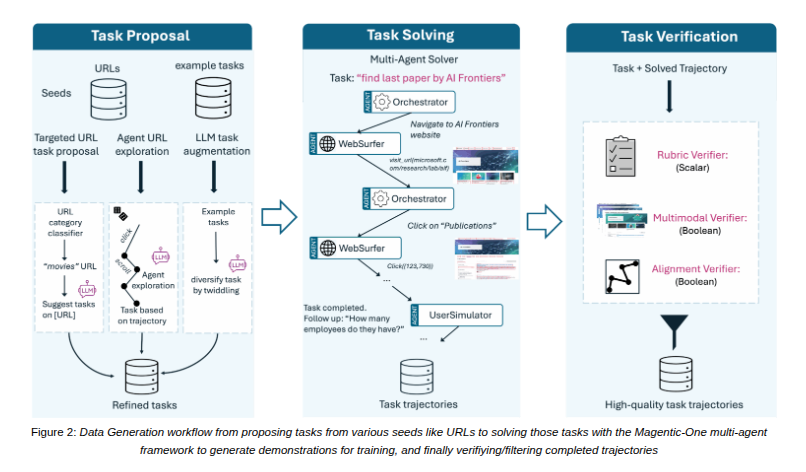
Microsoft said Fara-7B is being made available on Microsoft Foundry and Hugging Face under an MIT license, and can only be used with Magnetic-UI, its prototype AI research platform. In future, the company will release another version of Fara-7B that’s designed to run on Windows 11 Copilot+ PCs, which come with dedicated hardware for processing AI models.
Support our mission to keep content open and free by engaging with theCUBE community. Join theCUBE’s Alumni Trust Network, where technology leaders connect, share intelligence and create opportunities.
Founded by tech visionaries John Furrier and Dave Vellante, SiliconANGLE Media has built a dynamic ecosystem of industry-leading digital media brands that reach 15+ million elite tech professionals. Our new proprietary theCUBE AI Video Cloud is breaking ground in audience interaction, leveraging theCUBEai.com neural network to help technology companies make data-driven decisions and stay at the forefront of industry conversations.