




 SECURITY
SECURITY
SECURITY
SECURITY

Saviynt Inc., a startup that helps enterprises regulate how users and applications access their internal systems, has closed a $700 million funding round.
The company disclosed in its announcement of the Series B deal today that KKR was the lead investor. Sixth Street Growth, TenEleven and returning backer Carrick Capital Partners chipped in as well. Saviynt says it’s now valued at about $3 billion.
“The demand for secure, governed identity has never been greater, and this growth investment gives us the resources to meet it head-on,” said Saviynt founder and Chief Executive Sachin Nayyar.
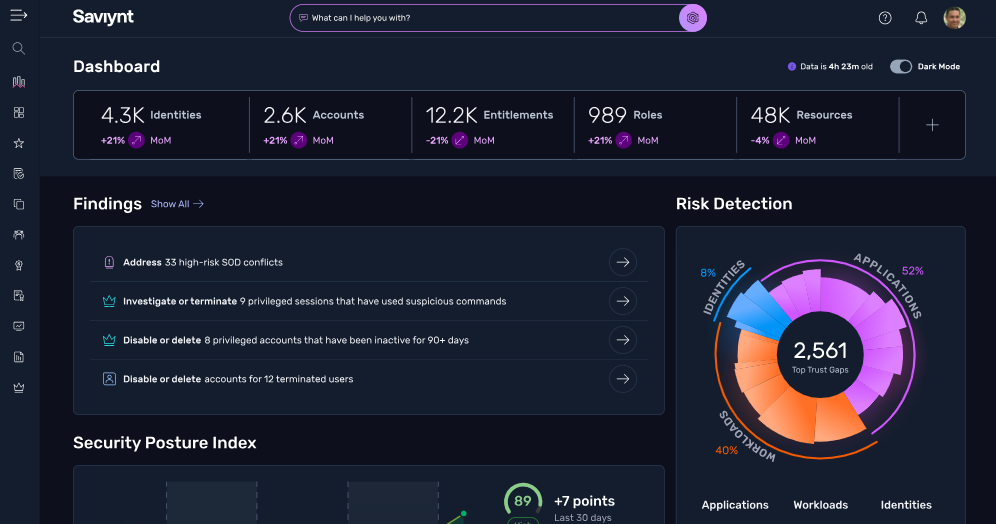
The company’s software platform, the Saviynt Identity Cloud, maps out the accounts that workers use to log into business applications. It then scans them for potential cybersecurity risks. The platform can, for example, point out if an account with access to a sensitive database should be deleted because it hasn’t been used in 90 days.
Companies often require workers to request access to sensitive applications from the information technology team. In a large enterprise, the task of reviewing those tickets can take up a significant amount of time for administrators. Saviynt says its platform uses artificial intelligence features to automate 75% of access request reviews. It recommends whether administrators should approve or reject a request based on factors such as user activity patterns.
Saviynt provides its core access management features alongside capabilities for managing privileged accounts. Those are accounts belonging to administrators, executives and other employees who have access to particularly sensitive applications. According to Saviynt, its platform hosts such accounts’ credentials in an isolated environment called a vault and records user sessions.
Historically, the owner of a privileged account automatically received access to the associated systems after logging in. Saviynt makes it possible to implement a stricter approach called just-in-time security. Using the platform, companies can grant users access to a sensitive system only for the limited amount of time necessary to perform a certain task.
The platform can manage not only user accounts but also machine identities. Those are accounts that applications use to interact with other applications. Its machine identity management features place particular emphasis on securing AI agents.
Saviynt identifies the knowledge bases, neural networks and other assets that AI agents access while carrying out tasks. It then finds excessive access permissions that should be disabled to avoid creating an opening for hackers. From there, it monitors how permissions change over time to ensure cybersecurity requirements are upheld.
The platform also spots other types of risks besides overly broad system access. It can, for example, identify AI agents that lack guardrails against harmful prompts.
Saviynt disclosed on occasion of today’s funding milestone that its platform has been adopted by more than 600 enterprises. Those companies include more than a fifth of the Fortune 100. According to Saviynt, they use the platform to manage more than 100 million identities.
The company will use the new capital to enhance its platform. The development effort will focus on adding more integrations with cloud platforms and software-as-a-serve products. In addition, Saviynt will develop AI-power tools to ease the task of switching to its platform from rival services.
Support our mission to keep content open and free by engaging with theCUBE community. Join theCUBE’s Alumni Trust Network, where technology leaders connect, share intelligence and create opportunities.
Founded by tech visionaries John Furrier and Dave Vellante, SiliconANGLE Media has built a dynamic ecosystem of industry-leading digital media brands that reach 15+ million elite tech professionals. Our new proprietary theCUBE AI Video Cloud is breaking ground in audience interaction, leveraging theCUBEai.com neural network to help technology companies make data-driven decisions and stay at the forefront of industry conversations.