
 AI
AI
AI
AI

AI

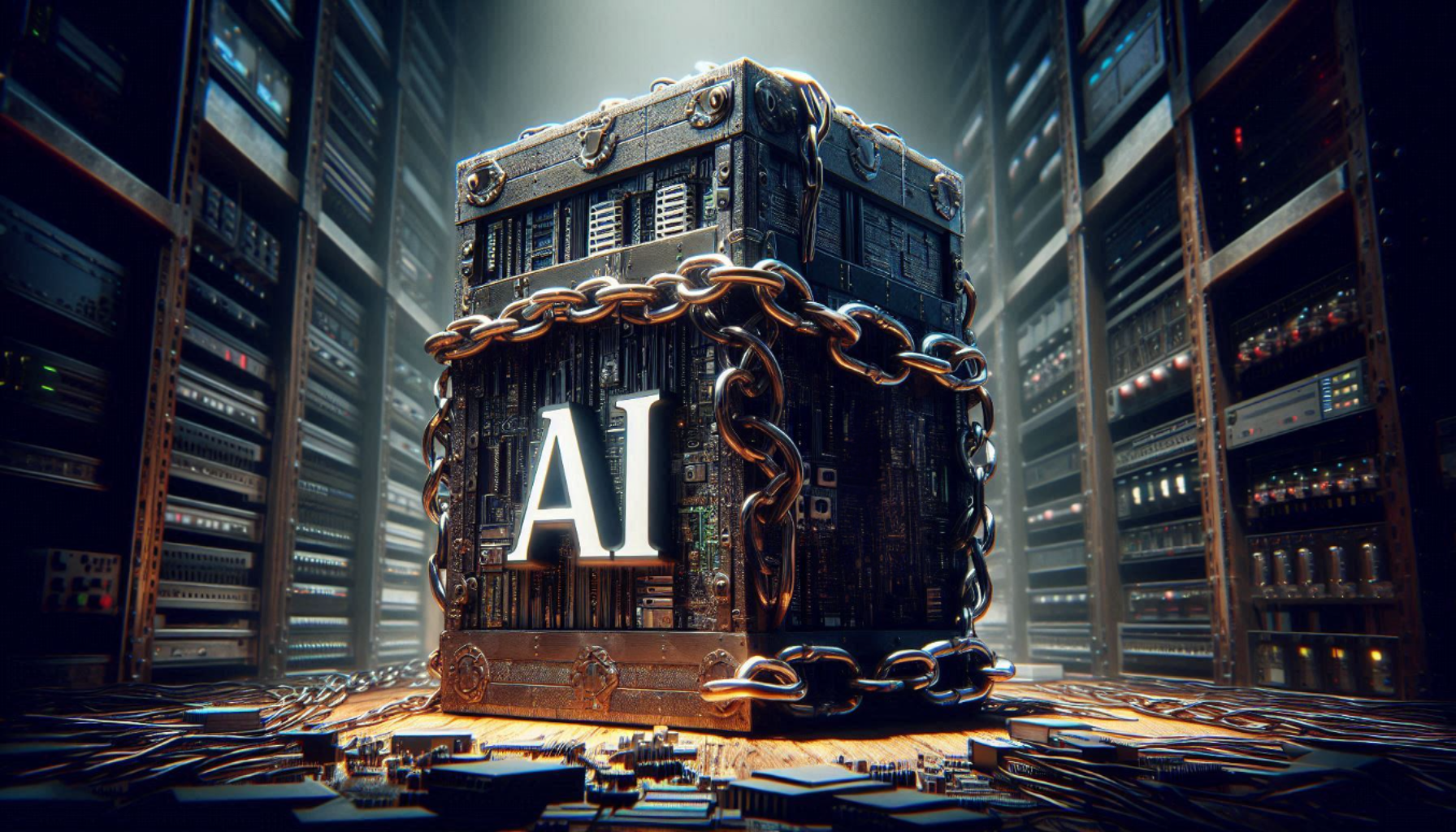
Can the technology industry really achieve secure AI integration?
This is the central question being asked in organizations around the world as AI adoption continues to march steadily forward. Sensitive records are moving through multimodal AI systems and applications are becoming more autonomous with agentic AI. Trust, compliance and resilience across public and private sector networks have become urgent priorities.
TheCUBE, SiliconANGLE Media’s livestreaming studio, recently spoke with leaders from Hewlett Packard Enterprise Co., SHI International Corp. and their partners, to explore embedding AI into infrastructure in order to unify data, reduce risk and build governance into system design. The SHI Fall Summit highlighted how strategies designed for resilience, trust and long-term impact will be essential for deploying AI at scale.
“Innovation only scales when resilience does too,” said Paul Nashawaty, principal analyst at theCUBE Research. “The SHI Fall Summit reinforced that secure AI adoption requires a coalition: platform providers like HPE, service integrators like SHI and governance owners like the CISO office. As one of the panelists said, ‘We’re past the question of whether AI will transform the enterprise; the real question is whether we can secure the transformation.’”
This feature is part of SiliconANGLE Media’s ongoing exploration into the evolution of AI innovation and cybersecurity resilience. (* Disclosure below.)
The innovation ecosystem surrounding the deployment of autonomous solutions has expanded to include offerings such as HPE’s Unleash AI partner program. Described by the company as a “launchpad for accelerated AI success,” the program validates ISV partner software on HPE Private Cloud AI.
This process for validation plays a key role in addressing enterprise concerns surrounding AI deployment. TheCUBE Research data shows that 71% of enterprises identify security is a gating factor for deploying AI at scale, and nearly two-thirds report new attack surfaces emerging as they integrate AI into everyday workflows, according to Nashawaty.
“This may be why there is interest in SHI and HPE’s Unleash AI program,” Nashawaty noted. “It’s not positioned as another reference architecture, but more as a blueprint for secure, governed AI adoption. HPE’s compute, networking and GreenLake cloud services, combined with SHI’s integration, consulting and governance muscle, give CIOs and CISOs what they’ve been asking for: an AI platform they can defend.”
One of the participants in Unleash AI is the business intelligence platform provider Aible Inc. The company offers AI agents that can analyze a business’s data and deliver corresponding insights, with the goal of making its clients “AI first.”
Aible is in the early stages of integrating with HPE Private Cloud AI to pre-test for efficiency and the lowest possible total cost of ownership, according to Vijay Anand, chief marketing officer of Aible. The goal is to deliver a packaged, integrated AI stack that can be reliably deployed with end core organizations.
“One of the key strengths for Aible, at least, is to be able to run everything within the customer’s environment, whether it’s the cloud or their edge devices or their on-prem systems, but data never leaves their control or possession,” Anand said during an interview with theCUBE. “Aible is performing the analysis within that environment, and the data never leaves it. So, it’s instilling a lot of confidence from a data privacy, data residency and security standpoint.”
In addition to instilling confidence surrounding data management within the enterprise, new AI solutions are also offering a way for state and local government agencies to meet a key deadline that is fast-approaching. Section 508 of the U.S. federal Rehabilitation Act requires state and local agencies to make their electronic and information technology accessible to people with disabilities. While the federal government’s compliance deadline has passed, larger state and local agencies must be compliant with Section 508 by April of next year.
The sheer volume of information provided by government agencies makes compliance a daunting task.
“It’s becoming an urgent situation now,” said Denise Collison, senior vice president of public sector sales at SHI, during a conversation with theCUBE. “Depending on the size of the agency, there can be millions of pages. The issue can be very cost prohibitive, time prohibitive to go back and actually get every single page up to compliance standards. Staying compliant is also an issue because any time any changes to those pages are made, the agency then has to go and make sure those changes are also compliant. Having governance around that on an ongoing manner is really difficult and challenging.”
The solution was a turnkey AI-powered platform spearheaded by SHI, in partnership with HPE, Kamiwaza Corp. and Nvidia Corp. Through the collaboration of these firms on a packaged AI solution, Section 508 compliance has become an automated process to ensure government websites are accessible for every visitor.
“It’s HPE and Nvidia architecture, hardware, Kamiwaza applications and SHI services that provide the government agencies, the government customers instant ROI, pretty much instant remediation, a fully remediated solution to get compliant without the manual work,” Collison said.
At the core of this automated solution is an agentic AI compliance platform contributed by Kamiwaza. The AI tool, called ARIA or Accessibility Remediation Intelligence Agent, scans, remediates and certifies every page according to pre-set criteria. The three-part solution includes the agent that takes over access to the website, a large language model to understand the content and an engine for representing the information visually. Applications must also be compatible with screen readers that can deliver content aloud for those with vision impairment.
“You have to orchestrate those three things together to get a full understanding of what’s being represented on that particular webpage,” explained Luke Norris, co-founder and chief executive officer of Kamiwaza, in an appearance on theCUBE. “The agent then seizes that compliance … then it actually goes through and remediates that. It applies the metadata structure to individual images. It actually changes the HTML to represent what’s in the graphs.”
When a massive amount of digital information is funneled into a compliance platform, there is always a risk that sensitive or personally identifiable information will be inadvertently exposed. Agencies are aware they must protect sensitive records as they migrate into AI workflows, according to Robin Braun, vice president of AI business development, hybrid cloud, at HPE, in an interview with theCUBE.
“Their system understands data sovereignty [and] data gravity so that we’re not exposing anything that shouldn’t be exposed,” she said. “However, we’re ensuring that the things people are accessing are accessible to all.”
The work surrounding initiatives such as Unleash AI and Section 508 compliance highlights a noticeable shift in the role of chief information security officers. What was once a high-level policy enforcement role has been transformed into that of a decision-maker, crafting model selection and playing a hands-on role in running the business.
The lines are blurring between digital and physical security, and it’s no longer about securing the network anymore. CISOs are being called upon to do supply chain security and manage data that flows into and out of proliferating AI models.
“CISOs can no longer pontificate and be professorial,” said theCUBE Research’s Nashawaty. “Many are moving from policy enforcers to ‘AI governance designers,’ shaping how models are selected, how data is shared and how risk is quantified. This means CISOs are playing an active role in day-to-day. The role of the CISO is expanding fast.”
However, that increased level of involvement has not been limited to information security officers or computing executives. In the Colorado town of Vail, the town’s government officials have become closely involved in the implementation of an AI-driven compliance and smart-city initiative for the popular mountain community.
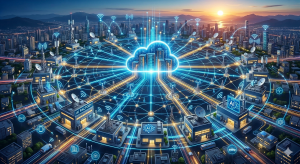
Working with SHI, HPE and Kamiwaza, Vail implemented an AI-powered conversational assistant to deliver real-time information to residents and visitors, automated deed assistance and an expanded wildfire detection and prevention system that integrates multiple AI applications through SHI’s orchestration layer. It provides yet another example of how the intersection of AI and everyday life is becoming more visible as time marches on.
“It was looking at and really listening to say, ‘Where are all of the areas that we can start to apply technology to help,’” HPE’s Braun noted. “We now have a repeatable system solution that we can bring across to small towns like Vail — that have dynamism in them — to some of the largest cities in the U.S. For us, this is an important statement that you can go from idea to execution in a matter of a couple of months, and you can do that at any scale.”
(* Disclosure: TheCUBE is a paid media partner for the SHI Fall Summit. Neither HPE, the sponsor of theCUBE’s event coverage, nor other sponsors have editorial control over content on theCUBE or SiliconANGLE.)
Support our mission to keep content open and free by engaging with theCUBE community. Join theCUBE’s Alumni Trust Network, where technology leaders connect, share intelligence and create opportunities.
Founded by tech visionaries John Furrier and Dave Vellante, SiliconANGLE Media has built a dynamic ecosystem of industry-leading digital media brands that reach 15+ million elite tech professionals. Our new proprietary theCUBE AI Video Cloud is breaking ground in audience interaction, leveraging theCUBEai.com neural network to help technology companies make data-driven decisions and stay at the forefront of industry conversations.