

 AI
AI
AI
AI
AI

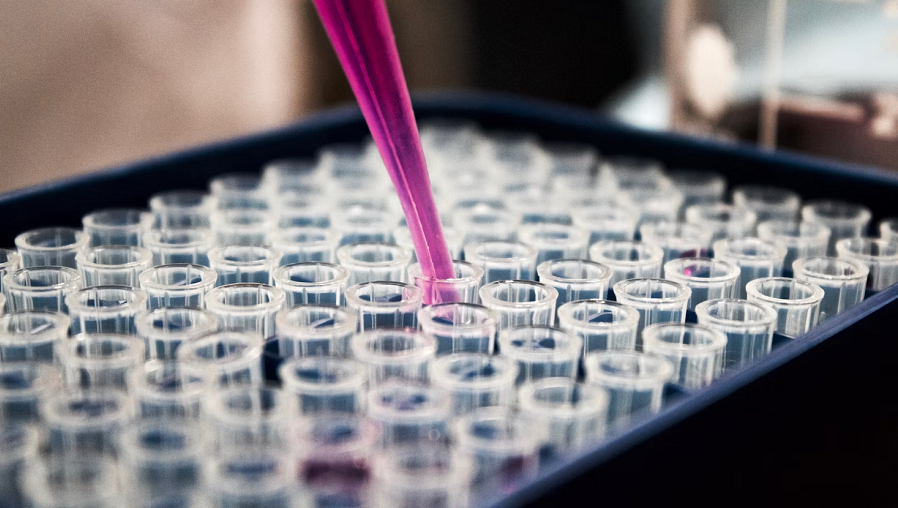
Nvidia Corp. is partnering with Eli Lilly and Co. to open a research lab that will use artificial intelligence to speed up drug discovery.
The companies announced the collaboration today. They plan to spend up to $1 billion on the lab, which is set to open its doors in South San Francisco later this year. The hub’s staff will comprise AI experts from Nvidia and Lilly life science researchers.
“Nvidia and Lilly are bringing together the best of our industries to invent a new blueprint for drug discovery — one where scientists can explore vast biological and chemical spaces in silico before a single molecule is made,” said Nvidia Chief Executive Officer Jensen Huang.
One of the first projects in the works will see the companies create what they describe as a continuous learning system for drug discovery. It will use labs operated with the help of AI to carry out scientific experiments around the clock. According to Nvidia, the data produced by those experiments will facilitate the development of new AI models that can automate pharmaceutical research tasks.
The lab will carry out its work using systems powered by the chipmaker’s new Rubin and Vera chips. Rubin is a graphics processing unit that can run some inference workloads for one tenth the cost of Blackwell, Nvidia’s previous flagship AI accelerator. Vera, in turn, is a central processing unit with 88 cores.
The staffers at the upcoming lab will also use BioNeMo, a collection of Nvidia-developed AI tools for the life sciences sector. It includes templates that ease tasks such as training AI models and preparing the data they will process. The toolkit lends itself to creating, among others, equivariant neural networks, specialized algorithms that can be used to study the geometric properties of molecules.
In addition to tools for building custom AI software, BioNeMo includes a series of pre-packaged models called Clara. The algorithms are designed for use cases such as analyzing data from medical devices. Lilly plans to make Clara models available to other biotechnology companies through a software platform called Lilly TuneLab. It combines neural networks with the company’s internal research data.
The lab will use AI to streamline not only drug discovery but also other aspects of pharmaceutical companies’ operations. According to Nvidia, one particular focus will be helping Lilly optimize its medicine production workflows.
The chipmaker offers a suite of libraries called Omniverse that manufacturers can use to create digital twins. A digital twin is a virtual replica of a physical object that not only simulates its high-level properties, but also incorporates the real-world data that it generates. Nvidia sees Lilly using Omniverse to stress test production lines and find ways of optimizing its supply chains.
Support our mission to keep content open and free by engaging with theCUBE community. Join theCUBE’s Alumni Trust Network, where technology leaders connect, share intelligence and create opportunities.
Founded by tech visionaries John Furrier and Dave Vellante, SiliconANGLE Media has built a dynamic ecosystem of industry-leading digital media brands that reach 15+ million elite tech professionals. Our new proprietary theCUBE AI Video Cloud is breaking ground in audience interaction, leveraging theCUBEai.com neural network to help technology companies make data-driven decisions and stay at the forefront of industry conversations.