 AI
AI
AI
AI

AI

BitGo went public last week, with more initial public offerings expected to come from the cryptocurrency and artificial intelligence sectors.
Initial trading jumped 25% over offering price for BitGo, and the stock rose over 3% on the day — a successful start for the crypto platform. It’s also a sign that crypto’s momentum isn’t slowing down any time soon, according to theCUBE’s coverage of the NYSE floor.
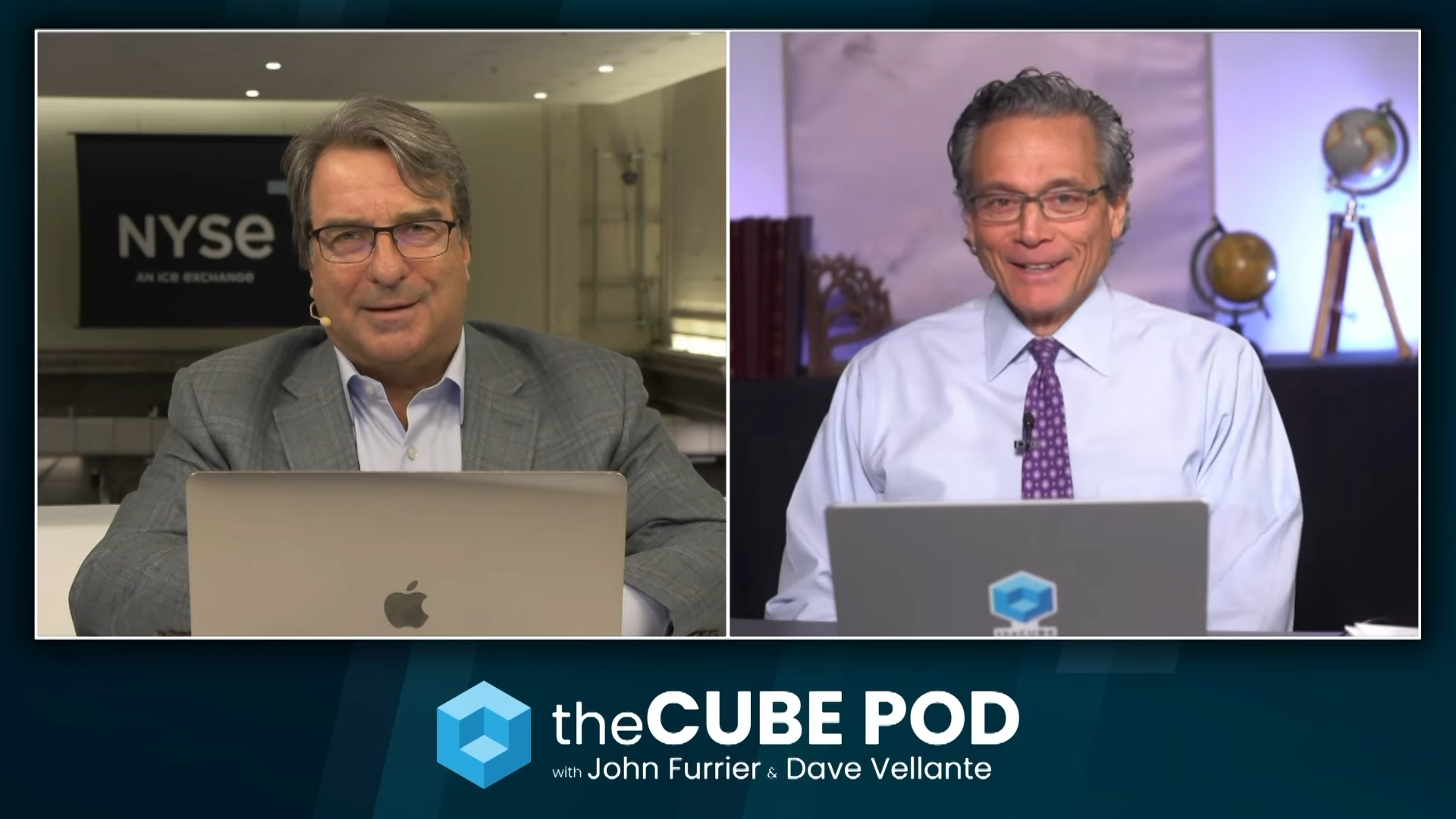
“[BitGo] has really nailed a product market fit that, one, produces revenue, but they got the most comprehensive platform for this financial wave of scale,” said John Furrier (pictured, left), executive analyst for theCUBE Research. “It’s basically infrastructure as a service … an IaaS layer for crypto infrastructure. They nailed the custody and all the things that go with it. That’s like nailing EC2 compute for AWS.”
On the latest episode of theCUBE Pod, Furrier and Dave Vellante (right), chief analyst for theCUBE Research, discussed BitGo’s IPO and the latest news in AI. They also explored takeaways from the World Economic Forum 2026 meeting in Davos, Switzerland, and the competition in semiconductors.
BitGo essentially functions as a service provider for infrastructure, with everything from wallet services to software developer kits, according to Furrier. He predicts that BitGo will continue to have room to grow as crypto reshapes the financial system.
“When you get the custody, you get the wallet,” Furrier said. “That’s self-custody. Today, moving real world assets, whether it’s equities or mango trees … that’s an owned asset that can be instrumented and a service. Payment rails, settlement rails, all developing an industrial, trusted scale way with BitGo. Then they have two other elements developing in their business: protocol solutions [and] stakings.”
Crypto’s no longer about finding the “shiny new toy,” Vellante added; it now needs trusted platforms that can provide the infrastructure for financial transactions. He predicts that the crypto market is going to increase in options and reach, especially as regulations loosen.
“The killer use case of crypto has always been money and the representation of that is Bitcoin and Ethereum and Solana and all the coins,” Vellante said. “But there’s always been protocols and technology and infrastructure underneath that. The way we transact and the way we sell stuff … is going to completely change over the next 10 years.”
In response to worries about an AI bubble, Nvidia CEO Jensen Huang thinks that AI actually needs more investment. This would, of course, benefit Nvidia, but the response has sparked conversations about the future of AI and how it’s changing the fabric of enterprise tech.
“If you discover something, a unique workflow or a proprietary benefit, you either don’t tell anybody and get there as fast as you can,” Furrier said of the new ethos in Silicon Valley. “The rationale [is] it’s easier to copy than ever before on the product market fit. It’s kind of … slaying the sacred cow of entrepreneurship.”
Between Google, Anthropic and OpenAI, there hasn’t been a lot of room for more breakout AI companies. Vellante expects to see more specialty models emerge — Amazon’s Nova Forge, which enables users to build their own frontier models, could be a sign of a growing trend. Nonetheless, he predicts that OpenAI will maintain its first mover advantage by continuing to innovate.
“People underestimate OpenAI in the enterprise,” he said. “The consumer [focus], it’s not a bug; it’s a feature. You don’t have to be as accurate, but you can improve the accuracy with that volume. And if you can handle that, volume always wins.”
Intel flagged a bit with its latest earnings, with soft guidance for the current quarter. The company has made significant strides in recent years, but closing the gap with Taiwan Semiconductor Manufacturing Co. still appears to be a ways off.
“There’s four major changes at Intel, which were very positive,” Vellante said. “New CEO, and he came in and did some cost-cutting. The injection of cash from Uncle Sam. And … the Nvidia deal. They got cash, and it’s a bridge to the GPU world.”
Last week also saw the annual World Economic Forum. The meeting showed how much technology has merged with politics in recent years, with Greenland and AI as the two biggest topics of discussion. Tech’s presence will only continue to grow on the geopolitical stage, Furrier believes.
“There’s going to be a massive acceleration with crypto and AI,” he said. “I think if you look at the data, technology is going to impact every vertical, every business, every person that either works for a company and gets serviced by a company and then their experience in life.”
Jim Cramer, American TV personality and author
Mike Belshe, chief executive officer at BitGo
Gemma Allen, theCUBE host
David Sacks, White House AI & crypto czar
Howie Xu, chief AI & innovation officer at Gen Digital
Jensen Huang, president, co-founder and CEO at Nvidia
Erik Bradley, chief strategist and director of research at Enterprise Technology Research
Vera Rubin, American astronomer
Paul Gillin, enterprise editor at SiliconANGLE Media
Sarbjeet Johal, founder and CEO of Stackpane
Elon Musk, chief executive officer of Tesla
David Floyer, analyst emeritus at theCUBE Research
Marc Benioff, chair and CEO at Salesforce
Bob Picciano, member of the advisory board from SolarWinds Worldwide
Donald Trump, 47th president of the United States of America
Steve Jobs, co-founder and former CEO and chairman of Apple Inc.
Jeremy Burton, CEO at Observe
Jonathan Swerdlin, co-founder & CEO at Function Health
Bill Belichick, former general manager of the New England Patriots
Bill Parcells, former American football coach
Nick Foles, American American football quarterback
Here’s the full episode of this week’s theCUBE Pod:
Don’t miss out on the latest episodes of “theCUBE Pod.” Join us by subscribing to our RSS feed. You can also listen to us on Apple Podcasts or on Spotify. And for those who prefer to watch, check out our YouTube playlist. Tune in now, and be part of the ongoing conversation.
Support our mission to keep content open and free by engaging with theCUBE community. Join theCUBE’s Alumni Trust Network, where technology leaders connect, share intelligence and create opportunities.
Founded by tech visionaries John Furrier and Dave Vellante, SiliconANGLE Media has built a dynamic ecosystem of industry-leading digital media brands that reach 15+ million elite tech professionals. Our new proprietary theCUBE AI Video Cloud is breaking ground in audience interaction, leveraging theCUBEai.com neural network to help technology companies make data-driven decisions and stay at the forefront of industry conversations.