




 AI
AI
AI
AI
AI

Factify Technologies IL Ltd. wants to kill off PDF files as the de facto standard for business records, contracts and agreements after closing on a massive $73 million in seed funding today.
The round was led by Valley Capital Partners and saw participation from angels including John Giannandrea, the former head of artificial intelligence at Google LL and senior vice president of AI at Apple, plus Ken Moelis, founder of investment bank Moelis & Co., and Peter Brown, chief executive of the hedge fund Renaissance LLC.
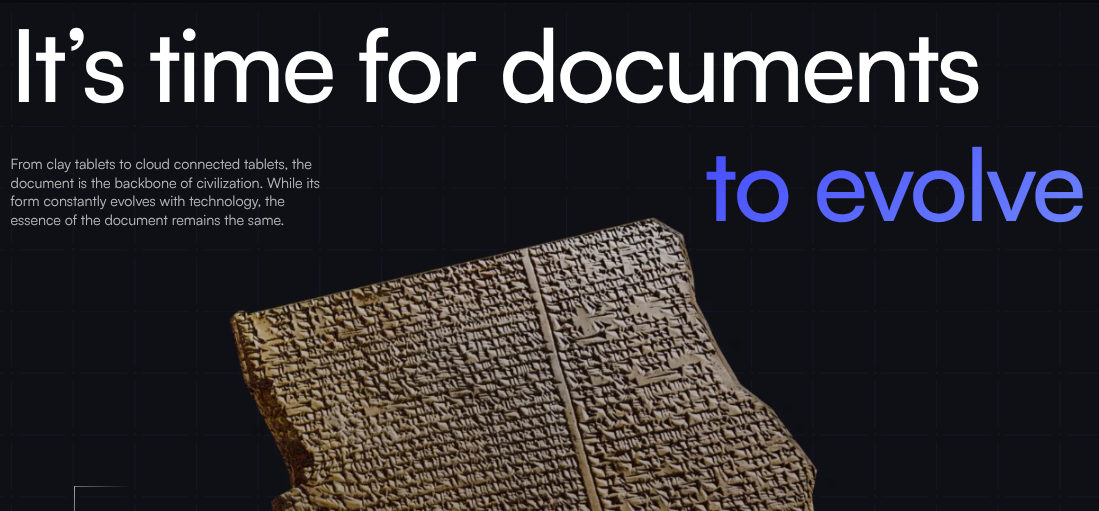
Factify seeks to replace PDFs with what it calls “document-as-infrastructure,” in which every file has its own identity, access rules, version history and intelligence, and is capable of updating itself automatically to serve as a single source of truth.
The startup argues that the time for PDFs to die is long overdue. Adobe Inc. first created the PDF format more than 30 years ago, and it quickly emerged as the default file type for digital documents. Today, Adobe estimates that there are more than 3 trillion PDF files in circulation in the world, yet amazingly this technology has hardly been updated at all.
Factify founder and CEO Matan Gavish (pictured) says that PDFs are static documents that essentially remain frozen in time, and the lack of evolution means they have major limitations. He has been concerned about the reliance on PDFs for a long time, publishing research as early as 2012 that warned about the format’s limitations in an increasingly connected world.
His main issue is that, because PDFs have no way to verify the information inside them or help users to identify the most up-to-date and authoritative version, they cannot be trusted anymore. And this is becoming a problem in a world where businesses are moving away from humans to AI systems that review, approve and take actions based on what they see in documents.
“PDFs remain the last major holdout of the pre-digital world inside document-heavy organizations,” Gavish said. “Layering outdated tools like digital signatures on top of static files only makes companies less future-proof, especially as AI moves into core business workflows.”
The solution, he says, is Factified documents, which come with built-in control, intelligence and authenticity to act as a governed record. That means they can be created, used and trusted by both humans and machines. Each Factified document carries its own identity, has its own access rules and version history, and possesses programmable intelligence that can be accessed via a ChatGPT-style interface.
What this means is that Factified documents can record any meaningful events that affect their contents in a permanent audit log attached to it. It also means that governance is enforced directly by the document, which will grant access only to approved users, even if they’re offline. Users can converse with their documents and ask them questions. They also support workflows that typically require external tools, such as approvals, signatures, redactions, expiration and compliance checks, directly within the document.
In other words, Factified files are essentially evolving, living documents capable of updating themselves over time and securing themselves against unauthorized access. And because they’re also machine-readable, they can act as a verifiable source of truth for both humans and AI systems.
Each document retains its own identity, audit trail and purpose throughout its entire lifecycle, from the moment it’s created until it’s deleted. Instead of copying files across inboxes and platforms and updating them manually, organizations can link everything to a single, authoritative document that can always be trusted.
Gavish said Factify is targeting a once-in-a-generation opportunity to replace the PDF format with something better. “We don’t just want to solve the inadequacies of the PDF,” he added. “We want to do it in a way that creates a bedrock for post-AI business. Forward-thinking companies want software investments that compound over time, and what’s missing is a new foundation that enables this.”
Factify initially will target document-heavy and highly regulated industries such as the banking, insurance, legal services and human resources sectors, where the cost of ambiguity is high. According to Gavish, its documents are already being used by early adopters in the legal industry to enforce nondisclosure agreements before access is granted and limit visibility to specific sections of the document based on the user’s approval status. Meanwhile, human resources teams can run their onboarding and approvals processes directly inside Factified documents, eliminating the traditional fragmented processes that span email threads, shared folders and disconnected platforms.
Holger Mueller of Constellation Research said the venerable PDF format has proven its worth over the last few decades, but its aversion to change means that it has become extremely vulnerable in an age where AI is changing everything. “Factify has just gotten a huge amount of funding to embark on its journey to replace PDFs with a more innovative file format, but it will still have a fight on its hands,” Mueller said. “For one thing, Adobe isn’t about to just let the PDF die easily, and we can’t overlook the fact that PDF documents are free for anyone to create and use. But Factify’s effectiveness in document management may be worth paying for if it can help to increase productivity in the enterprise.”
Although it costs money, Factify has its fans, with one of the biggest being Pittsburgh Mayor Corey O’Connor, who said his office is already running Factified documents. “Our region has a history of innovation and opportunities for next generation technology companies like Factify, who are revolutionizing documents,” he said. “Bringing cutting-edge companies like Factify to Pittsburgh helps develop our workforce and tap into homegrown talent that will continue to lead the world’s digital evolution.”
To fulfill its mission of killing off PDFs, Factify will use the money it has raised to expand its engineering team and enhance the capabilities of its Factified documents and make them even more intelligent. It’s also going to target more collaborations with early adopters in its target industries, with a special focus on the U.S. market.
“Factify is a fundamental rethinking of what a document is at a time when AI is acting on business information,” said Valley Capital Partners founder Steve O’Hara. “The team is building a new default for trust, governance and automation, and that kind of foundation only comes along once every few decades.”
Support our mission to keep content open and free by engaging with theCUBE community. Join theCUBE’s Alumni Trust Network, where technology leaders connect, share intelligence and create opportunities.
Founded by tech visionaries John Furrier and Dave Vellante, SiliconANGLE Media has built a dynamic ecosystem of industry-leading digital media brands that reach 15+ million elite tech professionals. Our new proprietary theCUBE AI Video Cloud is breaking ground in audience interaction, leveraging theCUBEai.com neural network to help technology companies make data-driven decisions and stay at the forefront of industry conversations.