 AI
AI
AI
AI

AI

Will artificial intelligence be the death of software? Investors seem to think so.
This week, fears over whether or not AI is an existential threat to software-as-a-service companies were felt across the stock market. Industry experts view the stock dip as an overreaction to the natural evolution of software.
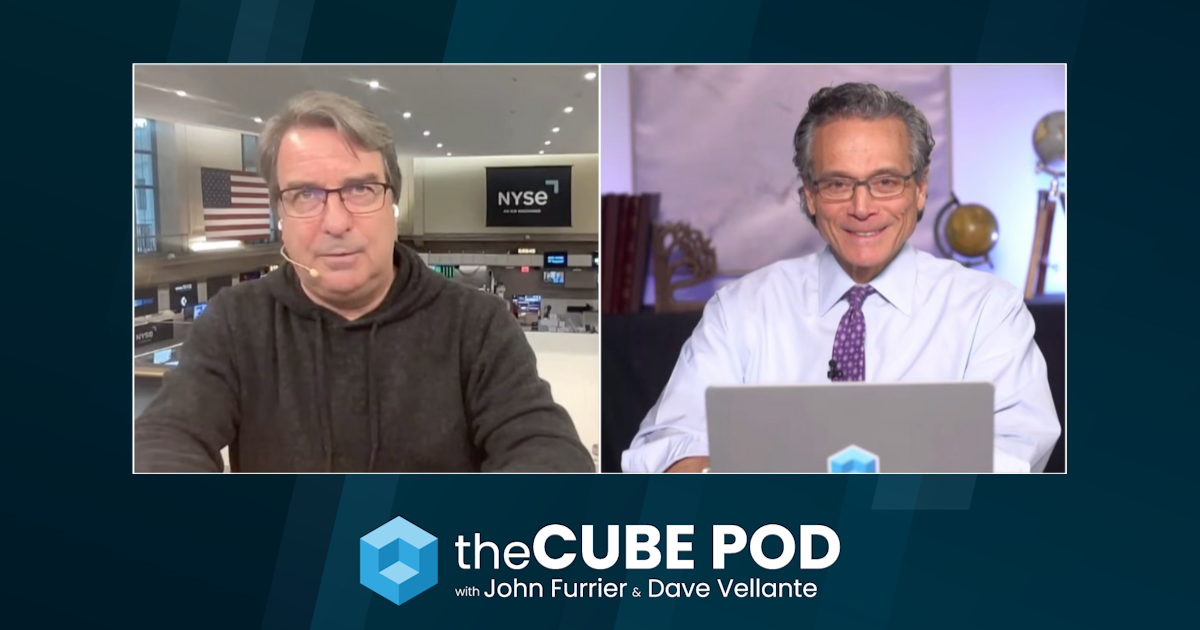
“Wall Street woke up and decided that AI is either going to kill software or bankrupt itself trying,” said John Furrier (left), executive analyst for theCUBE Research. “A trillion dollars in market cap evaporates, and suddenly everyone’s talking about the death of software. On the other hand, the same investors are panicking because the AI leaders are spending way too much on infrastructure.”
On the latest episode of theCUBE Pod, Furrier and Dave Vellante (right), chief analyst for theCUBE Research, discussed AI’s impact on software and why Wall Street’s panic is premature. They also talked about how agents are reshaping the job market and the future of advertising.
Although investors may be reacting prematurely, AI is certainly transforming what software looks like in modern enterprise. Anthropic released legal tools to its Cowork assistant, suggesting the potential for agents to automate a number of software tasks, and OpenAI just launched a new Codex app and Frontier agent management platform.
“It used to be software economics … were so good, 95% gross margin,” Vellante said. “Then cloud [Cost of Goods Sold] came into the equation. You had to pay the cloud suppliers, so you had to pay AWS. Now it’s token costs and you’ve got to pay the AI piper.”
OpenClaw, a proactive, open-source agent formerly known as Clawdbot and Moltbot, could be the “DeepSeek moment” for agents, according to Furrier. Although some SaaS companies will likely falter in the agentic era, Furrier and Vellante predict that agents will use software — primarily AI-infused software — in the same way that people do now.
“Agents eat tokens,” Furrier said. “The more they eat, the smarter they become. The game is about tokens. The game is about context windows. The game is about software. So, I just find it really odd, Dave, that people like saying the death of software when, in reality, like you were saying with tokens and productivity, that’s software.”
It’s not just SaaS companies feeling nervous — there continues to be worry about whether or not AI will replace jobs. Furrier highlights a recent study from The Wealth Group that shows S&P 500 employees are three times as productive as the average American worker, suggesting white collar jobs are already at risk.
“People who use AI are going to need less people,” Vellante said. “You’re going to start to see a hit on white-collar jobs. That said, I think you’re going to see a big boom in blue-collar jobs, people building out data centers. But I do think AI is going to replace jobs.”
The Big Four — Meta, Alphabet, Amazon and Microsoft — are going to spend $615 billion on capital expenditures, up 70% from last year. Investors are concerned, but these companies are thinking about long-term value, according to Furrier.
“There’s a huge disconnect between the capital markets and the technology reality,” he added. “We speak Silicon Valley and tech, which is roadmaps, architecture and velocity. In Wall Street, they talk risk, durability and returns. There is a huge disconnect between the two.”
Among the rise and fall of AI companies, Nvidia reigns as king. The AI giant is essentially the bank, investor and supplier for AI infrastructure. Vellante believes that companies are investing in Nvidia’s GPUs because if they get on the company’s bad side, there’s no realistic chip alternative.
“They’re spending so much on CapEx because they need Nvidia,” Vellante said. “If you don’t have Vera Rubin, you are screwed. So, they’re lining up, they’re writing checks, because they know that that is going to be the low-cost path. Without Nvidia, you lose. That’s fact.”
As the Big Four pours billions more into Nvidia, OpenAI, Anthropic and various AI newcomers, one question remains: Who is bankrolling all of these AI investments? The answer, according to Vellante, is simple:
“AI pays the AI bill,” he said. “It’s going to drive productivity. It’s going to become self-sustaining and self-funding. The number is going to go through the roof. We’re going to shift from traditional technology and IT spend to tapping tokens through APIs. All that function is going to be available through APIs, and it’s going to be generating tons of tokens that’s going to be generating tons of revenue and productivity that’s going to pay for itself.”
The other way to pay the bills? Advertising. Anthropic poked fun at OpenAI for letting ads into ChatGPT in its Superbowl ad, but Furrier sees ads as a potential gamechanger for OpenAI and a possible threat to Google’s dominance over search.
“At OpenAI, ads won’t look like links,” he said. “They’ll look like answers. Google won the ad game because of paid links, but it was the contextual relevance of typing in a search word and then seeing ads that were related to it. OpenAI is going to win there huge. I think OpenAI will be a threat to Google, even though Google’s got Gemini.”
Jack Hidary, CEO at SandboxAQ
Rob Hof, editor-in-chief at SiliconANGLE Media
Sam Altman, co-founder and CEO at OpenAI
Raphaelle d’Ornano, founder and CIO at Decoding Discontinuity
Jensen Huang, president, co-founder and CEO at Nvidia
Andy Grove, former COO and president at Intel
Aneel Bhusri, chairperson of Workday
Rick Sherlund, CEO at Sherlund Partners
Satya Nadella, chairman and CEO at Microsoft
Sundar Pichai, CEO at Alphabet
Andy Jassy, president and CEO at Amazon.com
Matt Garman, CEO at Amazon Web Services
Mark Zuckerberg, CEO at Meta Platforms
David Floyer, analyst emeritus at theCUBE Research
George Gilbert, principal analyst at theCUBE Research
Bill Gurley, general partner at Benchmark
Jeff Bezos, chairman of Amazon
Paul Martino, founder of Bullpen Capital
Ben Parr, COO at Moltbook
David Hitz, founder emeritus at NetApp
Rob McClanahan, American former ice hockey player
Brian Bellows, Canadian former ice hockey player
Drake Maye, American football quarterback
Christian McCaffrey, American football running back
Sam Darnold, American football quarterback
Tiger Woods, American professional golfer
Here’s the full episode of this week’s theCUBE Pod:
Don’t miss out on the latest episodes of “theCUBE Pod.” Join us by subscribing to our RSS feed. You can also listen to us on Apple Podcasts or on Spotify. And for those who prefer to watch, check out our YouTube playlist. Tune in now, and be part of the ongoing conversation.
Support our mission to keep content open and free by engaging with theCUBE community. Join theCUBE’s Alumni Trust Network, where technology leaders connect, share intelligence and create opportunities.
Founded by tech visionaries John Furrier and Dave Vellante, SiliconANGLE Media has built a dynamic ecosystem of industry-leading digital media brands that reach 15+ million elite tech professionals. Our new proprietary theCUBE AI Video Cloud is breaking ground in audience interaction, leveraging theCUBEai.com neural network to help technology companies make data-driven decisions and stay at the forefront of industry conversations.