

 BIG DATA
BIG DATA
BIG DATA
BIG DATA

Solid Data Inc. is trying to help enterprises get around the problem of error-prone artificial intelligence agents after raising $20 million in seed funding today.
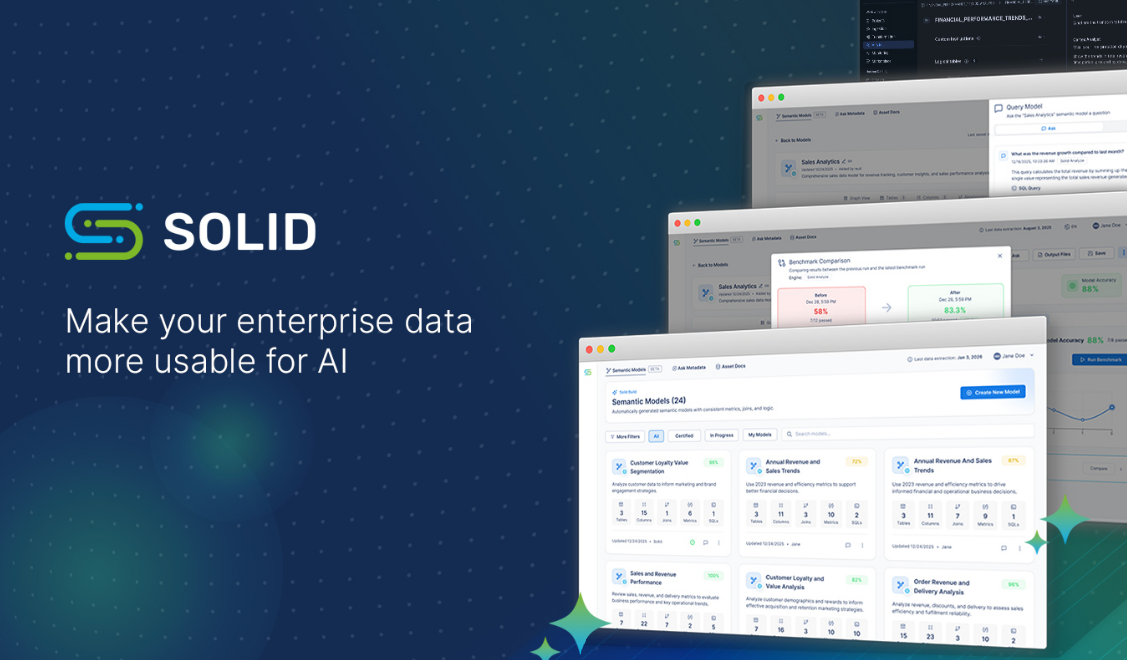
The round, led by Team8 and SignalFire, will help Solid to accelerate the deployment of its AI-ready semantic models, which are designed to help AI systems verify, prepare and understand business data.
The startup says it’s tackling the problem of untrustworthy AI. Though AI agents offer the enticing prospect of automating business workflows and decision-making, they simply cannot be relied upon to do this with enough accuracy to take over from experienced humans.
The problem is that AI agents don’t properly understand the business context behind the data they’re supposed to work with. That’s because every organization does things differently, with key metrics for revenue, performance and customer activity being defined differently across teams and tools. There’s a huge amount of inconsistency, and it means business leaders cannot trust the answers and insights generated by AI.
“AI isn’t failing because it lacks intelligence,” Solid co-founder and Chief Executive Yoni Leitersdorf said in a blog post. “It’s failing because it doesn’t understand how businesses actually work.”
According to Leitersdorf, existing data infrastructure architectures aren’t suitable for agentic AI systems. They’re designed to store, process and query data, but they don’t provide any clues into the meaning – or semantics – of that data, which evolves over time as organizations grow.
“No matter how powerful the models are, AI can’t deliver reliable results unless it understands the data it’s using — what the numbers mean, which rules apply, and which definitions the business actually trusts,” the CEO said. “That understanding is missing in most enterprises today, and it’s quietly becoming the biggest blocker to real AI impact.”
AI has trouble understanding semantics because enterprise data is notoriously fragmented and complex, and it’s constantly changing over time as metrics evolve, definitions shift and rules vary by context. The business logic lives in things like dashboards, documentation and in people’s heads, where it can’t easily be accessed by AI models, Leitersdorf said. Though humans can get around this using their experience and judgment, AI agents don’t possess this expertise, which means they can often generate conflicting answers, hesitate and fail to act when they should.
Leitersdorf predicts that as AI becomes more capable at retrieving and analyzing business information, organizations are going to need to spend much more time on defining and validating business meaning in a systematic way. He refers to this nascent discipline as “semantic engineering”: essentially, teaching AI how to interpret business data correctly over time, as organizations evolve. It’s likely this role will be performed by today’s data analysts, because they will have more time on their hands as AI takes over the manual aspects of data analytics work, he said.
Solid will become an essential tool for these “semantic engineers” in future, Leitersdorf believes. Its semantic models are designed to create a single source of truth for business meaning and automate how it’s maintained and tested over time. It applies an engineering-focused approach to semantics that ensures definitions are kept accurate and continually validated over time as business data and operations evolve.
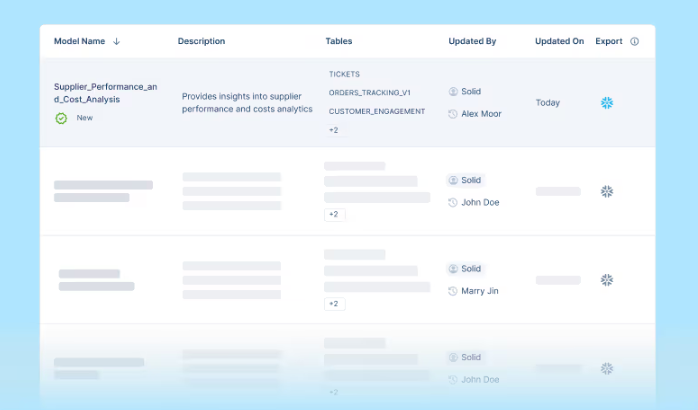
What Solid’s semantic agents do is integrate with existing data platforms so they can learn the structure and meaning of enterprise data based on the nuances of each organization’s business processes. Once they’ve got this logic nailed down, they’ll keep it up to date whenever definitions change, ensuring it’s always accurate. In this way, Solid provides a consistent foundation for AI systems and agents, making the answers and insights they generate much more reliable and ensuring that automated workflows don’t break down.
The startup said the impact of its semantic models is immediate, as the accuracy of AI responses rises from around 20% to 30% on average to more than 85%. In addition, it reduces the manual work associated with maintaining and testing business semantics by between 50% and 70%, freeing up data engineers to focus on other work.
Solid also changes the timeline for AI deployments. New AI systems that used to take one to two years to deploy and stabilize can be gotten up and running within six months or less, allowing companies to move experiments into real, operational much more quickly, Leitersdorf said.
To coincide with the general availability of its platform, Solid is offering all new customers a free, 30-day trial to see for themselves how much the reliability of their AI systems and agents will improve. Meanwhile, Solid will use the capital from today’s round to accelerate its product development roadmap, expand its team and better support its growing customer base.
SignalFire Principal Ryan Wexler said AI adoption is happening so fast that most organizations cannot keep their data aligned. “AI needs consistent business definitions to work, but historically those definitions have been manual, brittle and impossible to maintain at scale,” he said. “What makes Solid different is that it automates the creation and ongoing maintenance of business meaning and treats it like a real engineering system.
Support our mission to keep content open and free by engaging with theCUBE community. Join theCUBE’s Alumni Trust Network, where technology leaders connect, share intelligence and create opportunities.
Founded by tech visionaries John Furrier and Dave Vellante, SiliconANGLE Media has built a dynamic ecosystem of industry-leading digital media brands that reach 15+ million elite tech professionals. Our new proprietary theCUBE AI Video Cloud is breaking ground in audience interaction, leveraging theCUBEai.com neural network to help technology companies make data-driven decisions and stay at the forefront of industry conversations.