
 AI
AI
AI
AI

AI

The artificial intelligence spending frenzy has reached such a point that a company without an actual product can raise a billion dollars — but investors are seeking a return on their investment this year.
TheCUBE’s experts believe that 2026 is the year of enterprise ROI. OpenAI Group PBC just reached a $850 billion dollar valuation, and World Labs Inc. raised a billion dollars for its physical AI models. Funding rounds this large put pressure on the investors and AI companies to return value.
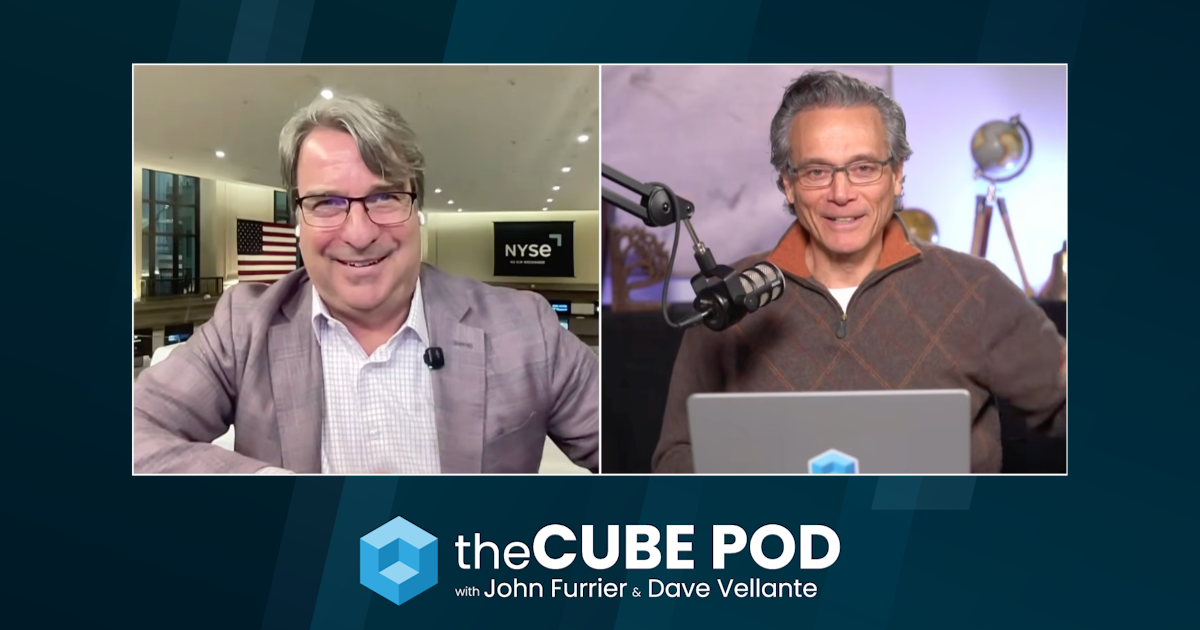
“You now have partnership money,” explained John Furrier (left), executive analyst for theCUBE Research. “That’s tier one capital market action. This is stuff that we’re seeing real time. This is a capital markets dynamic affecting the asset class of venture capital because the rounds are so big they can’t actually deploy venture capital at all because they know they can’t make the pro rata. That’s why these SPVs are popping up everywhere.”
On the latest episode of theCUBE Pod, Furrier and Dave Vellante (right), chief analyst at theCUBE Research, discussed why memory is the constraint on AI. They also delved into their predictions for 2026, including how AI will impact software-as-a-service and the future of telcos.
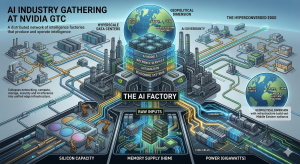
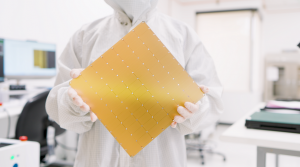
Memory chips are the new bottleneck for AI systems, and according to Furrier, it is creating a memory supercycle. A typical AI server uses roughly eight times more memory than a traditional server and that means memory spending is going to increase, by as much as five times in two years.
“All I know is that the froth on AI is so high,” Furrier said. “You have a memory shortage. This is where the AI flood is happening. And the question is: Is it a crack in the foundation or just reality? Are memory chips the new oil? AI bottlenecks [are tied] to memory bandwidth. We see that with Nvidia. We’re going to hear more about that at [Nvidia] GTC.”
As much as investors are concerned about the viability of the AI spending craze, they are even more worried that AI will kill SaaS companies. However, the situation is not as dire as Wall Street thinks, according to industry experts.
Furrier compares the future of SaaS to the iPod and the iPhone: Steve Jobs developed the iPhone, knowing it would make the iPod obsolete, before the competition could. The same strategy could play out as top SaaS companies infuse AI into their products.
“The enterprise SaaS companies, the business software companies are much, much different than security companies with the SaaS model,” Vellante said. “If you can infuse AI into your products and two, show that it’s incremental to your business and can replace the seat-based licensing and then three, if you can do more volume because you’re expanding … then these software companies at these levels are going to be undervalued.”
AI is entering the enterprise productivity phase this year, according to theCUBE Research. OpenAI, which has bet on owning a horizontal control plane for AI, will continue to battle it out with Anthropic, which has taken the vertical integration approach. And the clear winner continues to be Nvidia, which is gobbling up all that enterprise AI spending.
“No matter what, it’s Nvidia,” Vellante said. “I guess Nvidia doesn’t win if the whole thing blows up and then you don’t need GPUs anymore, but I just don’t see that happening, especially because they’re going to keep lowering the cost per token. So Jensen’s Law — buy more, make more or save more — is still in play unless this whole thing is BS, which I don’t think it is.”
Another question for 2026 is whether or not telcos will take advantage of AI. Telcos have the potential to take over the connectivity piece of the AI system, Furrier believes, but if they don’t move fast enough, Starlink Services LLC or another contender could move in.
“This is about culture and execution,” Furrier said. “Everything is in place. Massive power is there, the energy is there, they got the connectivity, every single tower, network switches. And the question is, ‘Will they leverage it?’ That’s going to be cultural. And if they don’t, someone like an Elon Musk or an AWS with their space strategy will come in with a connectivity layer that just makes it better.”
MWC 2026, starting on Mar. 2, will give insight into what next-generation connectivity looks like. Also, this week is the start of calculating AI’s impact in 2026, as Nvidia, Salesforce, Dell, Workday, HP and Coreweave report earnings.
“By June, you’re going to start to see some real enterprise ROI show up in the income statements of guys like Walmart and JPMorgan and some of these big conglomerates,” Vellante said. “We’re going to start to see productivity out of these firms, and I think that’s what’s going to bring this AI trade back but right now. We’re in a little bit of a rotation. It’s a good thing.”
Tom Brady, American football quarterback
Andy Jassy, president and CEO at Amazon.com
Jensen Huang, president, co-founder and CEO of Nvidia
Sanjay Mehrotra, CEO of Micron Technology
Ben Bajarin, CEO and principal analyst at Creative Strategies
Donald Trump, 47th president of the United States of America
Lip-Bu Tan, chief executive officer of Intel
Steve Jobs, co-founder and former CEO and chairman of Apple
Larry Ellison, chairman of the board and chief technology officer of Oracle
Sam Altman, co-founder and CEO of OpenAI
Vera Rubin, American astronomer
Elon Musk, chief executive officer of Tesla
Palmer Freeman Luckey, entrepreneur best known as the founder of Oculus VR and designer of the Oculus Rift
Robert Metcalfe, American engineer and entrepreneur
Zeus Kerravala, founder and principal analyst at ZK Research
Chris Lewis, founding director of Lewis Insight
Chuck Robbins, chair and CEO of Cisco Systems
Jeetu Patel, EVP and chief product officer of Cisco Systems
Brian J. Baumann, founder of NYSE Wired and director of capital markets, technology at NYSE
Here’s the full episode of this week’s theCUBE Pod:
Don’t miss out on the latest episodes of “theCUBE Pod.” Join us by subscribing to our RSS feed. You can also listen to us on Apple Podcasts or on Spotify. And for those who prefer to watch, check out our YouTube playlist. Tune in now, and be part of the ongoing conversation.
Support our mission to keep content open and free by engaging with theCUBE community. Join theCUBE’s Alumni Trust Network, where technology leaders connect, share intelligence and create opportunities.
Founded by tech visionaries John Furrier and Dave Vellante, SiliconANGLE Media has built a dynamic ecosystem of industry-leading digital media brands that reach 15+ million elite tech professionals. Our new proprietary theCUBE AI Video Cloud is breaking ground in audience interaction, leveraging theCUBEai.com neural network to help technology companies make data-driven decisions and stay at the forefront of industry conversations.