
 AI
AI
AI
AI

AI

The evolution of enterprise AI has moved beyond simple classification tasks and into a new era of generative capability. To keep pace, companies must move from rigid, rule-based systems to more flexible, data-driven models.
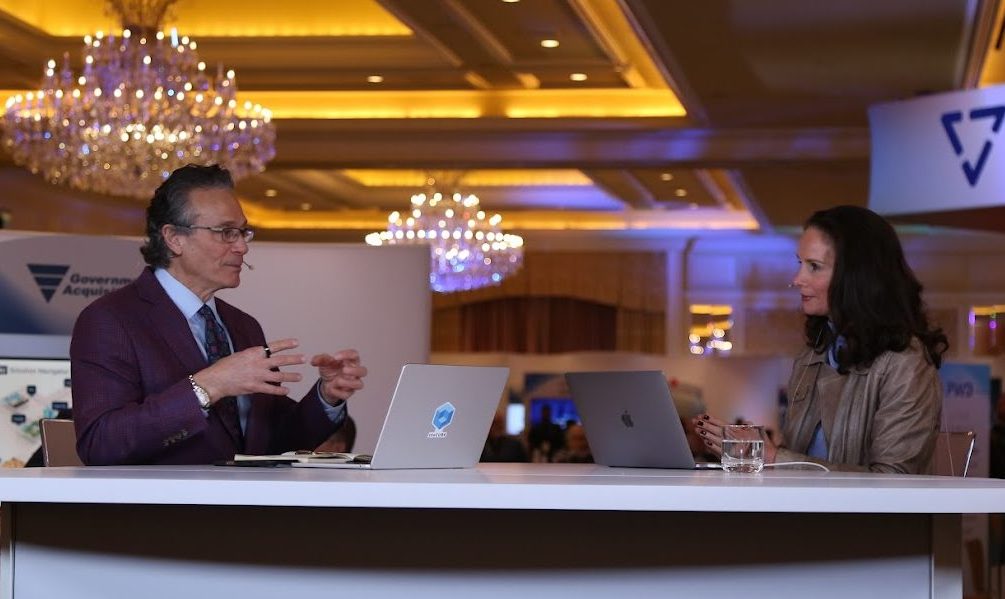
But as enterprise AI workloads become more complex, the separation between data storage and data processing remains a clear bottleneck that legacy infrastructure cannot solve, according to Dave Vellante (pictured, left), chief analyst for theCUBE Research. That architectural tension was a central theme during the opening address of Vast Data Inc.’s first dedicated customer conference — Vast Forward.
“[Vast’s] point is we need a new operating system. The old world isn’t going to get us through the next 20 years,” Vellante noted, discussing the sentiment during the opening keynote. “I feel like Vast is the sort of [input/output] operating system; taking data and making sure that data is accurate, secure, fast and fed to the AI.”
Vellante spoke with host Rebecca Knight (right) at Vast Forward 2026, during an exclusive broadcast on theCUBE, SiliconANGLE Media’s livestreaming studio. They discussed Vast’s strategy to unify storage, compute and database functions, as well as the requirements for the modern data stack. (* Disclosure below.)
To accommodate a broader shift to enterprise-ready AI, information technology leaders must rethink the rigid hierarchies that have defined data centers for decades. The traditional rules of storage tiering and siloed archives are incompatible with the needs of modern deep-learning models, which require instant access to massive datasets. Instead of adhering to legacy constraints, comments by CEO and co-founder Renen Hallak during the keynote make it apparent that Vast believes the path forward is in eliminating latency and fragmentation, according to Vellante.
“Renen said something to the effect that ‘we don’t live by rules, we live by principles,'” Vellante said. “And one of their first principles was: In order to serve AI, you have to have the data … in one logical place.”
By collapsing the stack, companies are moving beyond the definition of storage providers to become central nervous systems for enterprise computing. Vast’s approach is reinforced through key collaborations with strategic partners, which highlights how modern flash architectures are enabling AI environments to move beyond legacy hard-drive–based storage models. This evolution aims to provide a layer that sits above the infrastructure, orchestrating the flow of information directly to the models that need it, according to Vellante.
“[Vast] have the really audacious goal of being the operating system for AI — managing and allocating resources for intelligence itself,” Vellante noted. “Well, what does that mean? What does an operating system do? It manages and allocates resources … It’s basically the orchestrator of all that stuff. Their point is we need a new operating system.”
However, for this “operating system” to be viable for global enterprise AI, it must bridge the gap between on-premises data centers and the public cloud. And as data gravity increases, the ability to maintain a consistent operational model across diverse environments becomes the defining factor for success.
“’The market is clearly demanding platforms that can make machine intelligence trustworthy and operable anywhere across footprints and workflows,’” Knight said, quoting Vellante’s pre-conference analysis. “That’s exactly what we’re talking about here, and that is what [Vast co-founder] Jeff Denworth was starting to talk about today, too, in terms of what’s going to win business is the trust issue.”
Beyond the infrastructure, the keynote highlighted the profound impact enterprise AI will have on workforce structure. Companies are approaching a tipping point where autonomous AI agents will drastically outnumber human employees, changing the role of every worker into that of a supervisor, according to Vellante.
“We have some customers that are talking about having 2000 agents per employee. What does that mean?” he asked. “Can you imagine 2000 agents at your disposal? It sounds powerful, but it’s also, of course, scary.”
That explosion of non-human labor reframes the AI conversation from infrastructure to accountability, Knight noted. As execution shifts to autonomous systems, the defining enterprise challenge becomes oversight — who directs the agents, who sets the boundaries and who ultimately remains responsible for outcomes.
“If the AI is learning and training, what about the humans that also need to be learning and innovating, and having the judgment to direct the AI?” Knight asked. “How are they thinking about the humans in terms of how our jobs will change and evolve with this new AI operating system [that] they’re presenting?”
Here’s the complete keynote analysis, part of SiliconANGLE’s and theCUBE’s coverage of Vast Forward 2026:
(* Disclosure: TheCUBE is a media partner for Vast Forward. Sponsors of theCUBE’s coverage, including presenting sponsor Solidigm, do not have editorial control over content on theCUBE or SiliconANGLE.)
Support our mission to keep content open and free by engaging with theCUBE community. Join theCUBE’s Alumni Trust Network, where technology leaders connect, share intelligence and create opportunities.
Founded by tech visionaries John Furrier and Dave Vellante, SiliconANGLE Media has built a dynamic ecosystem of industry-leading digital media brands that reach 15+ million elite tech professionals. Our new proprietary theCUBE AI Video Cloud is breaking ground in audience interaction, leveraging theCUBEai.com neural network to help technology companies make data-driven decisions and stay at the forefront of industry conversations.