

 EMERGING TECH
EMERGING TECH
EMERGING TECH
EMERGING TECH

Science Corp., a developer of brain-computer interfaces and other medical equipment, today announced that it has raised $230 million in funding.
The capital came from a consortium that included Lightspeed, Khosla Ventures, Y Combinator, IQT and Quiet Capital. Science’s total outside funding now stands at $490 million.
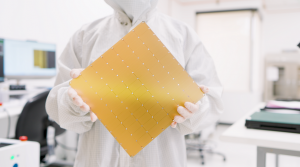
The company’s flagship product is a brain-computer interface called PRIMA. It’s designed to restore vision to patients affected by an eye condition called late-stage macular degeneration. PRIMA has two main components: a 2-millimeter retinal implant and a pair of specialized glasses.
The implant comprises 378 pixels that are each equipped with a tiny electrode. When infrared light hits a pixel, it activates the attached electrode, which in turn simulates cells in the patient’s retina. The electrodes thereby substitute retinal tissue lost to disease.
The infrared light that activates the implant’s pixels comes from a pair of glasses worn by the patient. According to Science, the glasses generate infrared signals based on footage from a forward-facing camera. The camera, which records the user’s surroundings, includes a lens that filters interference such as strong sunlight.
Science plans to launch PRIMA in the European Union later this year. It also has several other devices in the works.
The company is developing a second brain-computer interface, Biohybrid, that it says can provide significantly more bandwidth than existing implants. More bandwidth translates into a broader feature set. Biohybrid transmits data using electrodes and hundreds and thousands of microscopic light emitters called microLEDs.
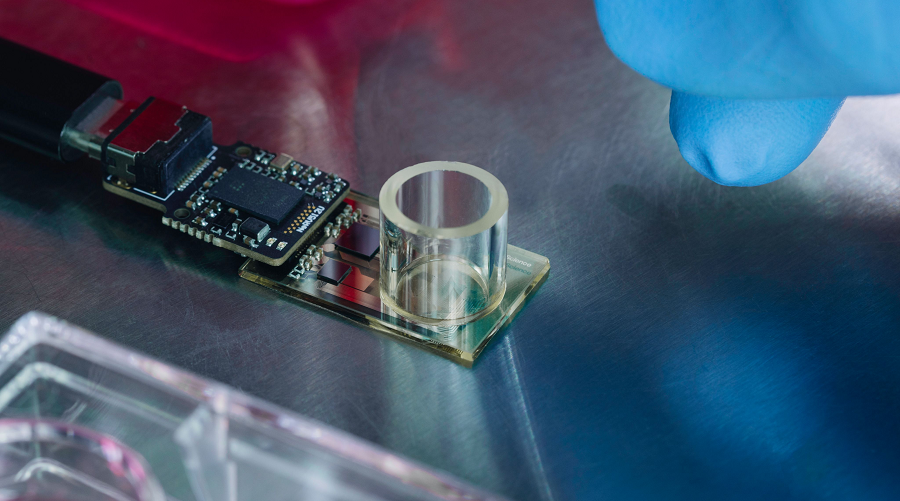
Science also sells sensors called Axon Probes that neuroscientists can use for tasks such as collecting data from lab experiments. The sensors are designed to work with a miniature computer called SciFi. It includes a battery, 128 gigabytes of internal storage and Wi-Fi 6 modem for transmitting scientific measurements.
Scientists can program SciFi via an application programming interface called Synapse. It provides the ability to deploy custom data analytics programs on Science’s devices. Those programs, which are written in C++ and packaged into Docker containers, automate some of the manual work involved in analyzing scientific data.
Science’s focus also extends beyond neuroscience. The company is developing a life-support system called Vessel that it says requires less manual work to operate than existing equipment. Additionally, the system includes swappable components that enable healthcare professionals to customize it for each patient.
Several of Science’s devices are powered by custom chips that it manufactures at a fab in North Carolina. The company obtained the facility through an acquisition that closed in 2022, the year after it launched. Science will use the proceeds from its new funding round to expand its manufacturing capacity and finance research initiatives.
Support our mission to keep content open and free by engaging with theCUBE community. Join theCUBE’s Alumni Trust Network, where technology leaders connect, share intelligence and create opportunities.
Founded by tech visionaries John Furrier and Dave Vellante, SiliconANGLE Media has built a dynamic ecosystem of industry-leading digital media brands that reach 15+ million elite tech professionals. Our new proprietary theCUBE AI Video Cloud is breaking ground in audience interaction, leveraging theCUBEai.com neural network to help technology companies make data-driven decisions and stay at the forefront of industry conversations.