
 AI
AI
AI
AI
AI

Over the past 18 months, the enterprise technology narrative has been dominated by a singular, persistent theme: artificial intelligence, more specifically agentic AI. From CES to NRF to the World Economic Forum, every vendor, service provider and analyst firm has been preaching the gospel of AI.
Yet if we pull back the curtain on the actual state of AI agent deployments, a different story emerges. Though the vision and ambition are there, the execution is lagging.
The data supports this observation. Despite nearly 80% of organizations experimenting with agentic AI in the last year, a significant portion of these projects remains indefinitely stalled in the pilot stage. Companies are pouring capital into AI, but they are struggling to bridge the “AI execution gap” — that is, moving from a successful proof-of-concept to a production environment that results in a positive return on investment.
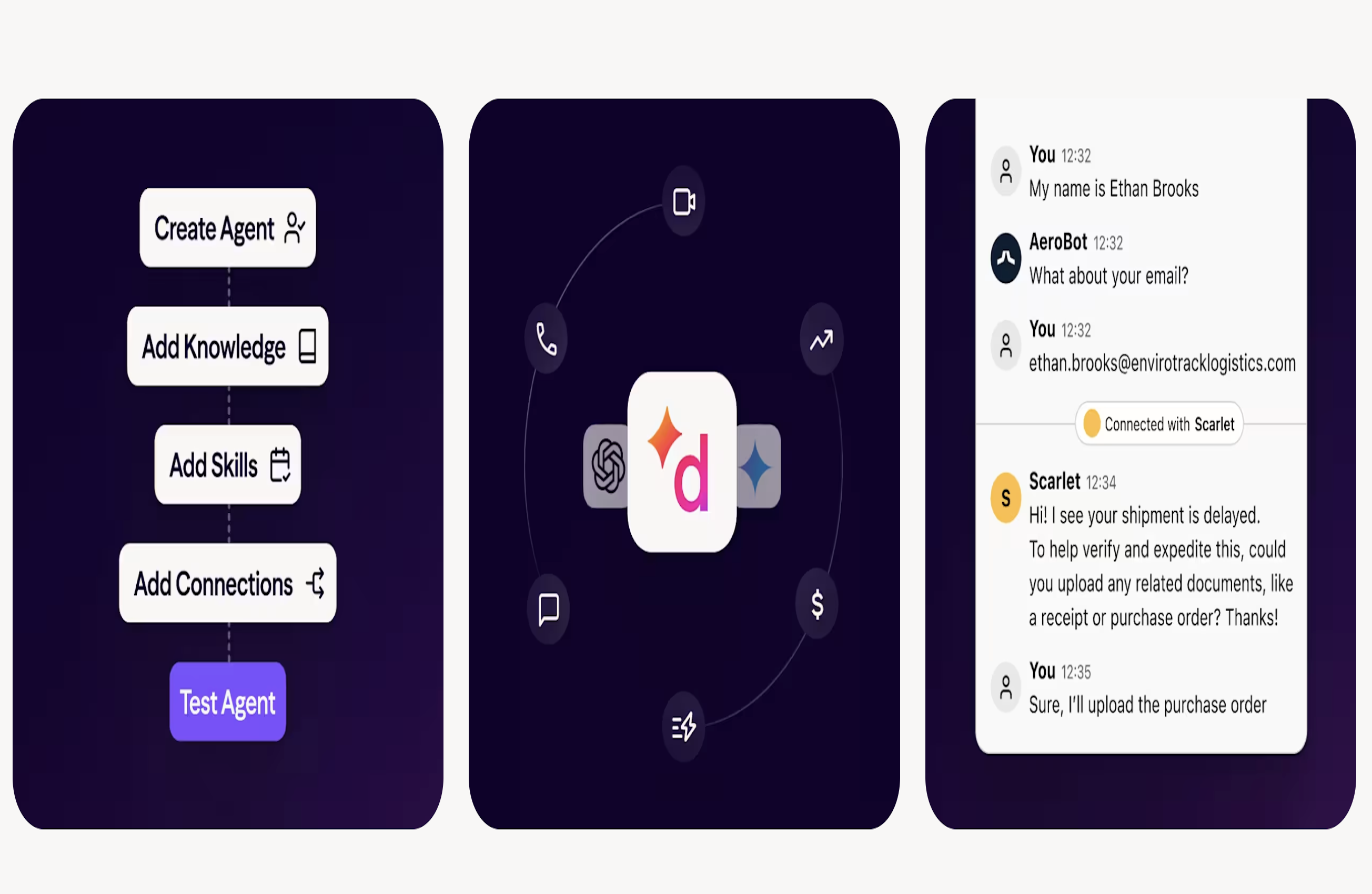
This is the goal of Dialpad Inc. On Tuesday, ahead of next week’s Enterprise Connect event, it announced the next iteration of its Agentic AI Platform. What’s notable about the announcement is that, rather than just adding “more AI” to its stack, Dialpad’s is focusing on outcomes by identifying the right use cases for AI agents, validating ROI and enforcing the kind of governance that makes enterprise-wide adoption possible.
To understand why this announcement is meaningful, we must first recognize the shift in the market. The industry has moved beyond the “wow factor” of generative AI — the chatbots that take notes and summarize meeting transcripts. Enterprises today are looking for agentic AI, that is systems that don’t just talk, but act. They want machines that can resolve customer issues, update CRM records, and navigate complex workflows without human intervention.
Doing this can remove many of the mundane and tedious tasks that prevent human workers from being more productive. One of the interesting data points from my research is that currently workers spend over 40% of their time managing work rather than doing the job. AI agents can remove most or all the time spent toggling among apps, taking notes and sending reminder emails.
However, moving from a passive AI assistant to an autonomous AI agent is a massive leap in complexity. If a chatbot makes a mistake, a customer gets incorrect information, but if an agent makes a mistake, an entire process could be done incorrectly, resulting in something that could harm the customer and the business.
This is where many of the current “pilot-stuck” projects fall apart. They lack the guardrails, and the clear business logic required for a mission-critical environment like a contact center or a customer-facing workflow.
Dialpad’s new AI Agent platform, by focusing on “from insight to production,” tackles these friction points.
The business value of this update lies in four distinct functional areas that address the specific roadblocks enterprises face when trying to adopt agentic AI:
For Dialpad, this move is a logical extension of its history as an AI-first company. Last week I spoke to Chief Executive Craig Walker about this, and he said the company is not trying to bolt AI onto a legacy system, but rather build a solution with AI as the foundation. The goal is to build on its strengths in unified communications as a service and contact center as a service and become a core layer of the modern enterprise AI stack for customer interaction.
The company is a smaller player in the world of customer experience, but these market transitions always create opportunities to disrupt the incumbents. The agentic AI pivot should open the door to new buyers that don’t have a historical allegiance to some of the bigger vendors.
For Dialpad customers, the benefits are more tangible. First, it shortens the time-to-value. By providing the tools to identify the right use cases for AI agents and prove ROI upfront, Dialpad helps companies avoid the “pilot purgatory” that kills so many digital transformation efforts.
Second, it solves the trust gap. Many enterprises are terrified of AI hallucinations or unpredictable AI agent behavior. By embedding governance into the lifecycle via Guardian, Dialpad is providing a framework where speed and confidence can coexist. You don’t have to sacrifice safety to innovate quickly.
Post announcement, I asked Joe Rittenhouse, co-CEO of Converged Technology Professionals, one of the communications industry’s premier services companies and one of four partners which looked at the beta, for his thoughts. “There are a lot of agentic solutions available today, but this was one of the more complete ones and addresses end to end CX workflows,” he said. “It has an intuitive interface that addresses everything from scheduling to analytics as well as a broad selection of marketplace apps to connect to.”
The AI agent race is no longer about who can generate the most text or who has the flashiest demo. It is about who can deliver actual business impact. The era of agentic AI experimentation is drawing to a close, and the era of agentic AI operationalization is beginning.
With these new capabilities, Dialpad is effectively telling its customers: “Stop experimenting and start executing.” By providing the tools for planning, testing, building and governing AI agents, they are providing a roadmap to move from vision to production.
Zeus Kerravala is a principal analyst at ZK Research, a division of Kerravala Consulting. He wrote this article for SiliconANGLE.
Support our mission to keep content open and free by engaging with theCUBE community. Join theCUBE’s Alumni Trust Network, where technology leaders connect, share intelligence and create opportunities.
Founded by tech visionaries John Furrier and Dave Vellante, SiliconANGLE Media has built a dynamic ecosystem of industry-leading digital media brands that reach 15+ million elite tech professionals. Our new proprietary theCUBE AI Video Cloud is breaking ground in audience interaction, leveraging theCUBEai.com neural network to help technology companies make data-driven decisions and stay at the forefront of industry conversations.