Telecommunications networks generate some of the most complicated, domain-specific data in the world. That complexity has exposed the limits of general-purpose artificial intelligence, pushing operators to develop specialized telecom AI models instead.
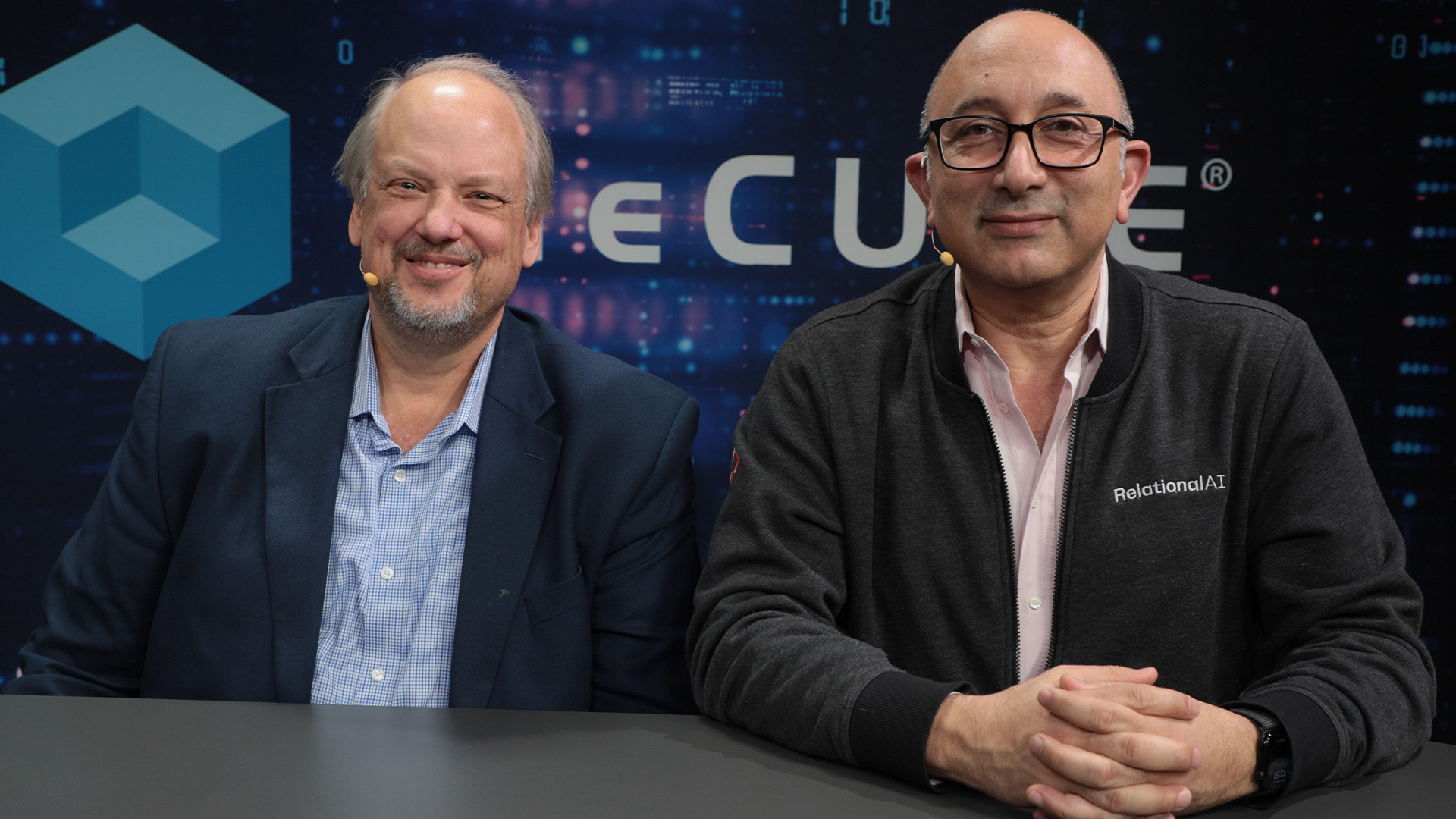
Until recently, the frontier models that power enterprise AI workflows couldn’t reliably answer a basic question about how a radio access network interacts with a core network, according to Mark Austin (pictured, left), vice president of data science and AI at AT&T. Fortunately, that’s beginning to change as AT&T Inc. and decision-intelligence startup RelationalAI Inc. discussed the release of 30 open-weight, telco-specialized AI models, trained on millions of pages of industry standards and publications.
“We released, two days ago, 30 open-source models that are better than the frontier [models]; sometimes a lot better,” Austin explained. “The cool thing is they’re all sizes. We even have some that will run on your phone. Let’s say that you have an outage or let’s say you have planned maintenance and you’re out there — a technician trying to figure something out. If you don’t have a connection, what are you going to do? Well, you can pull up your phone and you could run this small model.”
Austin and Molham Aref (right), chief executive officer of RelationalAI Inc. spoke with John Furrier and Dave Vellante during theCUBE’s coverage of MWC Barcelona, during an exclusive broadcast on theCUBE, SiliconANGLE Media’s livestreaming studio. They discussed how AT&T and RelationalAI are using specialized, open-weight models and relational knowledge graphs to bring genuine AI to telecom network operations. (* Disclosure below.)
Inside specialized telecom AI
For those 30 models, Advanced Micro Devices Inc. contributed hundreds of GPUs to support training, while RelationalAI’s ScalarLM software enables the models to run across different GPU hardware, including chips from Nvidia Corp. and AMD, according to Austin. The effort reflects a broader push by telecom operators to build AI systems that can run efficiently at massive scale. AT&T’s internal AI platform, Ask AT&T, processes roughly 27 billion tokens per day, covering human resources, finance and network operations, he added. At that scale, the company began exploring specialized telecom AI models that could better handle domain-specific questions.
“[Frontier models] don’t speak telco,” Austin said, noting they’re only able to provide accurate answers around 60-70% of the time. “Sure enough, this was an example of that. I said, ‘We’re going to fix this.’”
But building the specialized models required assembling a large corpus of telecom standards and industry documentation, a process RelationalAI helped organize. Frontier models are in the mix in terms of advanced reasoning tasks, but the specialized models deal with high-frequency, domain-specific queries. according to Aref. AI models should be given the same resources as a well-prepared human employee would need, such as structured data, semantic context and the right tools in general, he added. Many specialized models are also open-weight and relatively inexpensive to deploy, making them easier for enterprises to train and adapt.
“If you have a frontier model, you’re hiring a very, very smart person who’s never worked with you before,” Aref said. “[Instead], what if I could take maybe a less expert person, but I can train them? I send them to training for some time at AT&T, and they come back, and now they know AT&T.”
RelationalAI is also exploring how generative AI can help address one of the most persistent challenges in enterprise data environments: organizing complex, fragmented datasets so AI systems can reason over them effectively. By using agents that can automatically generate semantic models, ontologies and relational knowledge graphs from an organization’s data estate, the approach aims to make it easier for companies to train AI systems that understand how their operations actually work, Aref explained.
“Once you have a semantic model … you can now start generating queries and questions, and effectively making it so that we can create an infinity of question and answer pairs that generate reasoning traces that you can use to train a language model to be really good at that data estate,” Aref said. “We’re getting to the point now, we’re close to [pushing a] button — ‘point me at a data estate and I’ll build you a model that understands that deeply.’”
Here’s the complete video interview, part of SiliconANGLE’s and theCUBE’s coverage of MWC Barcelona:
(* Disclosure: TheCUBE is a paid media partner for MWC Barcelona. Sponsors of theCUBE’s event coverage do not have editorial control over content on theCUBE or SiliconANGLE.)
Photo: SiliconANGLE
A message from John Furrier, co-founder of SiliconANGLE:
Support our mission to keep content open and free by engaging with theCUBE community. Join theCUBE’s Alumni Trust Network, where technology leaders connect, share intelligence and create opportunities.
15M+ viewers of theCUBE videos, powering conversations across AI, cloud, cybersecurity and more
11.4k+ theCUBE alumni — Connect with more than 11,400 tech and business leaders shaping the future through a unique trusted-based network.
About SiliconANGLE Media
SiliconANGLE Media is a recognized leader in digital media innovation, uniting breakthrough technology, strategic insights and real-time audience engagement. As the parent company of SiliconANGLE, theCUBE Network, theCUBE Research, CUBE365, theCUBE AI and theCUBE SuperStudios — with flagship locations in Silicon Valley and the New York Stock Exchange — SiliconANGLE Media operates at the intersection of media, technology and AI.
Founded by tech visionaries John Furrier and Dave Vellante, SiliconANGLE Media has built a dynamic ecosystem of industry-leading digital media brands that reach 15+ million elite tech professionals. Our new proprietary theCUBE AI Video Cloud is breaking ground in audience interaction, leveraging theCUBEai.com neural network to help technology companies make data-driven decisions and stay at the forefront of industry conversations.







 AI
AI