

 INFRA
INFRA
INFRA
INFRA
INFRA

Nexthop AI Inc., a startup that develops network equipment for artificial intelligence data centers, has closed a $500 million Series B round.
The company said in its funding announcement today that Lightspeed Venture Partners was the lead investor. Andreessen Horowitz, Altimeter and Nexthop AI’s existing backers participated as well. The company is now valued at $4.2 billion.
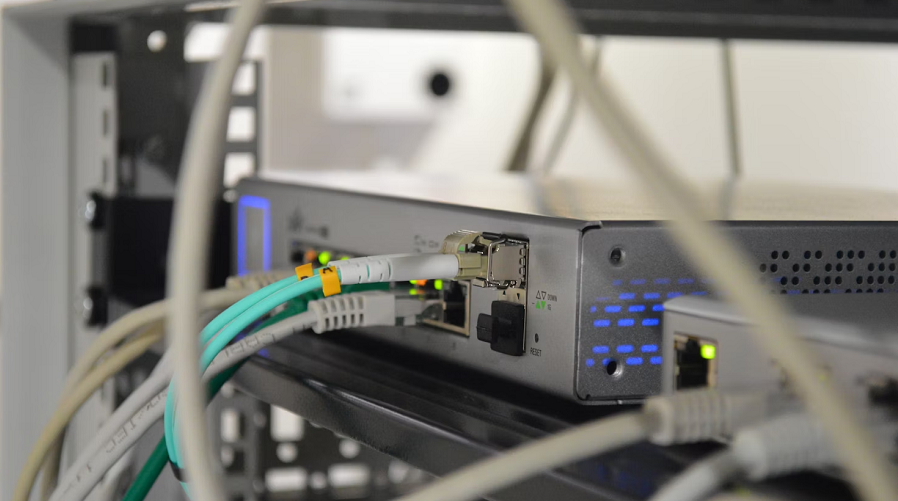
Nexthop AI announced the investment in conjunction with three new additions to its hardware portfolio. The NH-4010, NH-4220 and NH-5010 are switches optimized to process data traffic in AI clusters. All three devices are based on Broadcom Inc. networking chips.
The NH-4010 can process 51.2 terabits of traffic per second, while the NH-4220 has twice the capacity. Nexthop AI says that the former chip is up to 20% more power-efficient than comparable products from rivals. That translates into energy savings of up to several dozen megawatts per device.
The two switches support a networking technology called RoCEv2. When one graphics card sends data to another, the traffic usually has to pass through a central processing unit. RoCEv2 skips that step to speed up connections. Additionally, it powers a second technology called DCQCN that automatically detects and fixes congested network links.
The third switch that Nexthop AI debuted today, the NH-5010, is designed to power AI clusters with a so-called disaggregated spine architecture. That’s an alternative to the standard spine-and-leaf design on which many data center networks are based.
In a standard data center, servers are attached to switches referred to as leaves. The leaves, in turn, connect to a second set of switches collectively known as the spine. Nexthop AI’s disaggregated spine architecture splits this second collection of switches into two “functional tiers.” One tier is responsible for processing traffic inside the data center, while the other orchestrates packets flowing to and from other data centers.
Nexthop AI offers its switch lineup alongside other network devices. The company makes linear LPOs and LROs, modules that lower the cost of optical networks by reducing the need for digital signal processors. A digital signal processor is a chip that performs tasks such as removing noise from fiber-optic links.
Customers can manage Nexthop AI’s hardware using an operating system called Nexthop NOS. It’s based on SONiC, an open-source network orchestration platform originally developed by Microsoft Corp. Nexthop NOS adds cybersecurity optimizations and an update service that speeds up the process of installing patches.
“AI clusters are pushing data center networks to their limits, and networking is now central to overall system performance,” said Andreessen Horowitz General Partner Raghu Raghuram. “Nexthop is purpose-built for this shift.”
Nexthop AI will use the proceeds from its funding round to finance product development initiatives.
Support our mission to keep content open and free by engaging with theCUBE community. Join theCUBE’s Alumni Trust Network, where technology leaders connect, share intelligence and create opportunities.
Founded by tech visionaries John Furrier and Dave Vellante, SiliconANGLE Media has built a dynamic ecosystem of industry-leading digital media brands that reach 15+ million elite tech professionals. Our new proprietary theCUBE AI Video Cloud is breaking ground in audience interaction, leveraging theCUBEai.com neural network to help technology companies make data-driven decisions and stay at the forefront of industry conversations.