
 AI
AI
AI
AI
AI

Artificial intelligence inference, the processing of getting answers from AI models, has reached an inflection point and the AI factory is now poised to drive much of the global economy, Nvidia Corp. Chief Executive Jensen Huang declared today.
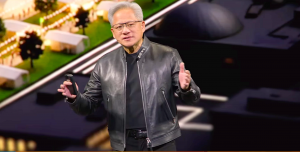
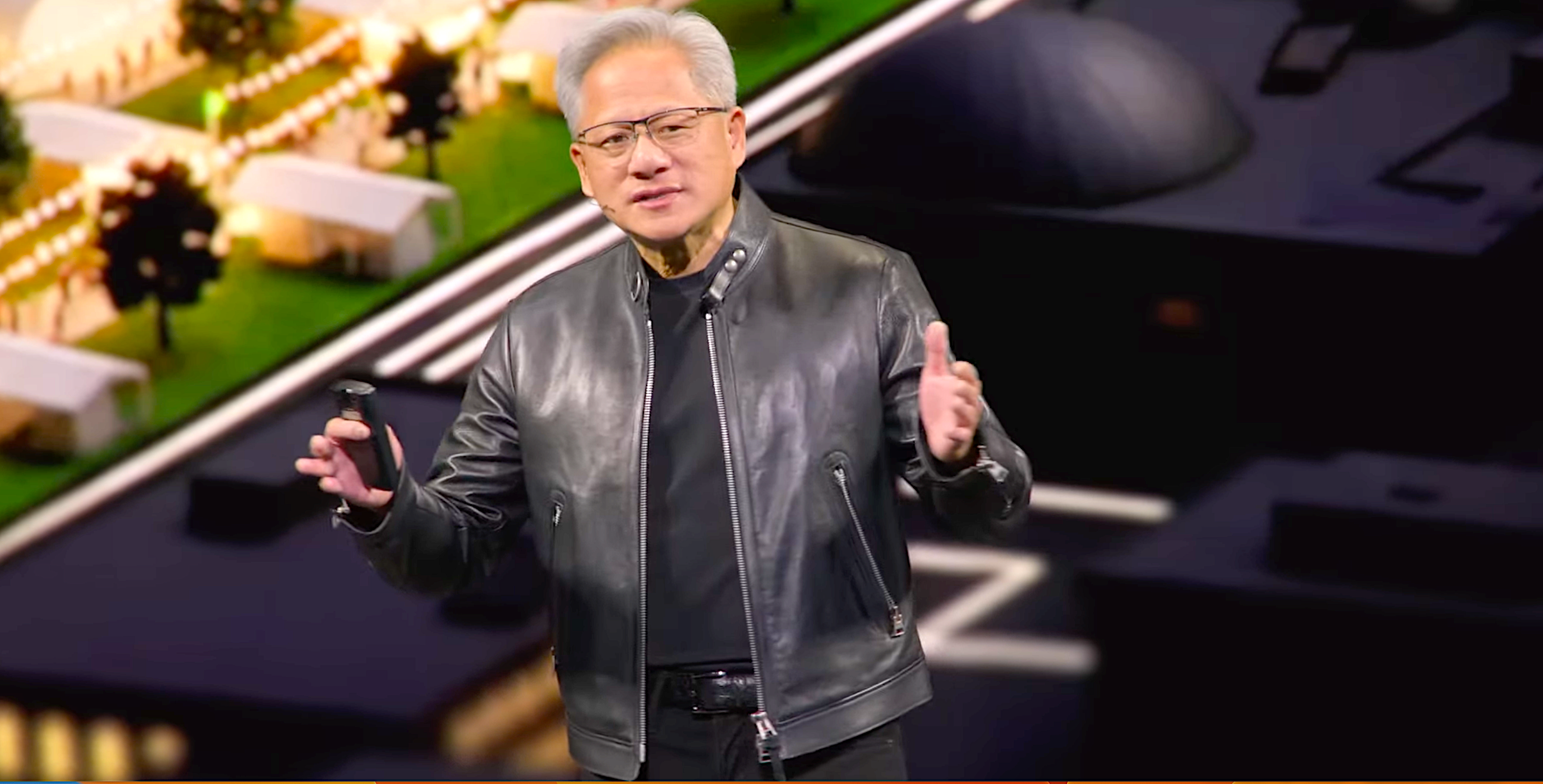
During the AI chipmaking giant’s GTC gathering in San Jose today, Huang (pictured) said he believes Nvidia will see $1 trillion in chip orders through 2027. The growth in revenue will stem from what he views as a key shift in AI’s main focus from training models to advanced inferencing, the ability to understand instructions and take action.
“An AI that could generate became an AI that could reason, an AI that could reason became an AI that could do work,” Huang said during his keynote remarks. “It’s way past training now. Inference is your workloads and tokens are your new commodity. We have reached that moment, inference inflection has arrived.”
Huang’s vision for the evolving AI economy was supported by a slew of announcements from Nvidia on Monday, ranging from new Vera Rubin GPUs and CPUs to an expansion of open model families. He noted that Nvidia’s process of “extreme co-design” has revolutionized the cost of tokens, the text, images or audio that AI models use to understand and generate outputs.
“This is your token factory, this is your AI factory, this is your revenue,” Huang said. “Our cost per token is the lowest in the world. You can’t beat it.”
Huang’s comments reflected the pressure key vendors in the AI world are feeling to make the case for a return on investment. As SiliconANGLE’s analysts have recently noted, enterprises have poured millions to tens of millions of dollars into building AI infrastructure, and many companies expect 2026 to be the year of ROI.
As Huang’s remarks about future revenue in the neighborhood of $1 trillion demonstrate — double his figure for 2024-2025 issued six months ago — Nvidia does not see a slowdown in spending for its advanced AI processors. This is being driven by its latest chip platform announcements, which the CEO noted will significantly increase the rates for token generation.
“We’re going to take our token generation rate from 2 million per second to 700 million,” Huang said. “This is the power of extreme codesign,” he added in a reference to Nvidia’s method of engineering hardware, software, networking, models and data pipelines simultaneously.
Nvidia also announced new open-source tools to enhance AI agentic capabilities. The most significant of these latest offerings for developers involved OpenClaw, a highly popular open-source personal AI assistant that has a reported 27 million monthly visitors.
“OpenClaw is the most popular open-source project in the history of humanity, and it did it in just a few weeks,” Huang told the GTC audience. “It has open-sourced essentially the operating system of agentic computers.”
Nvidia’s version, NemoClaw, is linked to another Nvidia project called Nemotron, allowing users to access other AI models optimized for tasks such as generating text and analyzing graphs. “The OpenClaw event cannot be understated,” Huang noted. “This is as big a deal as HTML. OpenClaw gave the industry exactly what it needed at exactly the right time. There’s just one catch.”
That catch involves security. Enterprises interested in adopting OpenClaw must deal with the tool’s lack of basic data protection. To address this issue, Nvidia has implemented a set of security protocols for NemoClaw that adds privacy and cybersecurity guardrails, along with limits to the agent’s network access.
Nvidia’s announcements spotlighted the growing influence of agents and the shifting economics surrounding AI. The rapid adoption of OpenClaw and the speed with which Nvidia has moved to embrace the open-source model show that agents are beginning to build their own ecosystems. Nvidia does not intend to let this trend develop without taking an active role.
It’s also becoming clear that the rise of the AI factory has placed a premium on token generation and the power to drive it. As AI factories become the next generation of global infrastructure, phrases like “token cost per watt” are going to become increasingly important.
Nvidia remains the central player in how AI will evolve. The company’s Vera Rubin platform highlights Nvidia’s vision for the shift taking place from computing as infrastructure to computing as production. Data centers have become factories, an essential part of the enterprise business model, and Nvidia’s moves this week were designed to cement its leadership role in AI going forward.
“Nvidia offers the only infrastructure in the world that you could go anywhere in the world and build with complete confidence,” Huang said. “We are now a computing platform that runs all of AI. This is not a one-app technology. It is fundamental.”
Support our mission to keep content open and free by engaging with theCUBE community. Join theCUBE’s Alumni Trust Network, where technology leaders connect, share intelligence and create opportunities.
Founded by tech visionaries John Furrier and Dave Vellante, SiliconANGLE Media has built a dynamic ecosystem of industry-leading digital media brands that reach 15+ million elite tech professionals. Our new proprietary theCUBE AI Video Cloud is breaking ground in audience interaction, leveraging theCUBEai.com neural network to help technology companies make data-driven decisions and stay at the forefront of industry conversations.