



 SECURITY
SECURITY
SECURITY
SECURITY

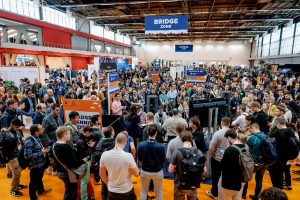
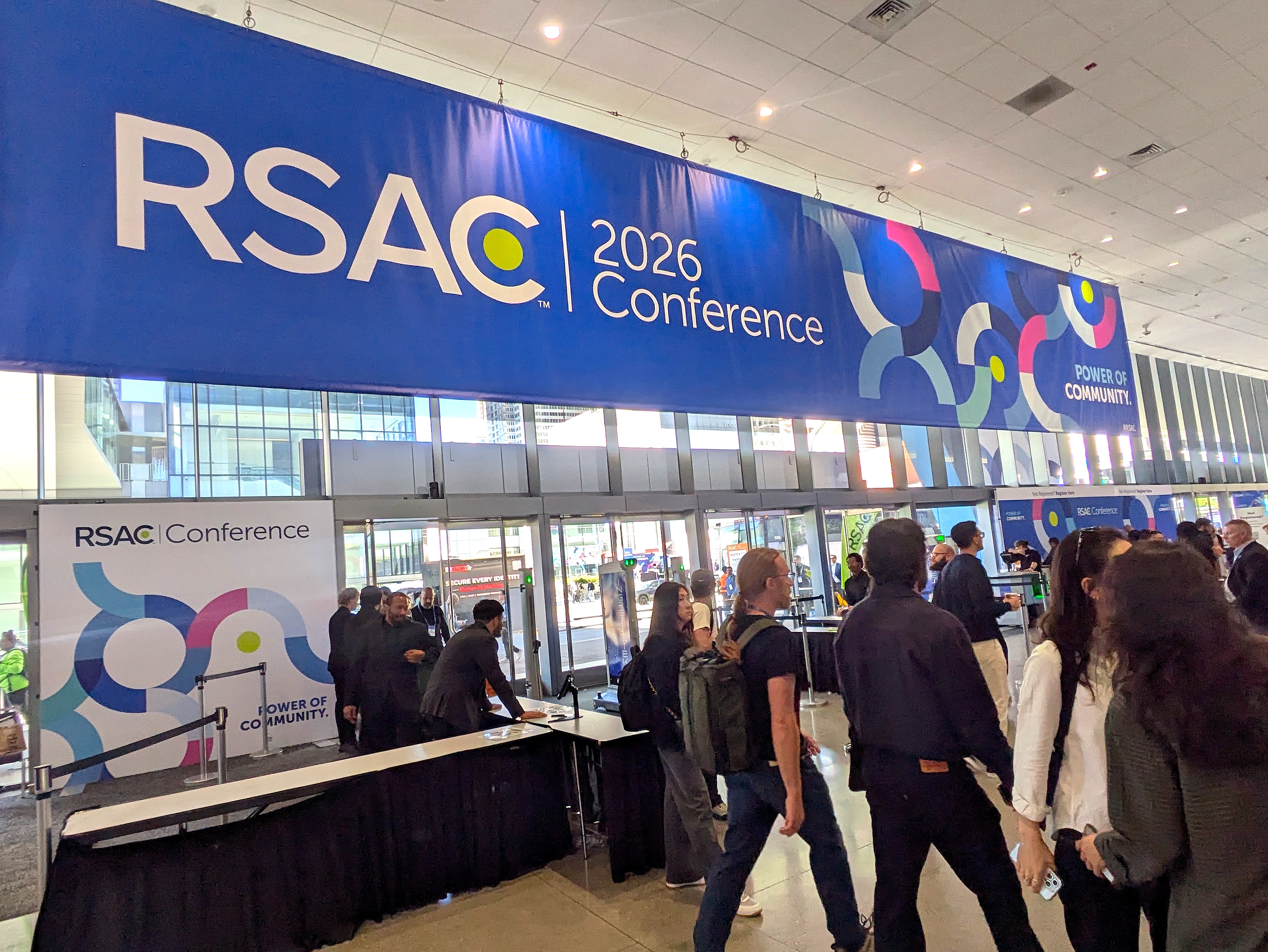
Artificial intelligence has been a prime concern for cybersecurity for years, but it took on a new urgency at this week’s RSAC conference in San Francisco.
AI agents in particular were the chief concern on everyone’s lips, and no wonder: You’ve got these things that you give access to your data and applications, let them connect to outside services, and they … do their thing. Hopefully the right thing, but this being generative AI, who knows? Lots more below on all the implications — if not the answers, yet.
Elsewhere on the event front, at KubeCon+CloudNativeCon in Amsterdam, AI also came up a lot, of course, but John Furrier thinks it has a long way to go to become established in enterprises, because of the “AI gap.” While 82% of enterprises use the de factor cloud operating layer Kubernetes, only 7% use AI daily. As John says, “That’s not a gap, that’s a chasm.”
OpenAI pulled the plug on Sora, its video generation model. The most likely explanation, besides the fact that not that many people actually ended up using it following the initial frenzy, is that it used gobs of AI chips, which it clearly would prefer to employ on more lucrative enterprise AI.
A U.S. judge temporarily blocked the Pentagon’s blacklisting of Anthropic after the Department of Defense last month designated the company a “supply chain risk” over disagreements over how it intends to use its chatbot Claude. Of course, this won’t be the end of this ridiculous catfight.
Elon Musk announced that his companies will collaborate on a new, $25 billion chip fabrication plant called “Terafab” that he says will be by far the largest semiconductor fab ever built. Not that doubting Musk is necessarily smart, but I’ll believe it when I see it.
Here’s all the enterprise and emerging tech news, views and analysis this week from SiliconANGLE, theCUBE Research, theCUBE and beyond:
Breaking Analysis: At RSAC 2026, AI hype meets operating model reality
The AI security crisis has arrived: theCUBE’s day one analysis from the RSAC 2026 Conference
Security buyers push back on tool sprawl: theCUBE’s RSAC day three analysis
AI mints a new era for cybersecurity: theCUBE’s RSAC day four analysis
AI vs. AI: Inside Google Cloud’s security strategy for machine-speed attacks
Cisco’s warning on agentic AI: One wrong action could cause irreversible damage to the enterprise
A brief list of what most struck me roaming the RSAC conference keynotes, sessions and expo hall:
* We all knew this year was going to be all about artificial intelligence, but RSAC 2026 was much more specifically about AI agents — and the existential threat they pose to keeping people and organizations safe from cyberattackers.
* The gist: Look out. Attackers by now have not only adopted AI, they’re successfully using agents for identity-based attacks, denials of service, and poisoning of the software supply chain. “I’m totally terrified,” said Adi Shamir, a professor of computer science at the Weitmann Institute in Israel and the “S” in RSA, since agents require access to all his files, appointments and the like to be useful. “I don’t even let my wife get access to this. I can foresee many disasters.”
* This attitude that AI will increasingly work to the advantage of attackers more than defenders is a reversal of the belief of the past couple of years, in which cybersecurity providers and enterprises quickly began using AI to improve attack detection and response, perhaps faster than attackers could use it to mount new attacks.
* That’s over, at least for the next few years, as trillions of agents proliferate. Agents can be, to anthropomorphize them, wily. CrowdStrike CEO George Kurtz told stories of agents gone wild, such as one that checked into a company’s Slack channel and managed to get around every security boundary. Another company fed an agent its security policy, and the agent promptly rewrote the policy to get around the guardrails. “We need to fundamentally reimagine security for the agentic workforce,” added Jeetu Patel, president and chief product officer at Cisco Systems, both to protect agents from the rest of the world and the world from agents — and do so at machine speed. “This is going to be the biggest bottleneck of our time: ensuring agents are trustworthy.”
* The key problem is that existing cyber services and software simply weren’t built for something like autonomous AI agents that you give access to your data to go off and do things on their own … without knowing exactly what the agent might do with it. Already, we’ve seen attacks related to the hot agent OpenClaw, which is also a hot mess for cybersecurity. That’s why we saw companies such as SentinelOne Inc. and Snyk Ltd. introduce new tools for securing agents, following others such as Nvidia that created their own secure versions of it.
* But cybersecurity leaders and personnel have a huge learning curve ahead of them. “It’s unlike anything the security industry’s ever had to deal with before,” said Zeus Kerravala, founder and principal analyst at ZK Research. “How you manage identities and how you onboard access and how you delegate trust and governance, all that’s going to change. Our attack surface has gone from something that was unmanageable to begin with to completely chaotic.”
* Identity looms as a big unsolved problem, because identity tools were built for identifying individual humans, not swarms of agentic entities with potentially conflicting permissions to access applications and data. “Identity is still the No. 1 access vector,” said Brian Contos, field chief information security officer at Mitiga. “AI is amplifying identity-based attacks. Adversaries no longer break in, they log in.” That’s why Saviynt, for instance, debuted an identity control plane for agents to assert more control.
* In the same vein, data protection becomes all the more important in the dawning agentic era, and again … so big-data companies are dipping their toes in cybersecurity. Databricks debuted Lakewatch, a security information and event management service built atop its cloud data platform, and even acquired two startups to help. “Now we can fight agents with agents,” said CEO Ali Ghodsi. And the previous week, Snowflake announced that governance and security management startup Bedrock Data’s AI-driven protection would be integrated into the Snowflake AI Data Cloud platform.
* Since AI happens ultimately on devices such as PCs and smartphones, as well as local servers to reduce cloud latency, these so-called endpoints increasingly need protection — and we saw a lot of new and updated endpoint cybersecurity services at RSAC. For example, CrowdStrike updated its Falcon services to make the endpoint the control plane for AI security, introducing services such as EDR AI Runtime Protection and Shadow AI Discovery for Endpoint. Likewise, Palo Alto Networks pitched its secure enterprise-focused Prisma Browser as the primary “Secure AI Workspace.”
* Observability has been a growing concern in information technology generally, but now the need to understand what systems are actually doing has become acute with generative AI, which by design does unpredictable things, and agents in particular. Zscaler, for one, announced it’s adding features to its AI Security Suite to give enterprises more visibility and control over how AI is being used in their environments. “We cannot protect what we cannot see,” said Vasu Jakkal, vice president of Microsoft Security.
* All that said, agents clearly can help the defenders as well, providing ways to find vulnerabilities and intrusions that would overwhelm human capacity. “The first line of defense is going to be agents,” said theCUBE Research analyst Jon Oltsik.
* But if there’s light at the end of the tunnel, it’s still a long tunnel. Ace cryptographers such as Whitfield Diffie and Dawn Song said that in the next four to six years, the attackers will have the advantage, but that should switch in the long term as AI increasingly makes cybersecurity more automatic. We’ll see.
* In the end, this is more than about cybersecurity. It’s about about the future of humanity. “We’re deploying systems at global scale that no human understands,” noted SentinelOne CEO Tomer Weingarten. “AI changes how we think. What we trust. What we see first. This is a new stage of human existence and human consciousness. How do we ensure humans stay in charge? This is the defining challenge of our lifetime.”
The agentic era: How Palo Alto Networks is turning security into a business enabler
Microsoft outlines agentic AI security strategy with new Defender, Entra and Purview capabilities
CrowdStrike targets AI security gap with Falcon platform expansion at RSAC Conference
CrowdStrike expands Falcon platform with threat-informed cloud risk and data security tools
Cisco debuts new AI agent security features, open-source DefenseClaw project And analysis from Zeus Kerravala: The agentic workforce is here: Why Cisco just put a ‘Claw’ on AI security
Databricks introduces Lakewatch SIEM, acquires two cybersecurity startups
SentinelOne, Snyk introduce new tools for securing AI agents
F5 and Forcepoint partner to secure AI across data and runtime lifecycle
Dataminr for Cyber Defense adds agentic AI and ThreatConnect integration
Akamai updates Guardicore Segmentation with AI to automate zero-trust policy enforcement
Barracuda expands BarracudaONE platform and overhauls Partner Success Program
Flashpoint unveils new threat intelligence suite to link cyber risks to business impact
Solink upgrades VerifEye platform to streamline global security operations centers
Google sets 2029 timeline for post-quantum cryptography migration
Onit Security raises $11M as it launches platform to automate vulnerability remediation processes
The $1T infrastructure war: How Nvidia is replatforming the agentic era
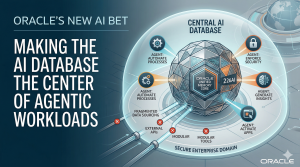
Oracle’s new AI bet: Make the AI database the center of agentic workloads
AI and bots have officially taken over the internet, report finds
The trillion-dollar race to automate our entire lives (per the Wall Street Journal)
Gemma needs help (per LessWrong) And so do a lot of AI models when they repeatedly fail.
Judge issues block on Pentagon’s label of Anthropic as supply chain risk
Wikipedia cracks down on contributors using AI to generate content
Defense startup Shield AI raises $2B, acquires flight simulation company Aechelon
OpenAI raises additional money to bring record funding round to $120B, CFO tells Cramer
Meta acqui-hires the co-founders of agentic AI startup Dreamer
AI cow collar startup Halter raises $220M in latest deal Seriously?
Granola raises $125M at $1.5B valuation for its AI note-taking app
Qualified Health raises $125M to transform how enterprise healthcare systems adopt AI
Dash0 raises $110M at $1B valuation to change cloud observability with AI agents
OpenAI backs AI startup seeking bot army breakthroughs (per the WSJ)
Multichip inference cloud startup Gimlet Labs receives $80M to solve one of AI’s biggest bottlenecks
Mirage raises $75M to continue building models for its AI video-editing app Captions
Rocketlane bags $60M from investors to accelerate professional services automation with AI agents
Steno raises $49M to change court reporting with AI-enabled transcript analysis
Insurance tech startup Shepherd raises $42M to underwrite the physical layer of AI
AI productivity startup Highlight AI raises $40M, appoints new CEO
Agentic retail dispute resolution startup Glimpse raises $35M from Andreessen Horowitz and others
Notch raises $30M to expand AI operating system for regulated industries
Krane raises $9M to expand AI-driven construction supply chain platform
Theia Insights raises $8M to build dynamic classification system for financial markets
Navi AI debuts flight training AI platform with $6.7M in funding
Zalos raises $3.6M to develop ERP computer agents that operate finance systems like humans
OpenAI says it’s pulling the plug on Sora, its generative AI video creation tool
Anthropic’s Claude gets computer use capabilities in preview
Anthropic unchains Claude Code with auto mode, allowing it to choose its own permissions
Google, Cohere launch new audio AI models
Google develops TurboQuant compression technology for AI models
Ai2 releases open-source visual AI agent that can take control of web browsers
Mistral releases an open-weights ‘speaking’ AI model with Voxtral TTS
Oracle Fusion agentic applications signal shift toward autonomous enterprise software
Domo launches AI agent builder with broad enterprise data connectivity
Exclusive: HG Insights expands revenue growth intelligence platform with agentic capabilities
Bland launches Norm to help teams build production-ready voice agents in minutes
Binalyze launches Magellan to bring ‘e-discovery’ into the security operations center
KubeCon Europe 2026: The AI execution gap meets cloud-native reality
From cloud native to AI native: The role of context density
Regulation crashes the AI party: theCUBE’s KubeCon + CloudNativeCon EU day three analysis
The AI infrastructure bottleneck: Why ‘good enough’ Kubernetes isn’t cutting it anymore
Chip interconnect startup Kandou AI raises $225M in funding
Activist Elliott builds big stake in chip design software maker Synopsys
Cents raises $140M for laundromat platform That’s a lotta quarters.
Doss raises $55M to expand AI-powered operations platform for ERP-integrated workflows
Normal Computing raises $50M to tackle the soaring energy demands of AI chips
Epic Microsystems raises $21M to revolutionize power for next-gen AI datacenters
Genesys reports record Q4 as organizations accelerate adoption of AI-powered experience orchestration
Elon Musk announces ambitious $20B Terafab project to manufacture chips for space-based AI
Arm launches 136-core AGI CPU for data centers
Emma Technologies unifies cloud infrastructure governance for legacy IT environments
Satellite navigation startup Xona Space nabs $170M investment
With $90M in funding, NoTraffic will use AI to end gridlock in America’s cities
Meta ordered to pay $375 million in major child safety trial
My prodigal brainchild: Author Neal Stephenson, who coined the term “metaverse,” never really thought regular people would want to wear VR and AR goggles, as Meta Platforms’ retreat proved.
Microsoft hired former Ai2 CEO Ali Farhadi and key researchers for Mustafa Suleyman’s AI team (per GeekWire).
Meta is laying off hundreds of staff across multiple divisions
Meta Platforms Chief Technology Officer Andrew “Boz” Bosworth, is taking over supervision of the company’s efforts to become AI-native, overseeing Meta’s “AI for Work” initiative, which was previously led by Guy Rosen (per the WSJ).
OpenAI tapped former Meta executive Dave Dugan to lead its ad push.
Security device startup Verkada named Chris Stori chief information officer.
Monday, March 30: Progress Software
Wednesday, April 1: Penguin Systems
Support our mission to keep content open and free by engaging with theCUBE community. Join theCUBE’s Alumni Trust Network, where technology leaders connect, share intelligence and create opportunities.
Founded by tech visionaries John Furrier and Dave Vellante, SiliconANGLE Media has built a dynamic ecosystem of industry-leading digital media brands that reach 15+ million elite tech professionals. Our new proprietary theCUBE AI Video Cloud is breaking ground in audience interaction, leveraging theCUBEai.com neural network to help technology companies make data-driven decisions and stay at the forefront of industry conversations.