


 AI
AI
AI
AI

AI

Enterprises want to move beyond AI experimentation, but most still struggle to bridge the gap between promising proofs of concept and production-ready cloud-native AI platforms.
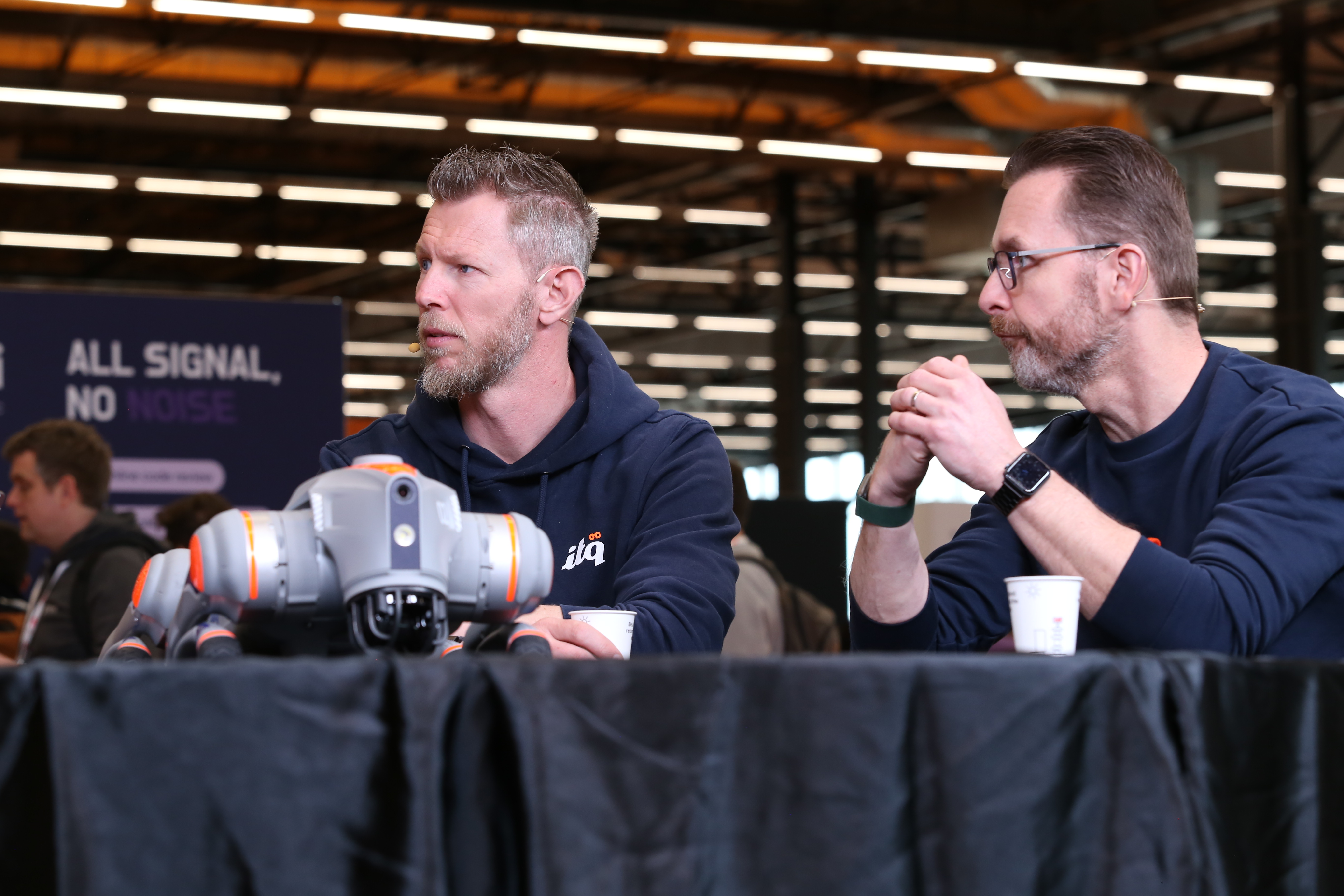
The challenge is compounding as AI workloads converge with cloud-native infrastructure. European services company ITQ Consultancy B.V. is tackling that challenge head-on, using an AI-powered robot dog named Q9 to demonstrate what a full cloud-native AI platform can do when it is assembled the right way, according to Johan van Amersfoort (pictured, left), chief evangelist and AI lead at ITQ. With Red Hat Inc.’s OpenShift under the hood, Q9 is less a demo prop and more a four-legged showcase for cloud-native AI.
“We trained a model to recognize [hand] gestures and one of our lead developers built an API to talk directly to the dog,” van Amersfoort told theCUBE. “That shows the potential of a platform like OpenShift, where we have the capabilities of running a full training pipeline out of the box. Honestly, you don’t have to do a lot of things to get it up and running, and having such a platform at your disposal makes the journey from zero to 60 a reality.”
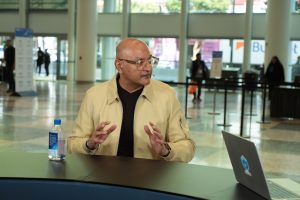
Van Amersfoort and Jeffrey Kusters (right), chief technology officer at ITQ, spoke with theCUBE’s Rebecca Knight and Rob Strechay at KubeCon + CloudNativeCon EU, during an exclusive broadcast on theCUBE, SiliconANGLE Media’s livestreaming studio. They discussed how cloud-native AI platforms are accelerating enterprise adoption from proof-of-concept to production. (* Disclosure below.)
For ITQ, the real story is not just the robot dog itself, but the production platform behind it. Behind Q9’s tricks lies an opinionated cloud-native stack built on OpenShift, designed to compress the time from idea to running workload. ITQ, a services company with about 300 employees across eight European countries, starts every engagement with a use case assessment rather than a technology push, van Amersfoort explained.
“One of the first aspects of challenge customers face is, ‘I want to do something with AI, but I have no idea where to start.’ We run use case assessments to define what the business problem is that we can solve and what the tangible result would be out of that,” he said. “You don’t want to wait 18 months to get [a] platform up and running.”
Sustaining value after day one is equally critical. ITQ runs a managed services practice that pairs ongoing operations with customer enablement and training, according to Kusters. The company is also a Cloud Native Computing Foundation Kubernetes training center.
“There’s always a lot of focus on enabling the customers and really upskilling them,” Kusters said. “If you look at the more traditional customers coming from a purely virtualization background, most of the time, there’s a strong Windows and Microsoft skillset in the team. Supporting a full cloud-native stack — that’s a whole different ballgame.”
Here’s the complete video interview, part of SiliconANGLE’s and theCUBE’s coverage of KubeCon + CloudNativeCon EU:
(* Disclosure: TheCUBE is a paid media partner for the KubeCon + CloudNativeCon NA event. Neither Red Hat Inc., the primary sponsor of theCUBE’s event coverage, nor other sponsors have editorial control over content on theCUBE or SiliconANGLE.)
Support our mission to keep content open and free by engaging with theCUBE community. Join theCUBE’s Alumni Trust Network, where technology leaders connect, share intelligence and create opportunities.
Founded by tech visionaries John Furrier and Dave Vellante, SiliconANGLE Media has built a dynamic ecosystem of industry-leading digital media brands that reach 15+ million elite tech professionals. Our new proprietary theCUBE AI Video Cloud is breaking ground in audience interaction, leveraging theCUBEai.com neural network to help technology companies make data-driven decisions and stay at the forefront of industry conversations.