

 AI
AI
AI
AI

AI

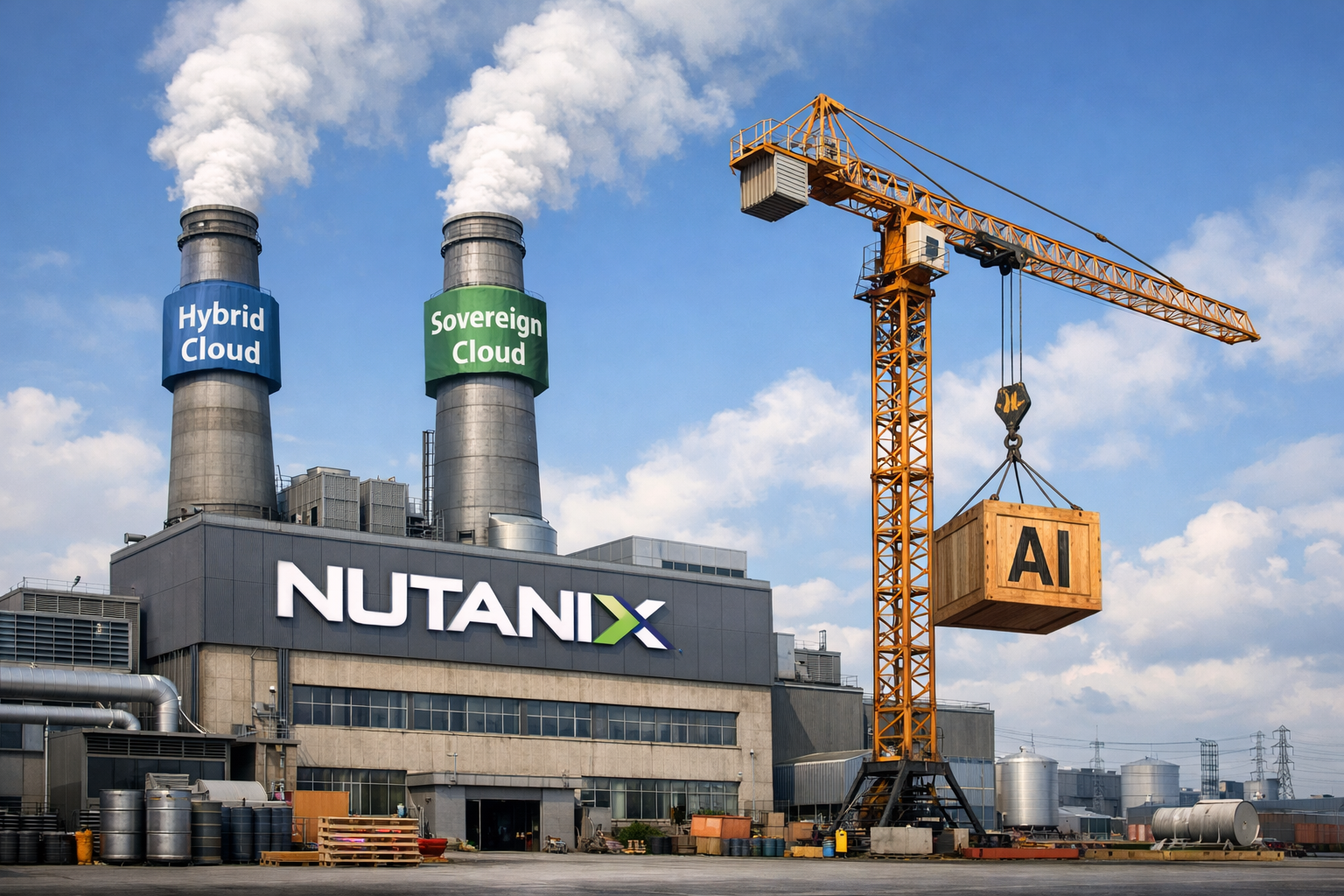
There is a massive investment underway in building digital infrastructure for the AI era, and enterprises are on the hunt for IT providers who offer complete solutions. This scenario sets up well for independent software vendors such as Nutanix Inc. who can offer packaged solutions that integrate with existing systems and provide advanced orchestration for AI workflows.
Nutanix has been buoyed in recent months by a series of high-profile strategic partnerships, improved earnings and enterprise interest in scalable, full-stack AI platforms. It marks a moment for the independent software vendor and Nutanix’s ability to nurture fresh alliances that allows it to differentiate against larger vertically-positioned firms.
“As a purely independent software vendor, we are the only company left,” said Tarkan Maner, president and chief commercial officer at Nutanix, in a recent interview with theCUBE, SiliconANGLE Media’s livestreaming studio. “There are a lot of great companies. I love Red Hat, I love VMware … but now they’re part of IBM, they’re part of Broadcom. They’re more verticalized. We are a complete, horizontally integrated, vertically astute company supporting any layer in the ecosystem, from Nvidia, AMD and Intel to any OEM, from Dell to Fujitsu to Supermicro to HPE to Cisco and Lenovo.”
This feature is part of SiliconANGLE Media’s exploration of the architectural shifts powering continuous, production-grade AI. Be sure to check out SiliconANGLE’s extensive coverage of Nutanix.NEXT 2026, including interviews with executives, customers and ecosystem partners focused on how organizations are building and operating enterprise AI infrastructure across hybrid environments. (* Disclosure below.)
At the time of last year’s Nutanix .NEXT event, the company described its AI approach as a threefold strategy. It was an agentic platform on Nutanix infrastructure, AI at Nutanix to optimize its current offerings, and AI in Nutanix to improve its products. This evolving approach reflected Nutanix’s focus on delivering AI-ready infrastructure that maintained workload flexibility as customers scaled across environments.
In March, Nutanix doubled down on that strategy with the release of its Agentic AI offering, integrated with Nvidia Corp.’s agent builder to address the needs of enterprise firms in the development of AI factory infrastructure and scale to meet new demands. As AI agents reason, work autonomously and complete complex tasks with little human oversight, enterprises will need a software infrastructure and platform with low latency that can maximize performance and maintain security guardrails.
The latest release included an ability to incorporate Flow Virtual Networking, Kubernetes and enterprise AI solutions to architect on-time cloud operating models in the orchestration and governance of AI agent fleets. The addition of BlueField data processing units helps reduce compute and memory consumption costs, while Kubernetes-native software layers provide predictable token costs when deploying agentic fleets.
“We believe there are going to be thousands of agents for every enterprise customer,” Maner told theCUBE. “As enterprises are moving into the first inning in this … all of a sudden, they don’t know where they’re going to build these agents, how they’re going to manage it, the lifecycle of the agents, how we are going to guardrail them and secure them. We want to make sure, in both regulated and non-regulated industries, there is a platform which makes these agent lifecycles more manageable, highly performant, low cost and super secure. That’s where Nutanix comes in.”
Nutanix’s positioning of AI orchestration solutions is designed to build on its position as a hybrid cloud converged infrastructure computing leader. The hybrid cloud is a core element in Nutanix’s market strategy as it seeks to be the hybrid cloud control point for data center operations.
“Hybrid cloud is the foundation, the chassis,” Maner explained. “Our software play is to make sure we make the operating model available and economically executable for the customers as they’re innovating. Hybrid cloud makes things efficient, makes things scalable, highly performant. Some applications are great on-prem, some applications are great in the cloud off-prem and some applications are great in a hybrid mode. Hybrid cloud is still the platform to achieve the goals and get outcomes through AI applications in this agentic era.”
A reasonable case could be made that Nutanix’s closely held belief in the hybrid cloud has generated favorable market tailwinds in recent months. One survey from OpenText found that 67% of enterprises have already repatriated some workloads, and 87% plan to do so in the next 12–24 months. This will play into Nutanix’s hand as it positions its platform for maximum workload flexibility, and SiliconANGLE’s analysts believe that the firm’s annual conference will see the company announce additional moves to cement its hybrid cloud position.
“I expect the event to reflect a broader industry pivot toward hybrid multicloud, AI-driven application delivery and platform engineering that abstracts complexity while accelerating developer velocity,” said Paul Nashawaty, principal analyst at theCUBE Research. “Enterprises embracing this trifecta — container first architectures, hybrid AI infrastructure and secure multicloud governance — will lead in both performance and innovation in the coming decade.”
Along with the hybrid cloud, Nutanix is building expertise in another area that has become critical for today’s enterprise: the sovereign cloud.
The cost and complexity of moving large volumes of data to train AI models are driving renewed interest in the sovereign cloud, a specialized cloud computing environment designed to meet strict digital sovereignty, data residency and compliance regulations. In December, Nutanix unveiled Cloud Platform 7.5 to deliver the three essential elements of a distributed sovereign cloud: security/control, resilience and global management. Nutanix believes that these capabilities will help customers maintain sovereignty while retaining the ability to modernize applications across hybrid environments.
“Distributed sovereign cloud is becoming a priority for organizations that must meet regulatory obligations without disrupting operational consistency,” according to Dave Pearson, vice president at IDC.
As part of its release in December, Nutanix also expanded sovereign cloud support across public cloud providers, including Nutanix Government Cloud Clusters on Amazon Web Services Inc. for U.S. federal agencies, Google Cloud and Microsoft Azure, with additional support for trusted cloud services in Europe. These moves are following a trend where customers need hybrid cloud solutions that allow a measure of governance and control, according to Maner.
“All of a sudden, hybrid cloud is happening contextually in each country in a different way,” he explained. “I give this advice to customers all the time — make choices with those vendors like Nutanix. They’re open, they’re flexible and they’re enterprise grade. They can serve you in the region you’re in based on the needs you have.”
Nutanix’s collaboration with the large hyperscalers in sovereign cloud services reflects a key element in its marketing strategy. The company has actively pursued partnerships with a broad range of major enterprise tech players to offer a comprehensive set of services.
Nutanix’s alliance with AWS is built on a multi-year strategic agreement involving co-developed solutions, joint go-to-market efforts and tailored offerings for regulated industries. Nutanix Cloud Clusters or NC2 on AWS provides bare-metal EC2 deployment with access to AWS’ growing AI suite.
“AWS and Nutanix are even tighter partners now,” said Maner, in a previous interview on theCUBE. “You don’t have to have all the hypervisor stuff of the past, just bare metal with containers. You’re delivering phenomenal microservice-centric application deployment capabilities across multiple workloads.”
Nutanix also has an extensive partnership with Dell Technologies Inc. to provide capability for scaling compute and storage separately in hyperconverged infrastructure as AI applications command IT resources. The release of Dell’s PowerEdge XC Plus and integration of PowerFlex software-defined storage into the Nutanix stack will be helpful for AI and edge computing, according to theCUBE Research’s Rob Strechay.
“Traditionally, customers looking to expand their infrastructure had to purchase both compute and storage resources simultaneously,” Strechay said. “This often led to inefficiencies, with either compute or storage resources being underutilized. Integrating PowerFlex into Nutanix’s platform changes this dynamic by allowing organizations to scale compute and storage independently.”
Nutanix’s partnerships and strategic moves in hybrid and sovereign clouds illustrate how the company is moving quickly in an effort to stay ahead of the AI curve. As customer expectations shift, Nutanix must adapt rapidly, something that the firm is built for, according to Maner.
“Sometimes folks get super enamored about how smart they are,” Maner said. “We’d like to be humble. As a company, we believe inflection points matter. It’s not always that we are the smartest team out there, but we’re also open-minded to listen to the customer.”
Support our mission to keep content open and free by engaging with theCUBE community. Join theCUBE’s Alumni Trust Network, where technology leaders connect, share intelligence and create opportunities.
Founded by tech visionaries John Furrier and Dave Vellante, SiliconANGLE Media has built a dynamic ecosystem of industry-leading digital media brands that reach 15+ million elite tech professionals. Our new proprietary theCUBE AI Video Cloud is breaking ground in audience interaction, leveraging theCUBEai.com neural network to help technology companies make data-driven decisions and stay at the forefront of industry conversations.