 AI
AI
AI
AI



AI

The chief financial officer’s priorities have decidedly shifted. AI value is no longer a promise to be made — it’s a number to be defended.
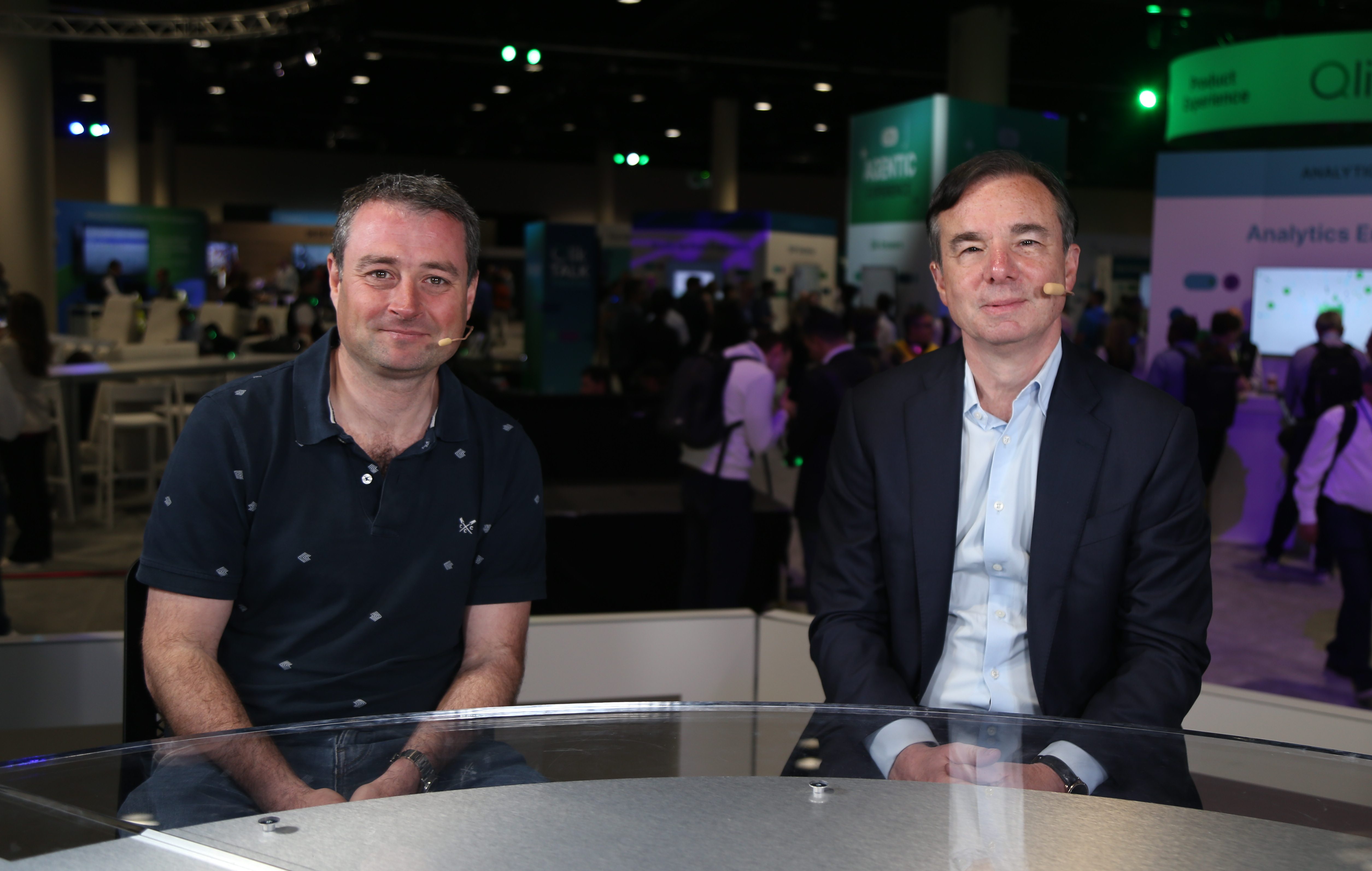
For most enterprises, delivery on that promise remains elusive. The challenge is not a shortage of AI ambition, according to Mike Capone (pictured, right), chief executive officer of Qlik Technologies Inc. Instead, it is the absence of a trusted, governed data foundation capable of converting that ambition into repeatable outcomes.
“The big conversation has really pivoted. AI used to be a novelty, but now it’s truly around value creation,” Capone told theCUBE. “Companies are spending a lot of money on AI. There’s a lot of experimentation and that was fun in the beginning, but now CFOs are weighing in and they’re saying, ‘Where’s all this money going — how am I getting value?'”
Capone and Ed Dunger (left), director of data and operations systems at HelloFresh SE spoke with theCUBE’s Rebecca Knight and Rob Strechay at Qlik Connect 2026, during an exclusive broadcast on theCUBE, SiliconANGLE Media’s livestreaming studio. They discussed how organizations can move from AI pilots to AI value by governing deployments and measuring business impact. (* Disclosure below.)
A Qlik 2025 Agentic AI study found that while 97% of enterprises have committed budget to agentic AI, only 19% have a defined return-on-investment framework — a gap that sits at the core of the AI value problem, Capone noted. For most, the lesson is learned the hard way.
“Oftentimes, customers actually have to fail at something before they understand, ‘Okay, we really do need to go back and build a trusted platform with our data. We have to build all the AI data pipelines and put all the governance and quality controls around that before we can start really using AI responsibly,'” he said. “Unfortunately, it’s usually after some pain. But they come back and [then] they approach it the right way. All of a sudden they start to see repeatable results.”
HelloFresh — a global meal kit delivery company and Qlik customer — illustrates that disciplined approach through the company’s use of Qlik Predict to manage logistics exceptions. By identifying at-risk deliveries and automatically triggering recovery actions, HelloFresh converted AI insight into measurable customer retention, Dunger noted. Critically, stakeholders accepted that the model did not need to be perfect to deliver AI value, as long as the net result meant better outcomes for both the business and the customers it serves.
“When we left it to a human, they would quite often wait because they wanted all the facts to make a decision,” he said. “AI sped that decision up … and quite often, by delaying, you didn’t actually give the customer that great experience you could have given them if you did let the AI act within those boundaries that you’ve set for your risk parameters.”
Stay tuned for the complete video interview, part of SiliconANGLE’s and theCUBE’s coverage of Qlik Connect 2026.
(* Disclosure: TheCUBE is a paid media partner for Qlik Connect. Neither Qlik, the sponsor of theCUBE’s event coverage, nor other sponsors have editorial control over content on theCUBE or SiliconANGLE.)
Support our mission to keep content open and free by engaging with theCUBE community. Join theCUBE’s Alumni Trust Network, where technology leaders connect, share intelligence and create opportunities.
Founded by tech visionaries John Furrier and Dave Vellante, SiliconANGLE Media has built a dynamic ecosystem of industry-leading digital media brands that reach 15+ million elite tech professionals. Our new proprietary theCUBE AI Video Cloud is breaking ground in audience interaction, leveraging theCUBEai.com neural network to help technology companies make data-driven decisions and stay at the forefront of industry conversations.