 AI
AI
AI
AI







AI

The AI bottleneck isn’t the model — it’s everything that has to happen to the data before the model can even touch it. Conversational analytics is now emerging as the bridge to turn already-curated data into decisions without rebuilding the pipeline from scratch.
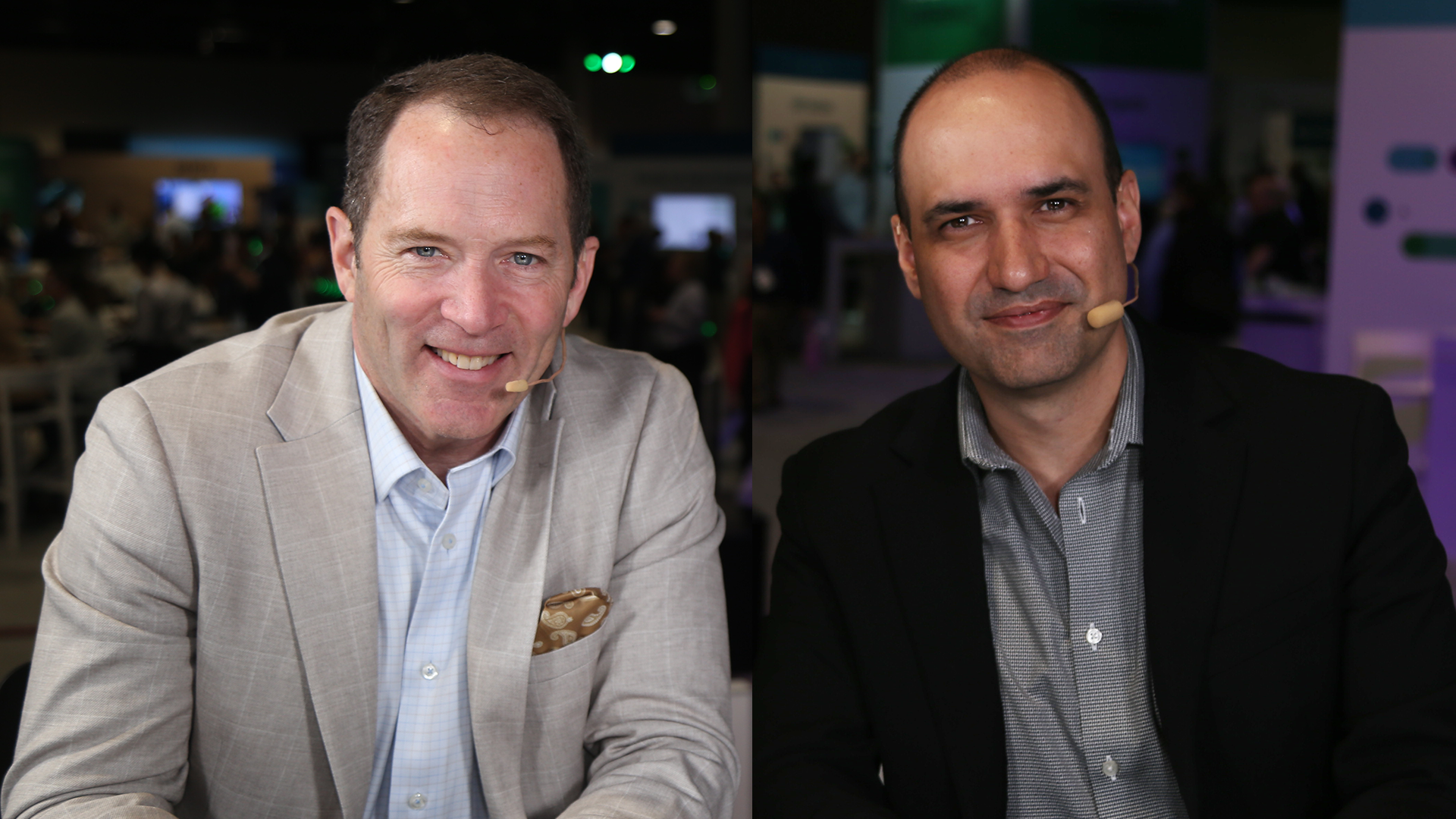
It’s hard to ignore that AI adoption is accelerating even as most teams lack a repeatable architecture to sustain it. The answer lies in pairing governed, curated data with conversational analytics capabilities that turn dashboards into decision engines, according to Drew Clarke (pictured, left), executive vice president of product and technology at Qlik Technologies Inc. As a member of Qlik’s executive advisory board, Juan Hurtado (right), vice president of business intelligence and data analytics at Ingersoll Rand Inc., helped push Qlik to focus on its strength — and then put that focus to work inside one of the most acquisition-intensive enterprises in the industrial sector.
“We’re going to orient the business analyst. We’re going to orient the data engineer, building the tools into your factory,” Clarke told theCUBE. “[Hurtado] gave us that advice as part of the advisory board, and we took it to heart.”
Clarke and Hurtado spoke with Rob Strechay at Qlik Connect 2026, during an exclusive broadcast on theCUBE, SiliconANGLE Media’s livestreaming studio. They discussed conversational analytics, the AI factory design pattern and Ingersoll Rand’s approach to scaling AI across an acquisition-driven enterprise. (* Disclosure below.)
The move beyond dashboards to decision automation is precisely what organizations such as Ingersoll Rand are pursuing. Rather than rebuilding data pipelines from scratch for each new AI initiative, Ingersoll Rand anchored its approach to the data gravity already embedded in its Qlik business intelligence environment, Hurtado noted.
“We started to look at, ‘How do we make conversational analytics and good agents out of the data that we already curated?'” Hurtado said. “We didn’t need all these data engineering efforts.”
The practical payoff is an “AI factory” architecture — a composable, standardized pattern that respects semantic layers built within Qlik, handles both structured and unstructured data, and avoids point-to-point solutions that accumulate technical debt. With Ingersoll Rand completing roughly one acquisition per month, that repeatability is not optional, Hurtado explained. Instead, it is the only way to onboard new companies without rebuilding the data estate each time.
“Those architectural patterns and the AI factory help us do something that has been preached for a long time,” he said. “You do [proofs of concept] quickly, you prototype quick and then you scale to enterprise-grade.”
The interoperability requirement is captured with a phrase the team is now using internally: the “Goldilocks zone” — a lakehouse architecture built on open standards such as Apache Iceberg where data sits where it needs to be, remains accessible without mass replication and arrives back to the analytics layer just right, according to Clarke. The architecture is already in production at Ingersoll Rand, he added.
“We want to be interoperable. Don’t create a monolith of everything,” Clarke said. “Have the data where it needs to be, make it accessible, bring it back just right — like Goldilocks.”
Here’s the complete video interview, part of SiliconANGLE’s and theCUBE’s coverage of Qlik Connect 2026:
(* Disclosure: TheCUBE is a paid media partner for Qlik Connect. Neither Qlik, the sponsor of theCUBE’s event coverage, nor other sponsors have editorial control over content on theCUBE or SiliconANGLE.)
Support our mission to keep content open and free by engaging with theCUBE community. Join theCUBE’s Alumni Trust Network, where technology leaders connect, share intelligence and create opportunities.
Founded by tech visionaries John Furrier and Dave Vellante, SiliconANGLE Media has built a dynamic ecosystem of industry-leading digital media brands that reach 15+ million elite tech professionals. Our new proprietary theCUBE AI Video Cloud is breaking ground in audience interaction, leveraging theCUBEai.com neural network to help technology companies make data-driven decisions and stay at the forefront of industry conversations.