 SECURITY
SECURITY
SECURITY



SECURITY

As organizations transition from experimentation with AI to full-scale production, the demand for mission-critical security and absolute data availability has become the primary benchmark for enterprise success.
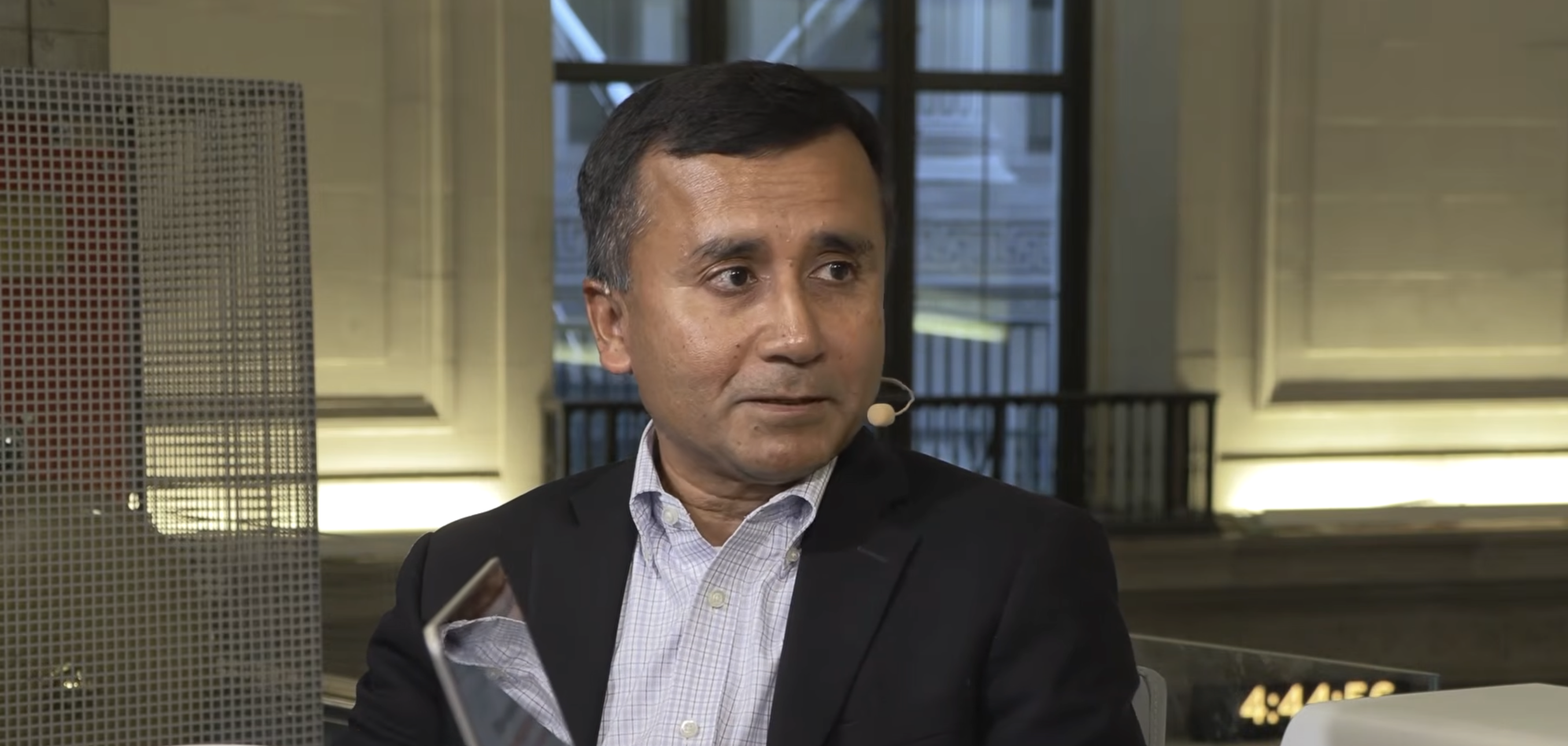
In this era of autonomous agents and increasingly sophisticated cyberthreats, the underlying data infrastructure must provide resilience that is inherent in the system rather than bolted onto it after the fact. That demand is driving a major paradigm shift away from decade-old enterprise security protocols, according to Ashish Ray (pictured), senior vice president of product management at Oracle Corp.
“If you look at the way agentic AI is coming into the enterprise, these are autonomous tasks which absolutely cannot deal with any bottlenecks, otherwise latencies queue up, transactions queue up,” Ray said. “There’s also the issue of cybersecurity threats, which means immunity has to be baked [into] the database — it cannot be built in the perimeter.”
Ray spoke with theCUBE’s David Vellante at the Oracle Data Deep Dive NYC event, during an exclusive interview on theCUBE, SiliconANGLE Media’s livestreaming studio. They discussed the new high-availability tiers for the Oracle AI Database and the evolving requirements of mission-critical security. (* Disclosure below.)
The launch of Oracle AI Database 26ai — Oracle’s newest major database version built natively for AI and agentic workloads — introduces significant optimizations aimed at reducing failover times and enhancing data protection without requiring any application changes. For senior information technology leaders, this means moving beyond traditional high-availability models toward a paradigm of distributed resilience, Ray noted.
“Resilience needs to be built inside the database, inside the data structure, which means when customers are investing in our product, they don’t necessarily have to go out and invest in a whole bunch of other technologies,” he said. “Resilience, high availability, performance, security — they all are baked inside the database.”
Oracle has introduced two primary service levels: the Platinum tier, which reduces failover for complex applications to about 20 seconds, and the Diamond tier, which offers near-instantaneous recovery in zero to three seconds. These gains are achieved through deep kernel-level optimizations in technologies such as Oracle Real Application Clusters and Oracle Data Guard, Ray explained. Notably, the Platinum tier is available by default when upgrading
“Our principle has always been when customers upgrade to Oracle AI Database 26ai, they can get all these benefits by default,” Ray said. “That has been our design principle from day one.”
Meanwhile, the Oracle Exadata platform provides a fault-tolerant foundation necessary to support these advanced recovery times. By integrating hardware and software optimizations, Oracle ensures that the system can handle the intense utilization of memory, flash and network resources demanded by modern AI, Ray explained. But neither hardware nor software optimization alone is sufficient — the two must work in lockstep to deliver the resilience agentic workloads demand.
“You cannot just do one and hope things work,” he said. “They will not. You need a combination of both worlds.”
This consistent architecture extends across the globe, supporting a comprehensive multicloud strategy. Whether deployed on-premises, in Oracle Cloud Infrastructure or within third-party environments, the core kernel and architectural principles remain identical, Ray explained. For executives navigating competing cloud commitments and legacy infrastructure, that consistency removes one of the most persistent barriers to enterprise AI adoption.
“My advice to all C-level people involved in this is make sure you have a high-performance, highly scalable, highly reliable data infrastructure that is guiding your agentic workloads,” he said.
Here’s the complete video interview, part of SiliconANGLE’s and theCUBE’s coverage of the Oracle Data Deep Dive NYC event:
(* Disclosure: TheCUBE is a paid media partner for the Oracle Data Deep Dive NYC event. Neither Oracle, the sponsor of theCUBE’s event coverage, nor other sponsors have editorial control over content on theCUBE or SiliconANGLE.)
Support our mission to keep content open and free by engaging with theCUBE community. Join theCUBE’s Alumni Trust Network, where technology leaders connect, share intelligence and create opportunities.
Founded by tech visionaries John Furrier and Dave Vellante, SiliconANGLE Media has built a dynamic ecosystem of industry-leading digital media brands that reach 15+ million elite tech professionals. Our new proprietary theCUBE AI Video Cloud is breaking ground in audience interaction, leveraging theCUBEai.com neural network to help technology companies make data-driven decisions and stay at the forefront of industry conversations.