 AI
AI
AI
AI







AI

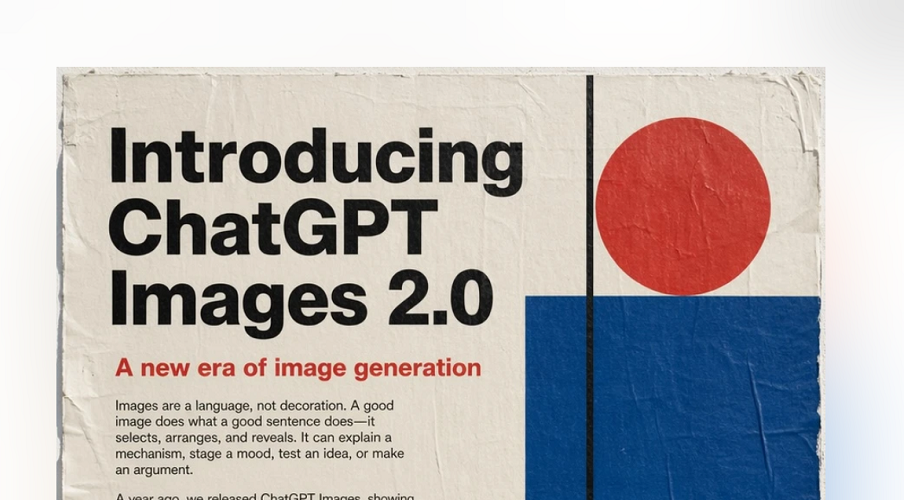
OpenAI Group PBC today launched ChatGPT Images 2.0, an upgraded version of the image generator built into its popular chatbot.
The company also debuted a new technical training service called Codex Labs. It’s designed to help organizations adopt OpenAI’s Codex programming assistant.
ChatGPT Images 2.0 can generate images with a maximum width of 2,000 pixels in multiple aspect ratios, including some that weren’t supported until now. Notably, users can now generate images that are up to three up as wide as they are tall or vice versa. Such aspect ratios lend themselves to use cases such as designing infographics.
OpenAI says that ChatGPT Images 2.0 brings significant improvements in image quality. One of the areas where the company’s researchers made upgrades is text rendering. ChatGPT Images 2.0 is better than its predecessor at generating images that contain Japanese, Korean, Chinese, Hindi and Bengali text.
OpenAI has also made quality improvements in other areas. The company says that its new image generator is better at generating small text, interface elements, icons and other visual assets that historically posed a challenge for artificial intelligence models. Furthermore, ChatGPT Images 2.0 renders images with “tiny flaws that add realism.”
The tool uses a built-in general knowledge dataset to interpret prompts and fill information gaps. For example, it could generate an infographic that explains how to prepare a user-specified dish even if the user didn’t list the dish’s ingredients. OpenAI says ChatGPT Images 2.0’s dataset was last updated in December.
Users with paid plans can expand the tool’s knowledge base by activating ChatGPT’s “thinking” and “pro” reasoning modes. The two settings enable ChatGPT Images 2.0 to round out the information at its disposal with data from the public web. In one demo, OpenAI engineers asked the tool to review the company’s e-commerce store and generate an ad for the items currently in stock.
The AI provider says that the two reasoning modes also boost the quality of outputted images. They do so by enabling ChatGPT Images 2.0 to “reason through the structure” of a visual asset before generating it. That lowers the risk of output errors, which in turn reduces the number of manual revisions needed to prepare an image.
ChatGPT Images 2.0 also saves time for users in other ways. It can generate up to 10 images based on a single prompt, which removes the need to enter multiple sets of instructions. The tool can maintain a consistent look across the visual batches in a batch or apply different design styles.
OpenAI launched ChatGPT Images 2.0 alongside a new enterprise offering called Codex Labs. It’s designed to help organizations deploy the AI provider’s Codex programming assistant. According to OpenAI, the offering provides access to workshops and other training that can make it easier for a company’s developers to adopt the tool. In addition, Codex Labs will help enterprises with tasks such as connecting Codex to their existing developer tools.
Support our mission to keep content open and free by engaging with theCUBE community. Join theCUBE’s Alumni Trust Network, where technology leaders connect, share intelligence and create opportunities.
Founded by tech visionaries John Furrier and Dave Vellante, SiliconANGLE Media has built a dynamic ecosystem of industry-leading digital media brands that reach 15+ million elite tech professionals. Our new proprietary theCUBE AI Video Cloud is breaking ground in audience interaction, leveraging theCUBEai.com neural network to help technology companies make data-driven decisions and stay at the forefront of industry conversations.