 AI
AI
AI
AI







AI

As enterprises race to wire AI into their operations, the infrastructure bottleneck has shifted from model capability to data access — and the enterprises winning the race are those treating real-time data pipelines as a first-class architectural concern.
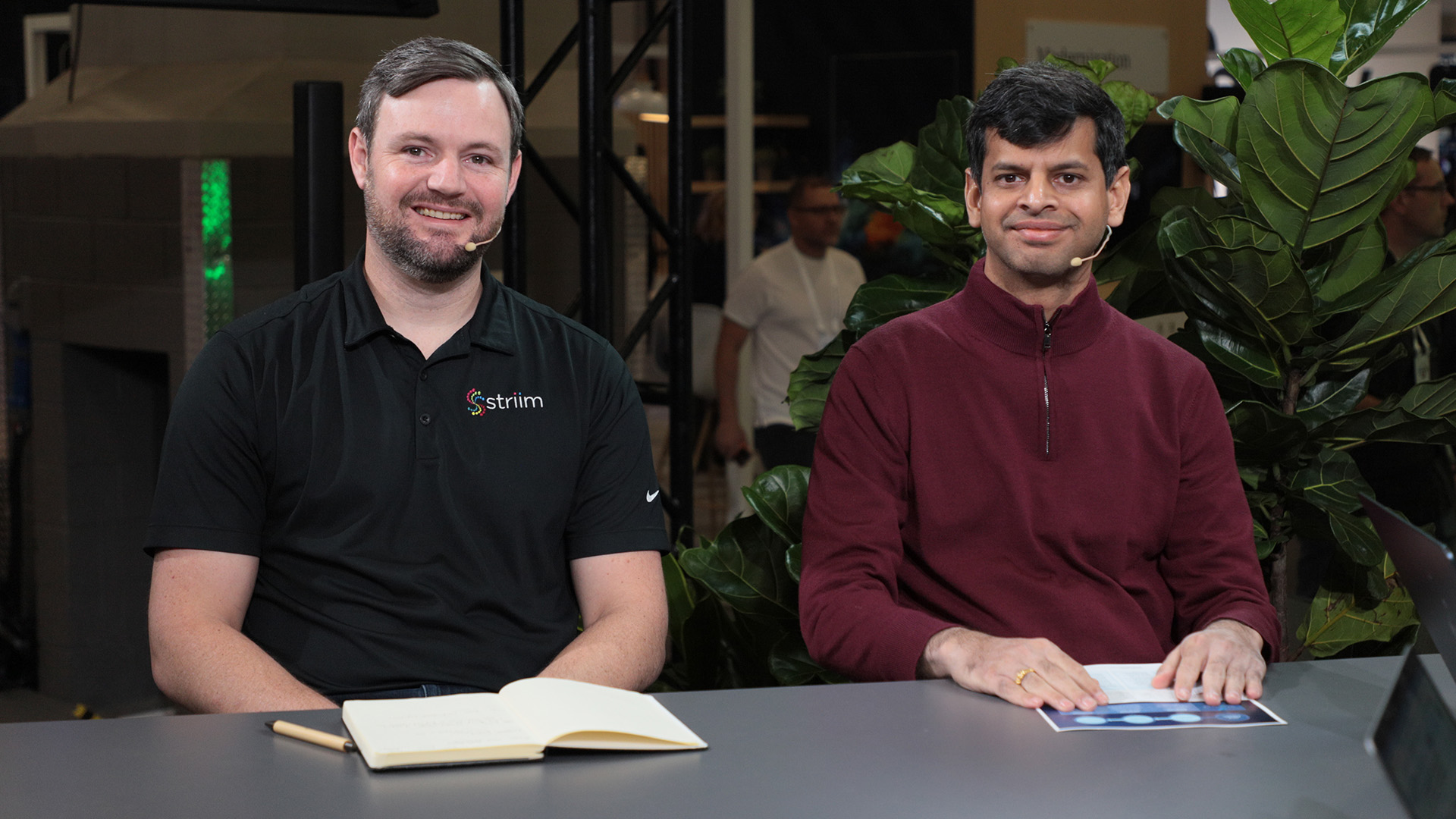
Agents are only as intelligent as their underlying data substrate, and batch-based architectures built for yesterday’s dashboards cannot meet that bar. Enterprises now need real-time data pipelines that move operational data from legacy sources into modern analytical systems at near-instantaneous latency, according to Benjamin Kennady (pictured, left), cloud solutions architect at Striim International Inc. For Striim, a data streaming and integration platform, that starts with the pipeline layer itself.
“Striim really enables you to do that real-time data replication at scale,” Kennady said. “We’re designed to do that ingestion from your Oracle and your SQL server and your operational databases, and then replicate that data in real time with sub-second or second latency into your analytic systems, so that those agents can then be used to actually make those real-time decisions.”
Kennady and Vinod Ramachandran (right), senior product manager at Google LLC, spoke with theCUBE’s John Furrier and Alison Kosik at Google Cloud Next, during an exclusive broadcast on theCUBE, SiliconANGLE Media’s livestreaming studio. They discussed modern real-time data architecture on Google Cloud, the role of open formats in unlocking agentic workflows and how Striim and Google are jointly enabling enterprise-scale data replication. (* Disclosure below.)
Enterprises sitting on sprawling legacy infrastructure do not need to tear it all down to reach agent-ready architecture. The key pivot is ensuring agents can immediately access data that already flows into object stores, using open formats such as Apache Iceberg to make that data instantly queryable across BigQuery, AlloyDB and other analytical systems, Ramachandran noted.
“Your automated pipeline can now just ride straight into open formats like Iceberg and it’s immediately available in all these analytical systems,” he said. “Analysts or system engineers building these pipelines can just make the tweak, use open formats and see it immediately accessible — it’s actually a feature, not a bug.”
The practical stakes of getting real-time data pipelines right showed up clearly in Striim’s work with United Parcel Service Inc. During a surge in package theft, UPS struggled to scale its fraud detection because its existing architecture could not ingest structured and unstructured data — images, emails and transactional records — fast enough to power real-time decisions, Kennady explained. By using Striim alongside Google Cloud to replicate that multimodal data into BigQuery at scale, UPS was able to build agentic models that reduced fraud risk nationwide.
“Package detection and fraud risk is happening in real time and therefore you need that data in real time for your agentic workflows,” Kennady said. “UPS used Striim along with Google to resolve that problem and to reduce that package theft at scale across the whole country.”
Here’s the complete video interview, part of SiliconANGLE’s and theCUBE’s coverage of Google Cloud Next:
(* Disclosure: Striim sponsored this segment of theCUBE. Neither Striim nor other sponsors have editorial control over content on theCUBE or SiliconANGLE.)
Support our mission to keep content open and free by engaging with theCUBE community. Join theCUBE’s Alumni Trust Network, where technology leaders connect, share intelligence and create opportunities.
Founded by tech visionaries John Furrier and Dave Vellante, SiliconANGLE Media has built a dynamic ecosystem of industry-leading digital media brands that reach 15+ million elite tech professionals. Our new proprietary theCUBE AI Video Cloud is breaking ground in audience interaction, leveraging theCUBEai.com neural network to help technology companies make data-driven decisions and stay at the forefront of industry conversations.