 AI
AI
AI
AI









AI

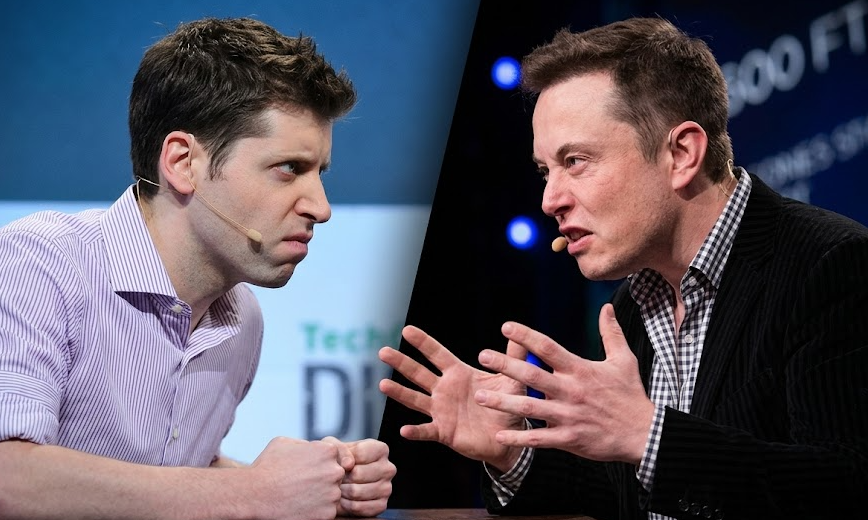
Billionaire technology entrepreneur Elon Musk took the stand today in a landmark trial that pits him against OpenAI Group PBC Chief Executive Sam Altman, with the outcome set to have a major impact on the future of artificial intelligence.
“Fundamentally I think they’re going to try to make this lawsuit seem complicated,” Musk said as he began his testimony. “But I think it’s very simple, which is, it’s not OK to steal a charity.”
Musk helped to found OpenAI, which began life as a nonprofit organization in 2015. His co-founders included Altman and the AI firm’s current President Greg Brockman. They originally shared the same vision of developing AI to benefit humanity, but things soon went pear-shaped as their goals diverged. Musk left the organization three years later, and is now accusing Altman and Brockman of sacrificing its original nonprofit goals in order to enrich themselves.
OpenAI has since evolved a for-profit arm and has gone on to raise many billions of dollars in funding from outside investors. Thanks to its commercial operation, which owns ChatGPT, it has become one of Silicon Valley’s most influential companies, and is widely regarded as one of the leaders of the AI revolution.
Musk’s lawsuit, which was first filed in 2024, is asking the court to remove Altman and Brockman from their roles and restore OpenAI as a full nonprofit organization. In its defense, OpenAI accused Musk of trying to kill off a competitor to his own AI firm, xAI Corp., which is the developer of a rival chatbot called Grok. “Motivated by jealousy, regret for walking away from OpenAI and a desire to derail a competing AI company, Elon has spent years harassing OpenAI through baseless lawsuits and public attacks,” the company wrote on a website specifically set up to provide its side of the story.
Musk was the first witness called in the trial, which is expected to last around three weeks and will likely see various other influential tech figures appear on the stand, including Altman and Brockman and also Microsoft Corp. CEO Satya Nadella. The Tesla Inc. and SpaceX Corp. CEO has attracted a lot of supporters, plus dozens of members of the public – some wearing T-shirts saying “Stop AI” – were lined up outside the court early, trying to get a seat inside.
The focus of the case is on the original agreements and commitments made by the cofounders shortly after the company was founded, and whether the creation of a for-profit arm that’s now worth hundreds of billions of dollars contradicts laws governing charities.
Before the trial began, Judge Yvonne Gonzalez Rogers of the U.S. District Court for the Northern District of California warned Musk and Altman not to stir up any more trouble by posting on social media. She demanded that they refrain from saying anything about the trial publicly. The two entrepreneurs, who regularly bash each other on social media, agreed.
Musk’s lawyer Steve Molo, in his opening statement, described the billionaire as a “genius technologist” and noted that he has created several companies, including SpaceX and Tesla, that have delivered profound breakthroughs. He tried to cast Musk as a man motivated not by greed, but by a desire to improve the well-being of humanity.
“I don’t have any yachts,” Musk said. “I like working and solving problems that make people’s lives better.”
Elaborating on this, Musk said that SpaceX was building “life insurance for life as we know it,” while Tesla was started because humanity needs to reduce its dependency on fossil fuels. With regard to AI, he said he has been worried about this technology for a long time, and believes it could be a “double-edged sword” because it has the potential to “solve all the diseases and make everyone prosperous, or it could kill us all.”
According to Musk, there are two outcomes for AI: a utopian, “Star Trek future, or a dystopian “Terminator”-style world. He said he wants to help build a future that’s more like Gene Roddenberry’s vision rather than James Cameron’s, referring to the directors of those two movies.
Molo acknowledged that Musk is a “divisive figure,” but he urged the jury to put any personal opinions they have of him to one side. “Like him or dislike him, you can’t disagree that he is a legend in the tech world,” he said.
Musk was asked about the founding of OpenAI, and he responded that he was the “central figure” who helped the startup get off the ground. He said he provided the initial funding and business expertise, and also helped to convince a number of top AI researchers and engineers to join the organization. He added that Altman “wasn’t very accomplished” when they first began OpenAI.
“At the time very few people knew who Sam Altman was,” Musk said, referring to the importance of his own contacts. “The only one who could call Satya Nadella and he would pick up the phone was me.”
Microsoft went on to become the first major backer of OpenAI as it began its first commercial venture in 2019, and has been named as a defendant in the lawsuit. The Windows software maker has stated in court filings that its investments in OpenAI “helped to fund one of the largest nonprofits in the world” and were “necessary for OpenAI to pursue its mission.”
OpenAI’s chief lawyer Bill Savitt tried to paint a very different picture when cross-examining Musk, arguing that he wasn’t really involved in developing the company’s technology. He added that he wasn’t especially knowledgeable about AI itself. “Musk hadn’t been much involved in the day-to-day of OpenAI,” he added. “He didn’t understand artificial intelligence very well.”
When Altman and Brockman decided to transition OpenAI from a nonprofit to a more traditional commercial venture to secure backing from venture capitalists, Musk allegedly demanded a significant stake in the company. He wanted control over both the company and any technology it develops, Savitt insisted. Musk left the organization in 2018 after Altman and Brockman stood up to him and rejected his demands, he added.
Musk countered that he left OpenAI after Altman and Brockman proposed transforming it into a for-profit organization, with equal shares for each of the cofounders. “I thought this seemed unfair and inappropriate, and that they should go and start their own company,” he said.
But Savitt framed Musk’s departure differently, saying that “since he couldn’t control OpenAI, he left it.”
Support our mission to keep content open and free by engaging with theCUBE community. Join theCUBE’s Alumni Trust Network, where technology leaders connect, share intelligence and create opportunities.
Founded by tech visionaries John Furrier and Dave Vellante, SiliconANGLE Media has built a dynamic ecosystem of industry-leading digital media brands that reach 15+ million elite tech professionals. Our new proprietary theCUBE AI Video Cloud is breaking ground in audience interaction, leveraging theCUBEai.com neural network to help technology companies make data-driven decisions and stay at the forefront of industry conversations.