 AI
AI
AI
AI










AI

OpenAI Group PBC co-founder and President Greg Brockman today disclosed in an ongoing landmark trial that his stake in the company is worth close to $30 billion, a windfall Elon Musk has invoked in his argument as proof the company sacrificed its original nonprofit mission.
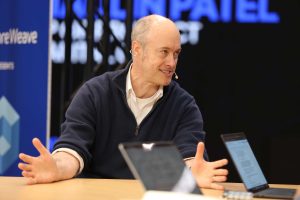
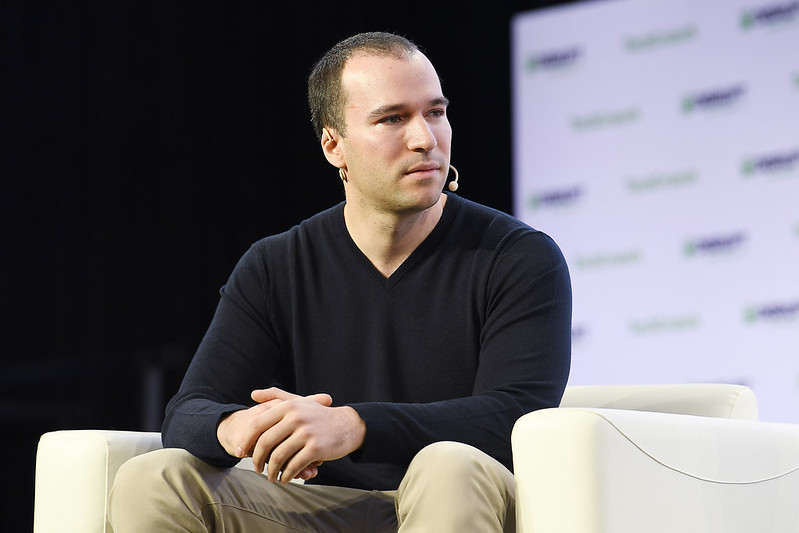
Musk’s civil lawsuit alleges that OpenAI Chief Executive Sam Altman and Brockman (pictured) swerved from the path of the company’s founding goal of becoming a nonprofit for the common good but later turned into moneymaking venture without Musk’s consent.
Brockman, who said he never personally invested any money in the venture, was asked on the stand to explain his fortune – a number that would now place him reasonably high up on the Forbes’ list of the world’s richest people. Brockman testified that the original mission was the same, despite the board selling equity stakes to investors.
When asked by Musk’s lawyer Steven Molo about the $30 billion and the $852 billion company’s ostensible nonprofit mission, Brockman replied, “Compensation was certainly secondary to the mission.”
OpenAI’s attorneys produced evidence of text messages sent by Musk to Brockman two days before the trial started. Musk had written he was trying to “gauge interest in settlement,” after which he warned that if the trial went forward, “you and Sam will be the most hated men in America.”
The lawyers argued that such words were evidence that rather than seeking a legitimate grievance about a for-all-mankind entity becoming a capitalistic venture, Musk, co-founder of rival AI firm xAI, was always only trying to stifle a competitor. “It tends to prove motive and bias, and, in particular, that Mr. Musk’s motivation in pursuing this lawsuit is to attack a competitor and its principals,” the lawyers said.
In what was a combative day for both sides, one that didn’t put tech billionaires in the best light, Molo compared Brockman to a “guy who robs a bank,” a comment Judge Yvonne Gonzalez Rogers struck as argumentative. In a separate statement Molo claimed Brockman had created a “money-making machine” when he started transferring money out of OpenAI’s charitable operation to the for-profit arm.
Brockman responded by saying that in 2018, when he was given his stake, there was no sign OpenAI would ever become financially successful. It was long before the company’s chief product, ChatGPT, was created. He also asserted that the company is still a nonprofit foundation, but that it was agreed from the beginning that there would be a for-profit arm in the spirit of the public good.
Musk, he said, was no longer making donations by 2017 and he left the board a year later. “That is something that we’ve built through blood, sweat and tears, during all these years since Elon left,” Brockman added.
When he was asked by Molo if his $30 billion stake contradicts his “duty to humanity,” Brockman fired back, “No, I believe that we have developed the most well-capitalized nonprofit in human history.” The money, he claimed, was always an afterthought in the larger scheme of things.
Support our mission to keep content open and free by engaging with theCUBE community. Join theCUBE’s Alumni Trust Network, where technology leaders connect, share intelligence and create opportunities.
Founded by tech visionaries John Furrier and Dave Vellante, SiliconANGLE Media has built a dynamic ecosystem of industry-leading digital media brands that reach 15+ million elite tech professionals. Our new proprietary theCUBE AI Video Cloud is breaking ground in audience interaction, leveraging theCUBEai.com neural network to help technology companies make data-driven decisions and stay at the forefront of industry conversations.