 AI
AI
AI
AI







AI

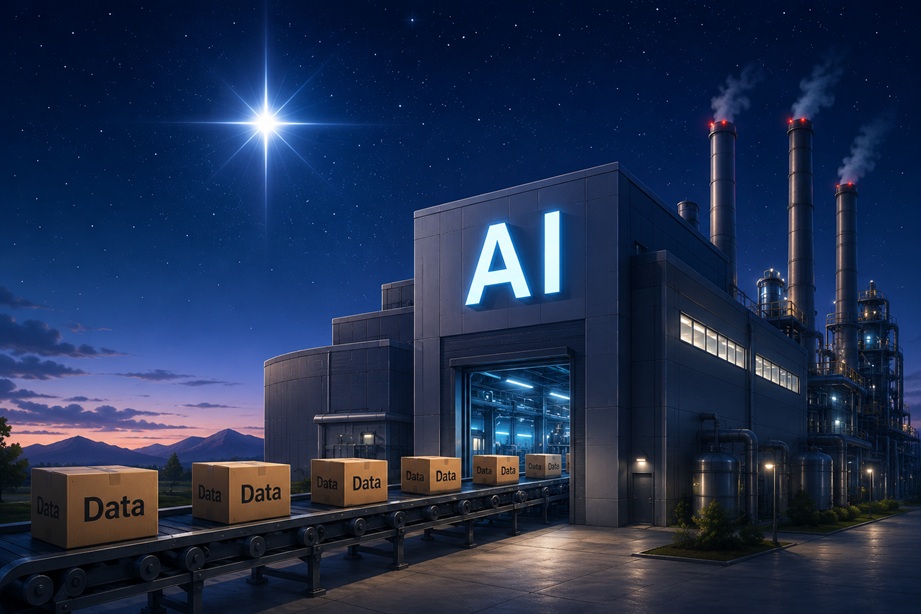
Dell Technologies Inc.’s launch of the AI Factory two years ago this month was positioned by the company as “advancements to manage and protect the data that fuels AI innovation.” This one phrase encapsulated what became Dell’s transformation from hardware infrastructure provider to a major supplier of data intelligence and orchestration layer solutions, and it has been a key driver of its marketing strategy since.
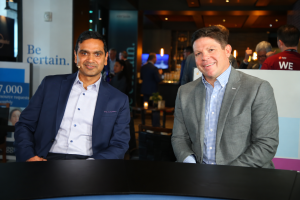
Dell’s ensuing announcements have reflected its intent to deliver enterprise value by providing the infrastructure for the preparation, movement and governance of the data that supports the scale and speed of AI. Whether this involves GPU power, pipeline orchestration or storage, Dell has structured a comprehensive solution to accommodate these needs. The importance of this approach to data orchestration and its impact on Dell’s role in supplying enterprise compute was acknowledged by Chief Executive and founder Michael Dell in an interview with theCUBE, SiliconANGLE Media’s livestreaming studio.
“You’ve heard about 100x token growth and that sort of thing; all that means [is] that data is becoming more valuable because it’s the fuel for these AI factories,” Dell said. “The demand for compute is maybe insatiable; we can say it that way. We don’t see any slowdown in that demand. And, for us, it’s coming from not just the tier two CSPs, [but] from sovereign AI … from enterprise AI. I think we’re still in the early stages of the S-curve adoption of how this is being used inside companies.”
This feature is part of SiliconANGLE Media’s exploration of the architectural shifts powering continuous, production-grade AI. Be sure to check out SiliconANGLE’s extensive coverage of Dell Technologies World, airing May 18–20, featuring interviews with Dell executives and other industry leaders. (* Disclosure below.)
Has Dell’s investment in data orchestration paid off? The numbers so far appear to indicate that it has.
The company has deployed AI Factory systems to more than 4,000 customers, and its AI server sales have climbed from $10 billion in early 2025 to $25 billion, with predictions for $50 billion this year. Dell’s fourth-quarter earnings were up by 39% from the same period one year earlier. The company’s profitability increased commensurately, with net income of $2.26 billion compared with $1.53 billion a year ago.
“Where do we see the biggest adoption?” said Arthur Lewis, president of the Infrastructure Solutions Group at Dell, in an interview with theCUBE. “We see it in really data-intense industries — finance, healthcare, manufacturing — leading the way just by sheer numbers. Organizations that are thinking, ‘Well, I’m going to let someone else figure it out,’ given the pace at which we’re evolving the technology, they’re going to be left behind in perpetuity.”
Dell is also capitalizing on a current move among CIOs to develop AI factories on-premises. An AI enterprise infrastructure survey by Deloitte LLP documented a clear preference for on-prem deployment, and Dell’s own research has found that 84% of organizations prefer to leverage generative AI onsite. This will still follow a hybrid path, according to Jeff Clarke, chief operating officer and vice chairman at Dell.
“Data sets that are very important need to be secured, need to be triaged in real-time where latency matters,” said Clarke, in a conversation with theCUBE. “There’ll be a tendency to do those on-prem, and there’ll be data sets that are less sensitive that are massive scale that need that compute power of the cloud. That continuum I think is very logical and that extends all the way to the edge. That’s how we believe it’s going to be built over the next handful of years.”
Dell made at least two significant enhancements to its enterprise AI portfolio within the last year. These involved the launch of the Dell Automation Platform in August and expansion of the Dell AI Data Platform in March.
The Automation Platform is an orchestration solution to deliver simplified IT operations across AI, private cloud and edge environments. The platform integrates Dell AIOps and automation up and down the stack. Dell followed the release with additional updates to its private cloud, storage and cyber resilience products.
Dell’s marketing strategy is designed to support a disaggregated architecture where compute, memory, storage and networking are decoupled from one another, managed by software. This is part of meeting the needs of customers who want to independently scale resources and switch hypervisors or cloud management platforms without having to replace underlying hardware, according to Lewis.
“There are a lot of things that are going on in terms of customers that are evolving to multi-hypervisor environments,” Lewis explained. “They liked hyperconverged infrastructure from a simplicity perspective, but now HCI doesn’t work because it doesn’t scale the compute and storage independently. We’ve taken that legacy of HCI and VxRail and built something really cool in the Dell Automation Platform.”
Dell’s expansion of its AI Data Platform was announced during Nvidia Corp.’s GTC conference earlier this year. Enhancements included a Data Orchestration Engine, GPU-powered analytics in the data layer, and high-performance storage offerings called Lightning and Exascale.
The message from Dell with these key changes to the AI Data Platform was clear: the company intends to be an end-to-end AI platform resource for the enterprise.
“Think of the AI Data Platform as our unstructured assets, so you would know them as ObjectScale and PowerScale,” Clarke told theCUBE. “You would know it as our new parallel file system that’s now in the hands of customers in beta – Project Lightning. The work that we’re doing with Nvidia around KV cache [is] to speed up inferencing. And then the Data Lakehouse, which is how you ultimately help customers ingest their data.”
Dell made another significant move in March that involved the rollout of a new agentic AI platform designed for enterprises to move from AI pilots to a governed, on-prem digital workforce of agents. The offering, built with blueprints from Cohere North, DataRobot and ClearML, includes Dell PowerEdge servers with Nvidia AI infrastructure to support multi-agent workloads.
Dell’s approach reflects the company’s interest in providing its customers with an on-ramp to the agentic world as part of the AI journey.
“We’ve created these blueprints and reference designs and starter kits, we’ve got hundreds of them now across all sorts of industries, to help customers and our partners get going on this road,” said Michael Dell. “Now, as we have these models and agents and multi-agent systems, what could it be in three or five years, and then what should the process of the organization look like? Let’s first understand that, let’s simplify, standardize the processes, let’s get all the data together. Let’s then apply the AI models and we’ll have something that comes out very different than the old thing we had.”
Dell’s market approach to agents has also been internally driven. The company has been running fully autonomous agents within the company for more than a year and a half, according to its executives. This has included use of agents within financial systems, performing tasks such as reconciliations and accounting journal entries.
This is all part of how AI is modernizing businesses, including Dell itself.
“We’ve talked about the modernization of the Dell company, we’re well into that, two and a half years into it, and we’re seeing real return on the investments to the point that we will accelerate more capability here,” Clarke said. “And we have yet to scratch the surface, which I think is the next level, which is agentic.”
After 42 years, Dell has proved to be remarkably resilient as a company, successfully navigating technology’s PC, dotcom and now AI market disruptions. AI may represent the most significant transformation for Dell as the company seeks to propel itself from the hardware arena and into the world of data intelligence and orchestration.
“What Arthur and Jeff and I and our colleagues at Dell have really done is we’ve viewed this moment as a reset and we’ve said, ‘What could our company actually be if we completely reimagined everything using this technology?’” Michael Dell told theCUBE. “And that’s what we’re building, because that’s the company that’s going to succeed in the 2030s.”
(* Disclosure: TheCUBE is a paid media partner for Dell Technologies World 2026. Sponsors of theCUBE’s event coverage do not have editorial control over content on theCUBE or SiliconANGLE.)
Support our mission to keep content open and free by engaging with theCUBE community. Join theCUBE’s Alumni Trust Network, where technology leaders connect, share intelligence and create opportunities.
Founded by tech visionaries John Furrier and Dave Vellante, SiliconANGLE Media has built a dynamic ecosystem of industry-leading digital media brands that reach 15+ million elite tech professionals. Our new proprietary theCUBE AI Video Cloud is breaking ground in audience interaction, leveraging theCUBEai.com neural network to help technology companies make data-driven decisions and stay at the forefront of industry conversations.