 AI
AI
AI
AI







AI

Open source AI trust has become a central concern for enterprises moving agentic AI into production, where governance, security and reliability matter as much as model performance.
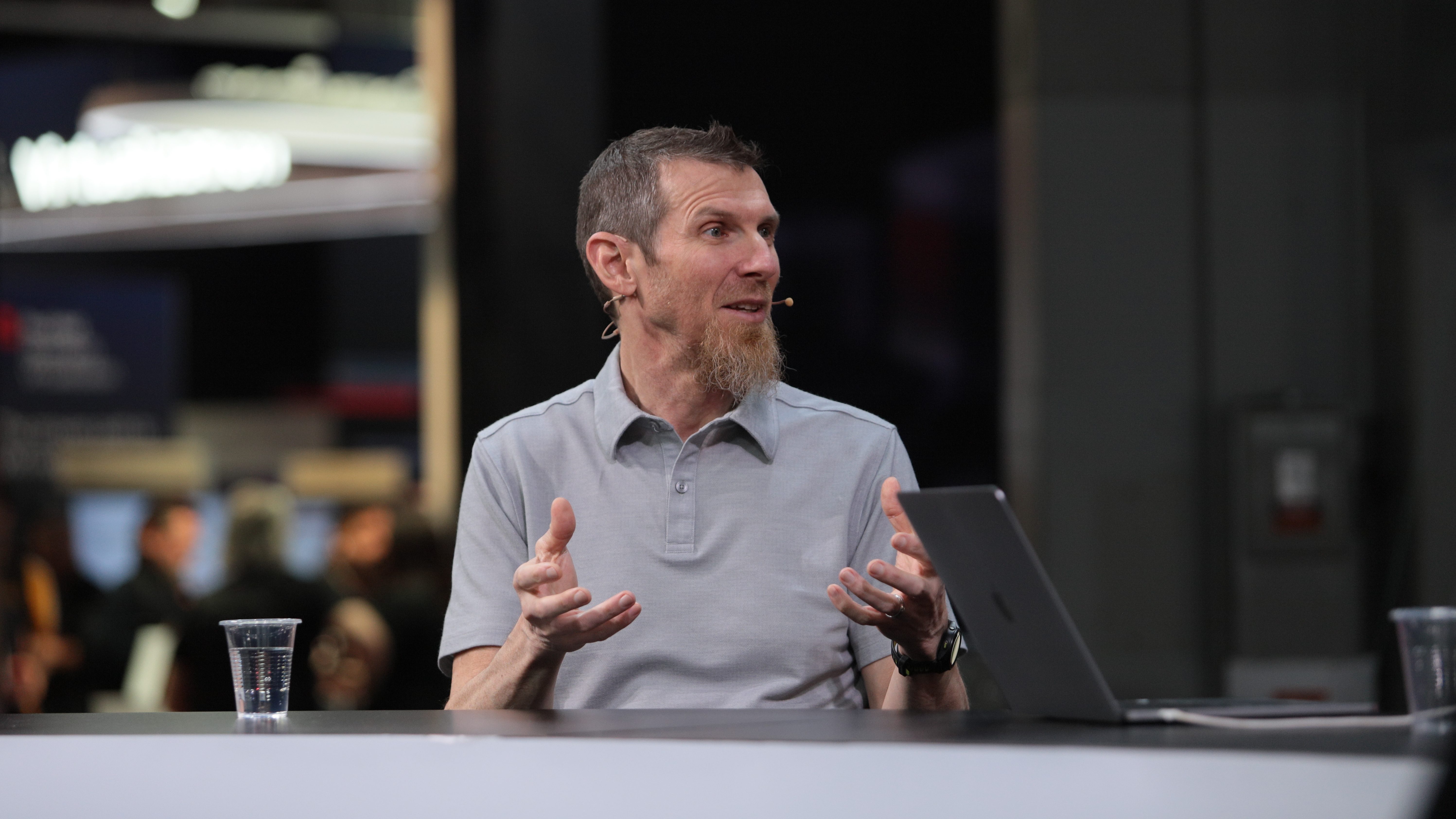
That pressure is landing squarely on platform companies to provide standardized, shared foundations that absorb the complexity so enterprises don’t have to. Notably, the industry has been here before — with Linux and Kubernetes — but the velocity of AI hardware and model cycles is forcing a new kind of co-engineering discipline, according to Chris Wright (pictured), chief technology officer and senior vice president of global engineering at Red Hat Inc.
“As you’re building agents that can write code and do things — make real actions within your real business — how do you trust that?” Wright said. “You got to give it the right sandboxing. You got to put protections around the agent, give it least privileges so it doesn’t think about read versus read-write — very big difference. How do you manage that in scale with potentially hundreds or thousands of agents? I think building trust is critical.”
Wright spoke with theCUBE’s Rob Strechay and Rebecca Knight at Red Hat Summit 2026, during an exclusive broadcast on theCUBE, SiliconANGLE Media’s livestreaming studio. They discussed open source AI trust, inference economics, agent identity governance and Red Hat’s push to establish a standard execution layer for the AI era. (* Disclosure below.)
Red Hat’s answer to enterprise AI complexity rests on the same logic that made Linux and Kubernetes ubiquitous — establish a focal point the entire ecosystem builds toward. The company is making that bet on vLLM as the standard open-source inference engine, backed by its acquisition of Neural Magic Inc., which brought deep vLLM expertise in quantization and inference performance engineering, Wright noted.
“[The model providers] build to vLLM before they ever release the model,” he said. “That’s creating this efficiency at scale. When you bring it into the business, you’ve got the same ability to create operational efficiency. You know what you’re targeting as a builder. I think it’s really important to have these standardized building blocks and help move the industry forward quickly.”
But as the economics of inference become a board-level concern, the path forward requires treating token production the way enterprises treat any other infrastructure cost — with deliberate tooling choices and workload-matched hardware, Wright explained. The right approach is selecting the most performant option per cost and per power ratio for each specific job, rather than defaulting to the most powerful model regardless of task. That calculus demands heterogeneity — across hardware, model sizes and deployment environments, from cloud to shop floor — and it’s exactly where Red Hat sees its converged platform creating durable value.
“Heterogeneity absolutely is the future,” Wright said. “Building heterogeneity, not just in hardware, but in the workloads and the kind of models that you use to support your workloads — the bigger ones, the smaller ones, tuned for a specific task — that’s exactly what we’re focused on.”
Here’s the complete video interview, part of SiliconANGLE’s and theCUBE’s coverage of the Red Hat Summit 2026 event:
(* Disclosure: Red Hat sponsored this segment of theCUBE. Neither Red Hat nor other sponsors have editorial control over content on theCUBE or SiliconANGLE.)
Support our mission to keep content open and free by engaging with theCUBE community. Join theCUBE’s Alumni Trust Network, where technology leaders connect, share intelligence and create opportunities.
Founded by tech visionaries John Furrier and Dave Vellante, SiliconANGLE Media has built a dynamic ecosystem of industry-leading digital media brands that reach 15+ million elite tech professionals. Our new proprietary theCUBE AI Video Cloud is breaking ground in audience interaction, leveraging theCUBEai.com neural network to help technology companies make data-driven decisions and stay at the forefront of industry conversations.