 AI
AI
AI
AI




AI

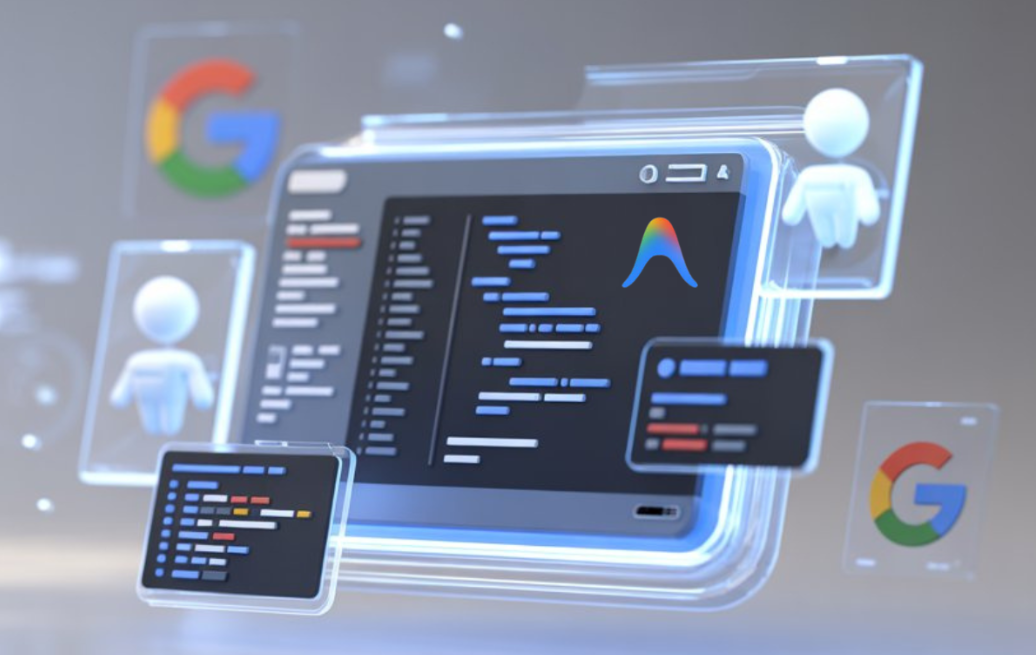
Google Cloud is enhancing its “agent-first” coding platform for developers with the launch of Antigravity 2.0, a new standalone desktop application that enables a full “agent-optimized” user experience.
It comes alongside the debut of Managed Agents in the Gemini application programming interface and native Android vibe coding in Google AI Studio, which were also announced today. The updates arrived during Google I/O today, building upon November’s launch of the original Antigravity platform that’s designed to support artificial intelligence automation at a higher, task-oriented level.
With Antigravity, AI evolves from an assistant to a true collaborator that’s able to work on its own initiative and with minimal supervision. The platform takes the appearance of a standard coding environment, but it’s peppered with AI agents that can access everything from the editor to the terminal and even an integrated web browser. This means they have all of the tools required to autonomously plan and execute complex programming tasks.
The original Antigravity was powered primarily by Gemini 3 Pro, later upgraded to Gemini 3.1 Pro, and from today, users will now have access to Google’s most advanced Gemini 3.5 Flash model. In a blog post, Google DeepMind Director of Software Engineering Varun Mohan noted that 3.5 Flash outperforms Gemini 3.1 Pro on almost all coding benchmarks while running four times faster than any other frontier model, giving developers the “high-speed engine needed for real-world agentic workflows.”
Antigravity 2.0 is meant to act as a central home for agentic interactions, enabling developers to orchestrate multiple AI agents that can perform tasks in parallel. It also introduces “dynamic subagents,” which are for parallelized workflows, scheduled tasks for background automation and new integrations with Google AI Studio, Android and the Firebase mobile development platform.
Developers may prefer a traditional terminal-style experience when the embark on agentic development, and they’re also catered to with Antigravity CLI. It’s a new and lightweight yet high-velocity product surface where agents can be created instantly without the need for a graphical user interface. Finally, Google also revealed the new Antigravity SDK, which provides programmatic access to the same agents found in Antigravity, enabling users to define custom agent behaviors and host them on third-party infrastructure.
Sticking with agentic development, Google said it’s updating the Gemini API for integrating AI capabilities into software applications with the introduction of Managed Agents. Mohan explained that Managed Agents made it possible to spin up new agents that can reason, use third-party tools and execute code in isolated Linux environments with a single API call.
These Managed Agents are all powered by the Antigravity agent harness and Gemini 3.5 Flash, and can be accessed through the Interactions API and through Google AI Studio. Because they use Antigravity’s harness, it means that user’s custom built agents will be based on the same technology and infrastructure as Google’s own agents. Developers can get started building custom agents using Google’s new agent templates, and will also be able to extend the capabilities of their Managed Agents with customized instructions and skills using markdown files.
Another way for developers to access the latest capabilities of Gemini 3.5 Flash is through the Google AI Studio, which is a web-based prototyping environment that makes it simple to experiment with AI, refine prompts and generate API keys.
Google AI Studio is now powered by Antigravity’s coding agents too, and the company said it’s expanding the ways developers can use the platform. For instance, there’s a new mobile application opening for registration now that sacrifices deeper functionality for convenience, allowing developers to “capture an idea on the go and have a working prototype ready by the time you get to your desk,” Mohan said.
Additionally, Google AI Studio is now integrated with Google Workspace, which means AI agents will be able to call relevant Workspace APIs and embed them directly into apps built using the platform. Should developers decide they need more advanced coding functionality, they can now export their entire Google AI Studio projects to the locally-hosted Antigravity platform with a single click.
Finally, there’s a new integration that makes it possible to build native Android applications with a single prompt. Once satisfied, developers will be able to publish their apps directly in the test track within the Google Play Console.
The last major dev-focused update pertained to the Gemini Enterprise Agent Platform, formerly known as Vertex AI, which is the company’s full-stack development platform for building enterprise-grade AI agents and autonomous applications that can plan and execute complex, multistep tasks.
The main update here is all about securing agent-generated code. It’s called CodeMender, a newly integrated AI code security agent that was first created by Google DeepMind researchers.
By leveraging Agent Platform’s capabilities and the most advanced Gemini models, it autonomously searches for and identifies any vulnerabilities in newly created code, including that generated by other agents. Once a bug is identified, CodeMender will recommend a precise fix, apply it on command and then securely test the code to ensure there are no more loopholes or weaknesses.
Support our mission to keep content open and free by engaging with theCUBE community. Join theCUBE’s Alumni Trust Network, where technology leaders connect, share intelligence and create opportunities.
Founded by tech visionaries John Furrier and Dave Vellante, SiliconANGLE Media has built a dynamic ecosystem of industry-leading digital media brands that reach 15+ million elite tech professionals. Our new proprietary theCUBE AI Video Cloud is breaking ground in audience interaction, leveraging theCUBEai.com neural network to help technology companies make data-driven decisions and stay at the forefront of industry conversations.