 AI
AI
AI
AI



AI

Curated AI ecosystems are becoming the defining architecture of enterprise AI.
The shift does not announce itself with spectacle. It shows up in procurement decisions, architecture diagrams and the slow retreat from fragmented experimentation toward systems that can actually hold under governance, security and operational pressure. The story stops being about model accuracy in isolation and becomes about whether anything survives contact with production.
Connecting AI capabilities in production without recreating enterprise silos has become one of the central challenges facing companies as they move beyond experimentation.
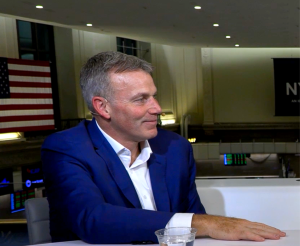
“The difficulty is not in building individual AI capabilities; it is in connecting them in a way that actually works in production environments without recreating the same silos you were trying to eliminate,” said Robin Braun, vice president of AI business development at Hewlett Packard Enterprise Co., describing the underlying challenge in structural terms during an interview with theCUBE, SiliconANGLE Media’s livestreaming studio.
Gartner Inc. has repeatedly observed that most AI initiatives fail to reach production due to governance and integration complexity rather than model quality itself. McKinsey and Co.’s “State of AI” report similarly shows that while AI adoption is widespread, only a small fraction of organizations successfully industrialize it at scale, often citing data fragmentation and operational overhead as primary blockers.
The AI-scaling problem is increasingly showing up in the gap between adoption and production, according to Paul Nashawaty, principal analyst at theCUBE Research.
“Over 90% of organizations are using or evaluating AI, but only about 5% have scaled it into production,” Nashawaty said.
This feature is part of SiliconANGLE Media’s ongoing coverage of HPE’s “Unleash AI Momentum” series, which explores how enterprises are moving AI from experimentation into production through curated ecosystems, partner integrations and governed infrastructure. (* Disclosure below.)
Enterprise AI has accumulated a familiar failure mode: Pilots proliferate, but production systems stall. The gap between the two becomes a holding pattern that few organizations fully escape.
As companies assemble AI systems from multiple tools and frameworks, integration itself is becoming the bottleneck, according to Rob Strechay, principal analyst at theCUBE Research.
“Organizations stitching together open-source frameworks, vector databases, orchestration layers and security controls are discovering operational complexity becomes the primary barrier,” he said.
The issue does not sit in any single layer of the stack. It accumulates across them. Each added tool introduces coordination overhead that rarely shows up in initial design reviews. Strechay has repeatedly described this as operational accumulation, where interdependent ecosystems expand faster than governance can stabilize them.
That gap between ambition and execution defines the current enterprise AI cycle.
As fragmentation scales, so does caution. CIOs are increasingly shifting away from open-ended AI experimentation toward curated ecosystems that reduce variance and offer governance as a built-in foundation. That shift is also becoming visible in enterprise buying behavior, Nashawaty pointed out.
“These opinionated platforms are becoming the default; they reduce friction, enforce governance and turn AI from fragmented pilots into scalable capabilities,” he said.
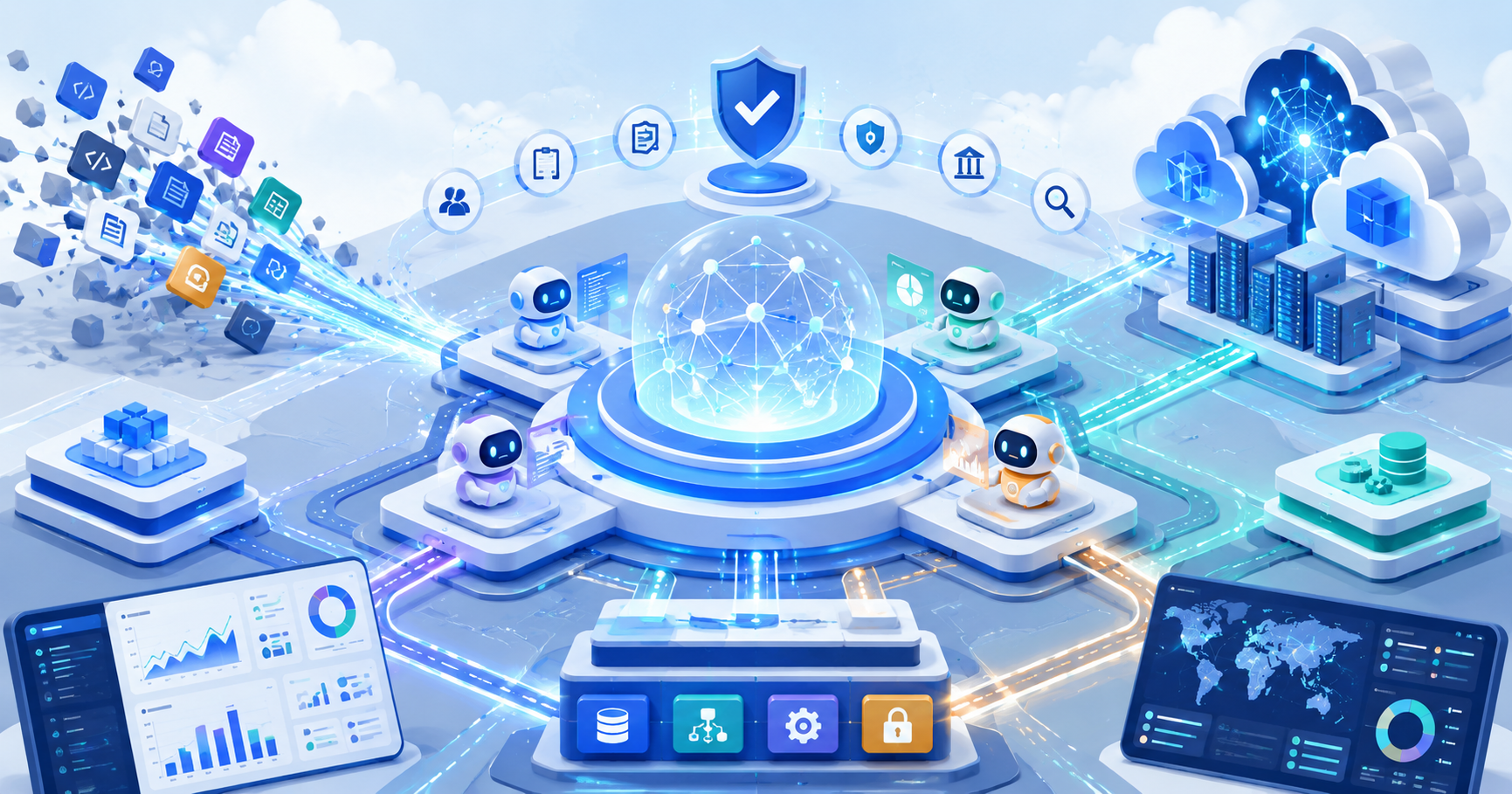
HPE is heeding the trend and embracing operational readiness in its approach to AI. It’s offering customers a “curated ecosystem of vetted ISV partners” designed to reduce integration friction and enforce governance from the start, according to Braun.
The orchestration model behind that ecosystem depends on specialized AI agents, each narrowly focused on a specific operational task rather than one monolithic model trying to handle everything at once.
“We’ve taken an approach of tens if not hundreds of different agents that are micro-focused on those particular jobs,” said Luke Norris, co-founder and chief executive officer of Kamiwaza.ai, one of the independent software vendors inside HPE’s broader Unleash AI ecosystem.
For public-sector deployments, the value proposition is less about AI novelty and more about operational scale. Cities facing fluctuating populations, budget pressure and aging infrastructure need integrated platforms that reduce staffing overhead while still expanding services, according to Jack Hogan, VP of advanced growth technologies at SHI International, HPE’s integration and deployment partner for several public-sector AI initiatives.
“Having the right platform allows for cities with dynamic populations to manage things with even less resources as you scale up,” Hogan said.
Pre-integrated platforms are becoming the preferred enterprise model for reducing that operational burden, Strechay pointed out.
“The enterprise default is becoming platforms that provide pre-integrated stacks, validated architectures and consistent hybrid-cloud operations,” he said.
The same integration that reduces operational chaos also changes the balance of power inside enterprise AI. Curated ecosystems collapse layers that companies once managed separately. Infrastructure, orchestration, governance, observability and security increasingly arrive as pre-validated bundles instead of interchangeable parts sitting loosely beside each other.
That shift creates a tension vendors are still trying to navigate. Enterprises want systems stable enough to survive production workloads, but they also fear recreating the same lock-in patterns that defined earlier eras of enterprise software and cloud computing.
The challenge is to reduce complexity without closing off flexibility, according to Strechay.
“Curated ecosystems abstract much of that complexity while still preserving flexibility and openness,” he said.
HPE’s position is not that enterprises should lock themselves into a single vertically integrated AI stack. The company has instead framed Unleash AI as a broad partner ecosystem built around validated integrations, where customers can combine infrastructure, models, orchestration platforms and ISV tooling without stitching every component together manually.
This is also why HPE continues emphasizing hybrid-cloud operations and a growing catalog of ecosystem partners rather than a closed proprietary platform. The strategy is an attempt to reduce integration burden while still allowing customers to swap or add components across a curated ecosystem of partners.
That operational distinction matters because the goal is not simply to place tools beside each other, but to make them work together, Braun pointed out.
“We’re not just having platforms next to each other. We’re having applications integrated and talking back and forth,” she said.
That distinction matters because many enterprises already spent years trying to assemble AI environments from disconnected open-source frameworks, vector databases and orchestration tools, only to discover that the integration burden swallowed budgets and slowed deployment timelines. HPE and its partners are betting that customers will accept some ecosystem gravity in exchange for systems that actually work under production conditions.
The tradeoff sits in plain view now. Curated ecosystems promise more flexibility than closed single-vendor platforms but less raw optionality than fully DIY architectures. For nervous CIOs staring at sprawling AI pilots, that middle ground increasingly looks like the safer bet.
The strongest argument for curated AI ecosystems is no longer vendor theory or analyst forecasting. It is deployment speed and operational follow-through. HPE’s Unleash AI ecosystem has increasingly focused on combining infrastructure, orchestration, integration services and governance into production-ready environments that customers can actually implement without building every layer themselves from scratch.
In Vail, Colorado, that translated into municipal AI deployments moving from planning to active use cases within months rather than years.
“We’ve developed four use cases, and within months we are already seeing transformation,” said Russell Forrest, town manager of Vail.
Layered AI architecture is also making larger enterprise outcomes more realistic than they were only a short time ago.
“We can really start to do high-level outcomes for very large organizations that even a year or two ago was unfathomable,” Norris said.
The shift is moving enterprises from being “API-token consumers to token producers,” where AI systems no longer sit on top of business processes but inside them, according to Strechay.
Enterprises are moving toward curated AI ecosystems because fragmented experimentation has repeatedly failed under production pressure. Curated ecosystems do not eliminate tradeoffs around openness or dependency, but they increasingly offer something enterprises value more right now — systems that can actually scale without collapsing under integration complexity.
(* Disclosure: TheCUBE is a paid media partner for HPE’s “Unleash AI Momentum” interview series. Neither HPE, the sponsor of theCUBE’s event coverage, nor other sponsors have editorial control over content on theCUBE or SiliconANGLE.)
Support our mission to keep content open and free by engaging with theCUBE community. Join theCUBE’s Alumni Trust Network, where technology leaders connect, share intelligence and create opportunities.
Founded by tech visionaries John Furrier and Dave Vellante, SiliconANGLE Media has built a dynamic ecosystem of industry-leading digital media brands that reach 15+ million elite tech professionals. Our new proprietary theCUBE AI Video Cloud is breaking ground in audience interaction, leveraging theCUBEai.com neural network to help technology companies make data-driven decisions and stay at the forefront of industry conversations.