 CLOUD
CLOUD
CLOUD
CLOUD


CLOUD

Shares of the financial services and human resources software company Workday Inc. rose more than 10% in late trading after it reported first-quarter earnings and revenue that came in higher than expected, and also bumped up its full-year margin forecast, increasing optimism over its future profitability.
The company reported earnings before certain costs such as stock compensation of $2.66 per share, easily beating Wall Street’s target of $2.51 per share. Revenue for the period rose 13%, to $2.54 billion, edging past the consensus estimate of $2.52 billion. Subscription revenue, which is a key metric for the company, increased 14%, to $2.35 billion, with 40% of that growth coming from net new business, said Chief Commercial Officer Rob Enslin.
Those results helped Workday to drive up its bottom line, with net income at the end of the quarter coming to $222 million, compared with just $68 million in the year-ago period.
In terms of guidance, the company said it’s looking for subscription revenue of $2.46 billion at the midpoint of its range, and called for a 30% adjusted operating margin in the second quarter. Wall Street had been looking for slightly lower subscription sales of $2.45 billion and the same 30% margin.
What really encouraged investors was the longer-term margin forecast. Workday said it’s now projecting a 30.5% adjusted operating margin for the full year, up from 30% in February, with revenue growth still pegged at between 12% and 13%.
The results and guidance helped earn a reprieve for Workday, whose stock has endured its worst year since the company first went public in 2012. This year, investors have been fretting about the rise of generative artificial intelligence models and the prospect of their reducing growth opportunities for software companies. Even with today’s after-hours gains, Workday’s stock is still down 43% in the year to date. Meanwhile, the broader S&P 500 has gained about 9% this year.
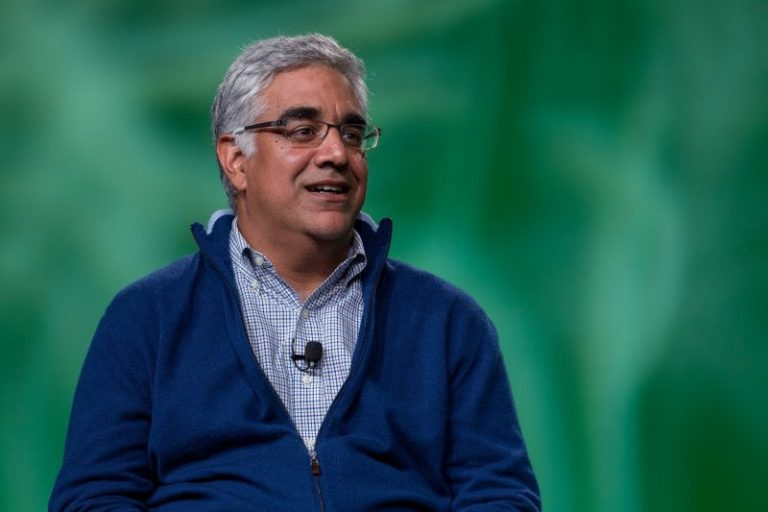
Workday’s fortunes weren’t helped by the disruption in its leadership ranks. Three months ago, the company revealed that its then-Chief Executive Carl Eschenbach would be stepping down from the role. He was replaced by founder and former CEO Aneel Bhusri (pictured), who resumed his old job to lead the company through a tough period.
One of the ways Workday has been trying to stem fears of AI disruption is by investing in its own AI innovations, and in March it announced the availability of a new conversational “agentic AI” layer called Sana, which is aimed at executives, managers and other employees. With Sana’s agents, they can retrieve information, initiate tasks, review data and automate some decision making.
“Our core business is strong, our AI strategy is working, and we’re moving with the speed and focus required to lead,” Bhusri said in a statement. He added that the number of clients using its AI agents has more than doubled from the previous quarter, with over 4,000 using at least one.
In answer to a question about the impact of AI, Workday’s President of Product and Technology Gerrit Kazmaier told analysts on a conference call that annualized revenue from its agentic offering is fast approaching $500 million. “The 150th feature in HR or finance is not going to move the needle for our business,” he said. “The next agentic application will.”
Investors were likely surprised by Workday’s increased profits and revenue growth, because it came before it saw any real business impact from the agentic Sana offerings, said Holger Mueller of Constellation Research. Which means that all of the traction it’s enjoying now is from its earlier generation of packaged agents. “It’s pretty remarkable that the company is already able to leverage that momentum,” he said.
The analyst believes this has created a lot of optimism among investors that Workday can quickly get traction with the new Sana agents and start converting it into revenue, perhaps as soon as the next quarter, but especially in the latter half of the year. “The AI vision, which started with general work capabilities and then embedded ERP-related agents and automation into that, feels compelling and generally unique in the current enterprise systems landscape,” Mueller said. “That should fuel solid growth in the later quarters this year.”
But it may not all be plain sailing. Because Workday faces competition from rivals such as Salesforce Inc. and ServiceNow Inc. for enterprise’s agentic spending, it is going to have to “both innovate and differentiate why its AI delivers comparatively more value,” said Valoir analyst Rebecca Wettemann.
“To ward off saaspocalypse rumors, Workday needs to show the market that its AI is gaining momentum,” she said, using a term that reflects the feeling of impending doom that’s affected software-as-a-service companies this year. She explained that Workday’s customers have a lot of alternatives when it comes to agentic systems, and argued that even if a customer uses Workday’s platforms at the application layer, that doesn’t guarantee it will also use its agentic offerings.
According to Wettemann, one of Workday’s main problems is the growing competition it faces. It’s one of the more expensive enterprise software platforms, both in terms of its deployment and support costs, she said. “It’s also dependent on a per-user pricing model, which means that it’s less insulated from a SaaSpocalypse than some of its peers,” she added.
Unlike many of its peers in the software industry, Workday has not yet announced any significant layoffs so far this year, and Bhusri had some reassuring news for the company’s employees when he was asked about this on the call. He insisted that he wants to keep the company’s headcount as close to flat as possible during the 2027 fiscal year, even as its employees increase their usage of agentic tools and services from other companies.
Support our mission to keep content open and free by engaging with theCUBE community. Join theCUBE’s Alumni Trust Network, where technology leaders connect, share intelligence and create opportunities.
Founded by tech visionaries John Furrier and Dave Vellante, SiliconANGLE Media has built a dynamic ecosystem of industry-leading digital media brands that reach 15+ million elite tech professionals. Our new proprietary theCUBE AI Video Cloud is breaking ground in audience interaction, leveraging theCUBEai.com neural network to help technology companies make data-driven decisions and stay at the forefront of industry conversations.