 AI
AI
AI
AI


AI

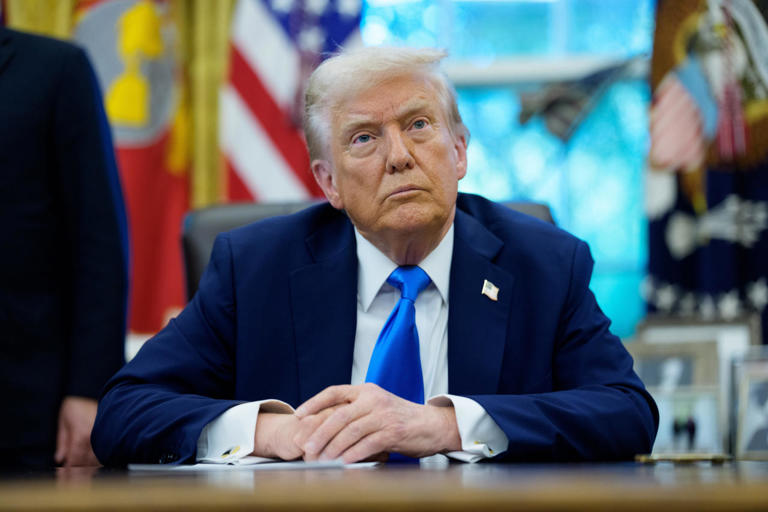
U.S. President Donald Trump has delayed the signing of an executive order designed to regulate advanced artificial intelligence models.
“I didn’t like certain aspects of it. I postponed it,” Trump told reporters at a Thursday event in the Oval Office.
According to Politico, the decision came after several prominent tech industry figures expressed opposition to the directive. The group reportedly included SpaceX Corp. and Tesla Inc. Chief Executive Elon Musk, Meta Platforms Inc. CEO Mark Zuckerberg and venture capitalist David Sacks, a former White House adviser. OpenAI Group PBC is said to have supported the order.
The White House reportedly shared a draft of the directive with private sector representatives late Tuesday. That version called on AI developers to submit certain frontier models to the federal government for review at least 90 days before their release. Additionally, the draft specified that participating companies should give critical infrastructure operators early access to their models.
The order would have made participation in the initiative voluntary. It specified that the Treasury Department should run the AI review program with the support of several other agencies. The participants would have included the Office of the National Cyber Director, the National Security Agency and the Cybersecurity and Infrastructure Security Agency.
The proposed AI review program focuses on algorithms designated as “covered frontier models.” The draft executive order would have given federal agencies 60 days to develop a “classified benchmarking process” for determining which systems should receive the designation.
The initiative would presumably focus on AI models such as Anthropic PBC’s Claude Mythos Preview. The algorithm, which made its debut last month, is highly adept at discovering software vulnerabilities. Anthropic says that the model has so far identified thousands of high-severity flaws.
Earlier large language models also demonstrated the ability to find cybersecurity weaknesses. However, they struggled to determine whether those vulnerabilities could be exploited in practice. Claude Mythos Preview has no such limitation: It can chain together multiple zero-day flaws into sophisticated cyberattacks.
The draft executive order reportedly included a section dedicated to cybersecurity. It called on government agencies to “establish or expand” internal programs that use AI tools to mitigate cyberattacks. Additionally, the directive called on officials to identify federal grant programs that could be used to support such initiatives.
According to Politico, the White House invited several prominent tech industry figures to the Thursday signing event. The group included Anthropic CEO Dario Amodei, Zuckerberg and OpenAI CEO Sam Altman, but the trio indicated that they would not be able to attend. The attendance issues reportedly factored into Trump’s decision not to sign the order.
Separately, the White House has reportedly given OpenAI the green light to back state-level AI regulations. Last year, Trump signed an executive order meant to limit such laws. The directive called for the establishment of a litigation task force dedicated to challenging state laws that don’t facilitate a “minimally burdensome national policy framework for AI.”
Support our mission to keep content open and free by engaging with theCUBE community. Join theCUBE’s Alumni Trust Network, where technology leaders connect, share intelligence and create opportunities.
Founded by tech visionaries John Furrier and Dave Vellante, SiliconANGLE Media has built a dynamic ecosystem of industry-leading digital media brands that reach 15+ million elite tech professionals. Our new proprietary theCUBE AI Video Cloud is breaking ground in audience interaction, leveraging theCUBEai.com neural network to help technology companies make data-driven decisions and stay at the forefront of industry conversations.