 AI
AI
AI
AI



AI

As organizations push to convert AI ambition into defensible business results, many are discovering that infrastructure alone is not enough. Instead, the real challenge lies in reconciling decades of fragmented enterprise data into actionable intelligence.
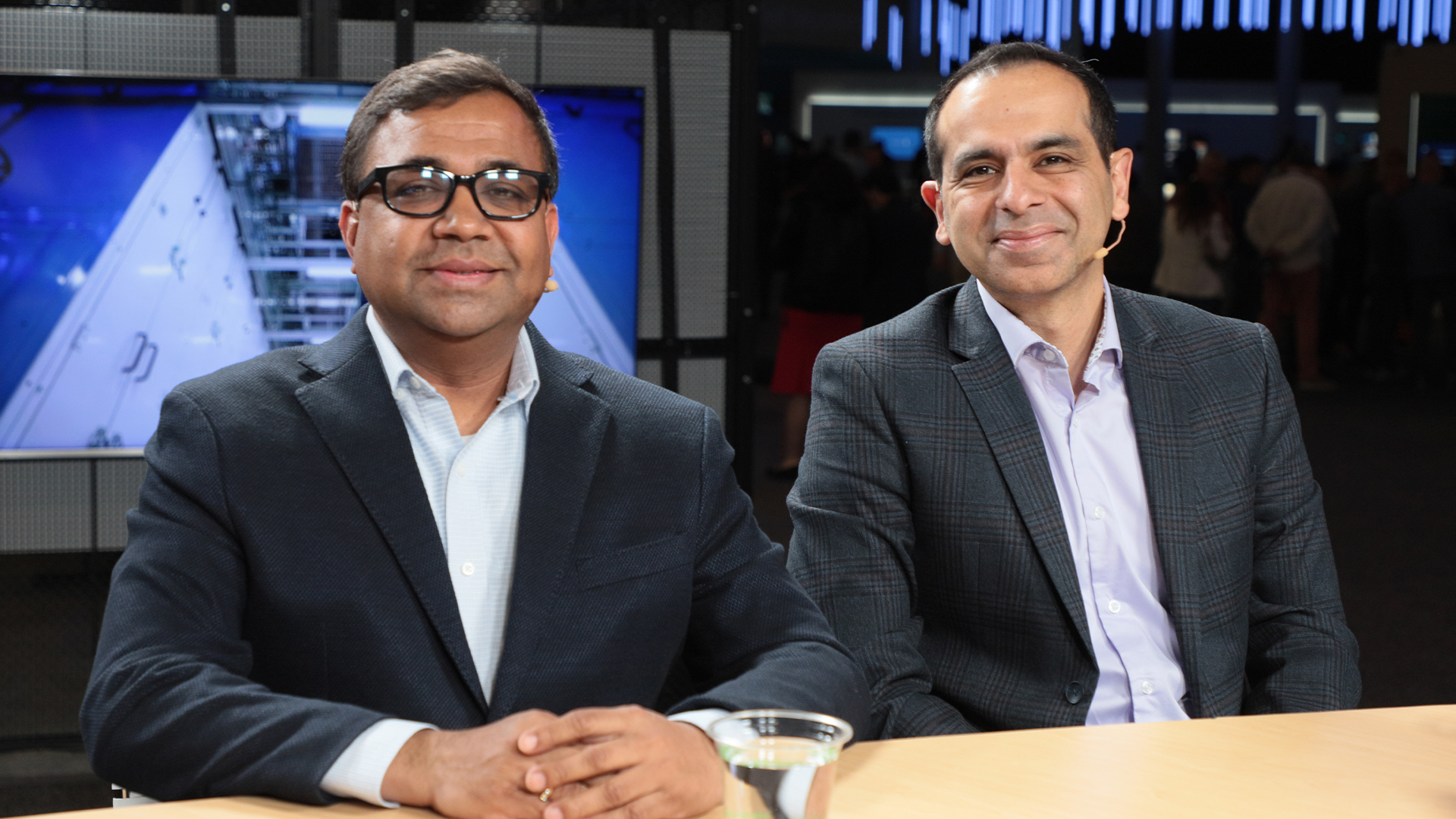
Solving that challenge is now a core focus of Dell Technologies Inc.’s AI Data Platform, built in partnership with Nvidia Corp. Enterprise data today is spread across countless systems of record and often exists in unstructured formats that must be tagged and fed into AI pipelines before it can power models and applications, according to Varun Chhabra (pictured, right), senior vice president of product marketing at Dell. To fix that, the entire data pipeline must be managed end to end.
“[Resolving the data problem requires] a lot of the work, not just at the storage level, but data ingest, data curation, orchestrating the entire data pipeline — that’s really the focus to make sure that data gets fed into the GPUs,” Chhabra said. “That intelligence and business context, which is really what data is, makes the AI outcomes more powerful.”
Chhabra and Rajesh Rajamaran (left), vice president and chief technology officer of Dell Storage, AI data storage and data protection at Dell, spoke with theCUBE’s John Furrier and Dave Vellante at Dell Technologies World 2026, during an exclusive broadcast on theCUBE, SiliconANGLE Media’s livestreaming studio. They discussed how data has emerged as the hidden bottleneck in enterprise AI adoption and why scalable AI depends on the ability to curate and operationalize fragmented enterprise data. (* Disclosure below.)
Before enterprises can scale AI, they first need to understand where their data comes from, how to make it accessible across distributed environments and how to transform it into usable intelligence. Building that kind of agentic pipeline requires technologies that can connect data, create context and orchestrate it all into an AI-ready foundation, according to Rajamaran. No single vendor can do that alone — pulling together distributed data and assembling the scaffolding for agentic AI demands a broad ecosystem of partners and technologies working in concert.
“There’s a lot of technology that we have put together, and we work with a lot of partners,” Rajamaran said. “We believe that as data is important — data is not in one place — which means we have to bring together all forms of data.”
Ultimately, the shift Dell is engineering is less about any single product and more about collapsing the complexity that has long kept enterprise AI stuck at the proof-of-concept stage — stitching together storage, curation, orchestration and partner ecosystems into something customers can actually consume at scale, Chhabra explained.
“I think sometimes when we talk about these different brand new toys, we lose our focus on that stuff,” he said. “[It’s] really important for people to remember, wherever they are in their journey, we’ve got something for them.”
Here’s the complete video interview, part of SiliconANGLE’s and theCUBE’s coverage of Dell Technologies World 2026:
(* Disclosure: TheCUBE is a paid media partner for Dell Technologies World. Neither Dell, the sponsor of theCUBE’s event coverage, nor other sponsors have editorial control over content on theCUBE or SiliconANGLE.)
Support our mission to keep content open and free by engaging with theCUBE community. Join theCUBE’s Alumni Trust Network, where technology leaders connect, share intelligence and create opportunities.
Founded by tech visionaries John Furrier and Dave Vellante, SiliconANGLE Media has built a dynamic ecosystem of industry-leading digital media brands that reach 15+ million elite tech professionals. Our new proprietary theCUBE AI Video Cloud is breaking ground in audience interaction, leveraging theCUBEai.com neural network to help technology companies make data-driven decisions and stay at the forefront of industry conversations.