 INFRA
INFRA
INFRA
INFRA











INFRA

Rack-scale infrastructure has become the defining unit of deployment as enterprises shift from individual servers to fully integrated racks to meet the extreme power and cooling demands of production AI factories.
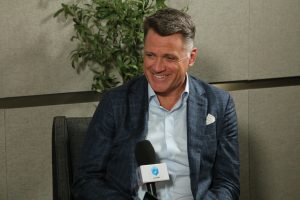
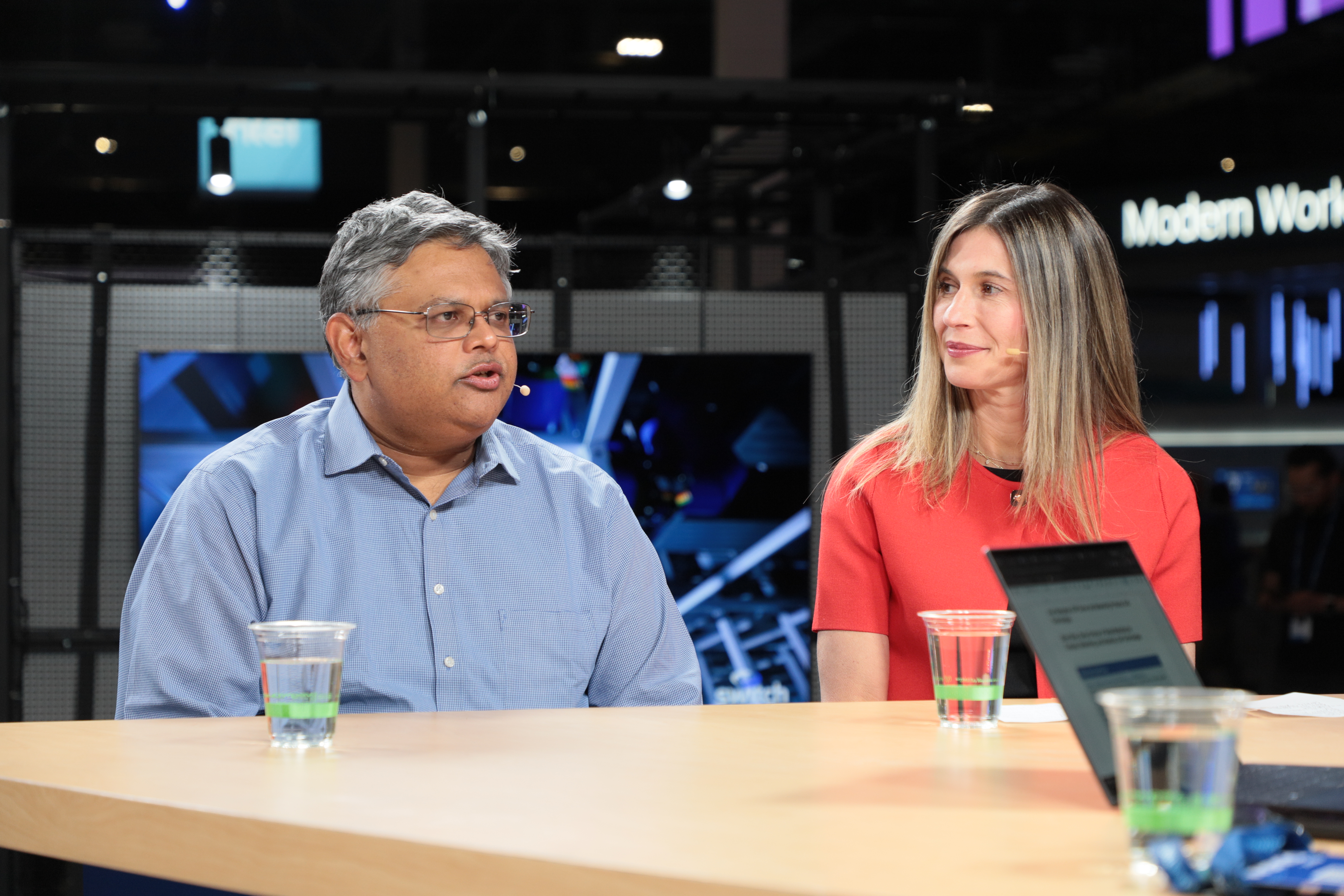
Dell Technologies Inc. has spent years positioning itself at the center of that shift, and at Dell Technologies World 2026 the company unveiled the expanded PowerRack portfolio to bring compute, networking and storage together under a single rack-scale system. The move reflects how far Dell’s engineering priorities have evolved beyond the individual server, according to Arun Narayanan (pictured, left), senior vice president for compute and networking product management at Dell. It is now apparent that a rack-level rethink is unavoidable given skyrocketing power density.
“Go back two years ago, the largest, most powerful rack was 80 kilowatts,” Narayanan said. “Come to Vera Rubin, you’re going to get racks of 235 kilowatts, and then get to the next generation of Rubin Ultra and Kyber, you’re going to very quickly get to one megawatt racks. You have to fundamentally redesign everything from power distribution to cooling.”
Narayanan and Alison Biers (right), global marketing senior director for servers, networking and global industries at Dell, spoke with Dave Vellante and John Furrier at Dell Technologies World 2026, during an exclusive broadcast on theCUBE, SiliconANGLE Media’s livestreaming studio. They discussed rack-scale infrastructure, the expanded PowerRack portfolio, liquid cooling advancements and AI networking strategy. (* Disclosure below.)
The scope of the engineering challenge behind today’s AI infrastructure is more demanding than most enterprises realize. As rack-level power requirements race toward the one-megawatt threshold, Dell has retooled its cooling strategy from the ground up — moving from hybrid liquid cooling in earlier generations to a fully liquid-cooled architecture in its current portfolio, Narayanan noted. The company is also working several years ahead, exploring two-phase cooling and further refinements to immersion cooling to meet requirements that don’t yet exist in production, he added.
“In the next generation with Vera Rubin and everything we’re doing in the portfolio, we are at 100% liquid cooled solution,” Narayanan said. “That means there’s nothing in the component that’s not touched by cold plate. We’ve also innovated on the cooling technology itself — the cold plate design, the CDU designs — getting into, ‘What is the pressure that’s needed? What is the temperature that’s needed?'”
But not every enterprise can retrofit a data center for direct liquid cooling, and Dell is addressing that reality with a continued air-cooled portfolio. The company ranked No. 1 among rack-scale infrastructure providers in 2025 by IDC — a position tied directly to the PowerRack system’s factory-tested, turnkey model that takes customers from delivery to full production in about six hours, according to Biers.
“It’s not just about having the right technology, it’s also about that turnkey ability,” Biers said. “Everything has really been engineered together as a system and that’s why we’re the number one rack scale vendor now this year — ranked by IDC. It’s why our customers [go] from delivery timeframe to full production in six hours. It’s really an incredible feat.”
On the networking side, Narayanan made the case for SONiC as the future operating system for AI infrastructure. The open-source network operating system, now hosted by the Linux Foundation, has found footing at hyperscalers and is gaining traction across enterprise AI deployments. Dell is deploying it across Broadcom Tomahawk and Nvidia Spectrum-based switching fabrics alike, with the goal of making networking as composable as the rest of the stack, he added.
“SONiC is the Linux of networking,” Narayanan said. “Linux transformed data center computing. I think SONiC will transform AI networking. We need lightweight, high bandwidth, low latency network operating systems — and SONiC is the future there.”
Here’s the complete video interview, part of SiliconANGLE’s and theCUBE’s coverage of Dell Technologies World 2026:
(* Disclosure: TheCUBE is a paid media partner for Dell Technologies World. Neither Dell, the sponsor of theCUBE’s event coverage, nor other sponsors have editorial control over content on theCUBE or SiliconANGLE.)
Support our mission to keep content open and free by engaging with theCUBE community. Join theCUBE’s Alumni Trust Network, where technology leaders connect, share intelligence and create opportunities.
Founded by tech visionaries John Furrier and Dave Vellante, SiliconANGLE Media has built a dynamic ecosystem of industry-leading digital media brands that reach 15+ million elite tech professionals. Our new proprietary theCUBE AI Video Cloud is breaking ground in audience interaction, leveraging theCUBEai.com neural network to help technology companies make data-driven decisions and stay at the forefront of industry conversations.