 AI
AI
AI
AI





AI

Physical AI is no longer a concept confined to factory floors and autonomous vehicles — it is reshaping the complex, time-sensitive operations of some of the world’s busiest airports.
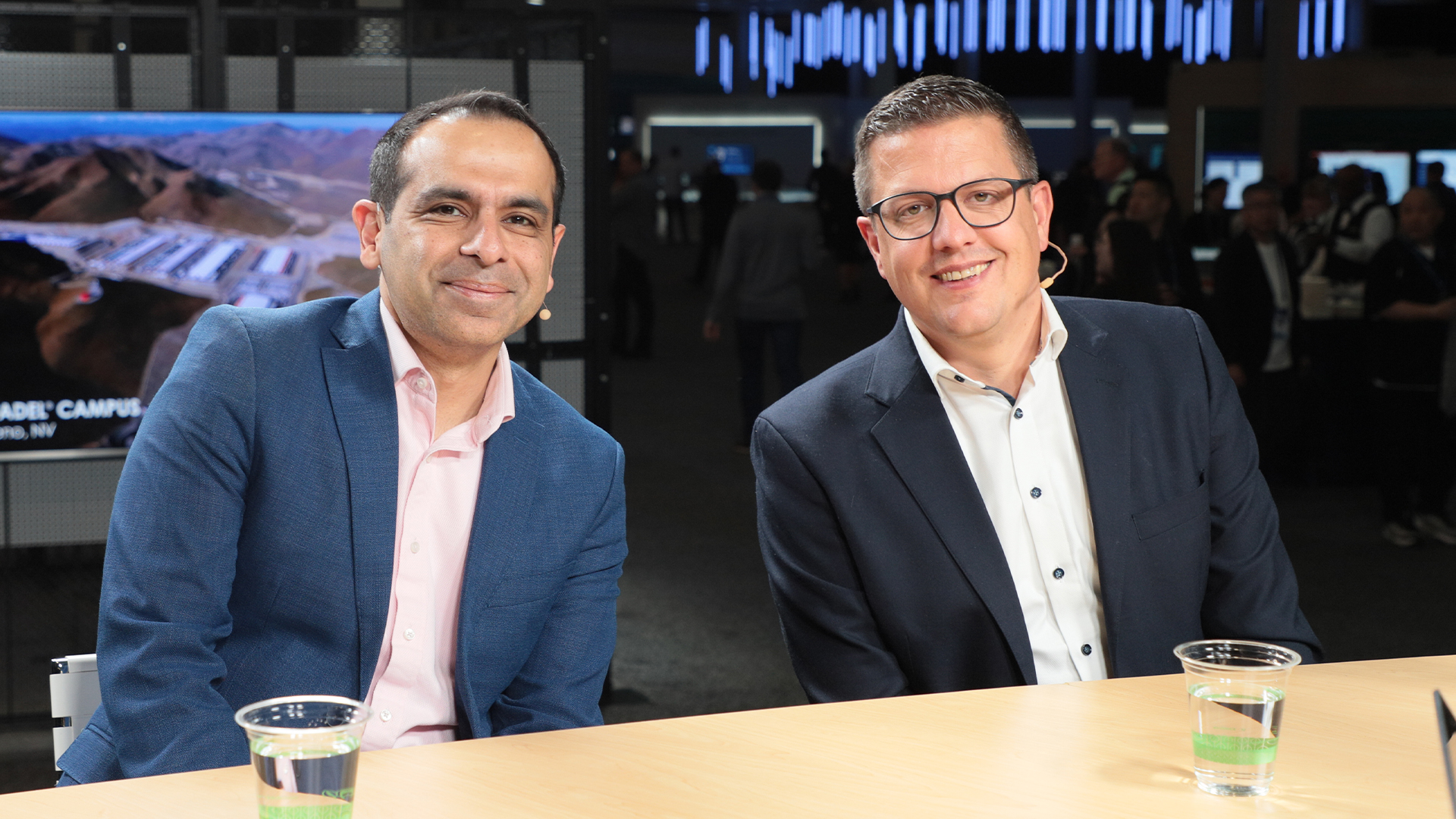
The operators managing dozens of airports and tens of millions of passengers face decisions that cannot wait for a round-trip to the cloud, making low-latency, on-premises AI processing a competitive imperative. The challenge is integrating siloed operational data — from ground handling to cargo to aircraft turnarounds — into a coherent intelligence layer that drives measurable outcomes, according to Varun Chhabra (pictured, left), senior vice president of product marketing at Dell Technologies Inc.
“The agentic AI conversation has to start with the data,” Chhabra said. “Agents act on context. The more context you can give an agent, the more accurate they will be and the better outcomes will be. The airport scenario is a perfect example — you’ve got data in so many places from so many sensors. How do you ingest that? How do you tag it, curate it and decide what you want to make available to which model?”
Chhabra and Fritz Oswald (right), senior vice president of IT infrastructure at Fraport AG, spoke with theCUBE’s Dave Vellante and John Furrier at Dell Technologies World 2026, during an exclusive broadcast on theCUBE, SiliconANGLE Media’s livestreaming studio. They discussed physical AI use cases in airport operations, edge computing strategy and the path toward agentic AI governance. (* Disclosure below.)
Fraport manages 29 airports and handles about 174 million passengers annually, with Frankfurt alone serving roughly 60 million last year — and the newly opened Terminal 3 built to handle up to 90 million. That scale demands infrastructure that processes intelligence at the edge, not in a distant cloud, Oswald noted. With Dell Private Cloud running Azure Local on-premises, Fraport deployed an edge compute to analyze 600 high-resolution video streams — three cameras per aircraft stand — without saturating its network, he added.
“We found that we already have cameras in place,” Oswald said. “We can analyze the video streams with AI — on the edge, right where it occurs — and we generate timestamps for every process that is happening, and for the first time we can really see what is happening on the aircraft stand during the turnaround of an aircraft.”
The operational gains are concrete. Ground crews previously waited an average of 16 minutes at aircraft stands; real-time data now enables just-in-time dispatch, eliminating that idle time, according to Oswald. The same visibility is enabling Fraport to pursue physical AI use cases beyond video analytics — including connected autonomous vehicles that use pre-loaded pushback clearance data from operational systems to reroute across the apron before a conflict occurs, rather than relying solely on lidar sensors. As a highly regulated business, Fraport also depends on the private cloud model to keep sensitive data on-campus and maintain mission-critical uptime independent of internet connectivity.
“I always tell the people, if we bring 99% of the aircraft safely to the ground, it wouldn’t be enough,” Oswald said. “The challenge for us and for all other companies is really bringing innovation with those agents together with good governance and managing it right.”
Here’s the complete video interview, part of SiliconANGLE’s and theCUBE’s coverage of Dell Technologies World 2026:
(* Disclosure: TheCUBE is a paid media partner for Dell Technologies World. Neither Dell, the sponsor of theCUBE’s event coverage, nor other sponsors have editorial control over content on theCUBE or SiliconANGLE.)
Support our mission to keep content open and free by engaging with theCUBE community. Join theCUBE’s Alumni Trust Network, where technology leaders connect, share intelligence and create opportunities.
Founded by tech visionaries John Furrier and Dave Vellante, SiliconANGLE Media has built a dynamic ecosystem of industry-leading digital media brands that reach 15+ million elite tech professionals. Our new proprietary theCUBE AI Video Cloud is breaking ground in audience interaction, leveraging theCUBEai.com neural network to help technology companies make data-driven decisions and stay at the forefront of industry conversations.