 AI
AI
AI
AI



AI

The breakneck expansion of AI is forcing enterprise IT leaders to urgently rethink how infrastructure and cyber resilience work together to protect critical assets.
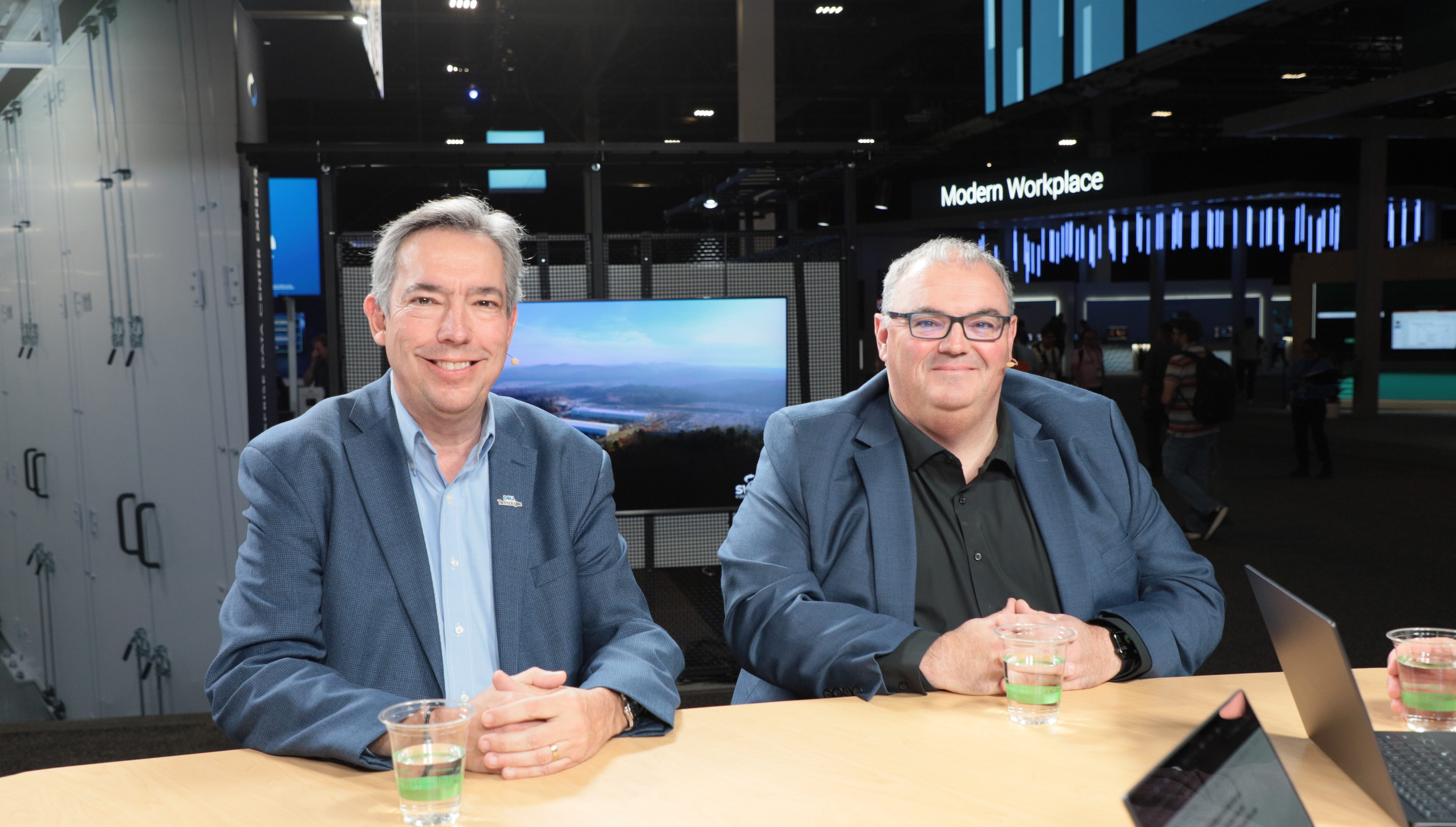
Above all else, securing foundational data is now paramount for enterprises as they forge ahead with agentic AI deployments. But doing so requires organizations to shift away from traditional backup paradigms to embrace dynamic recovery strategies designed for modern threats, according to Rob Emsley (pictured, left), director of cyber resilience marketing at Dell Technologies Inc. However, data remains the ultimate constant.
“At the end of the day, it’s the data layer that’s still the crown jewel,” Emsley said. “Whether or not the data has been interacted [with] by a human or a digital agent, the data is still the data.”
Emsley and Simon Jelley (right), vice president of product management at Dell, spoke with theCUBE’s John Furrier and Dave Vellante at Dell Technologies World 2026, for an exclusive interview on theCUBE, SiliconANGLE Media’s livestreaming studio. They discussed the growing intersection of AI infrastructure and enterprise cyber resilience. (* Disclosure below.)
With agentic AI threatening to accelerate the pace and sophistication of cyber attacks, companies must modernize their defensive postures just as quickly. The integration of robust security capabilities directly into primary storage systems is now becoming a major priority for technology decision-makers, Jelley explained.
“The threat is evolving more quickly than ever with agents, and that’s why having this secure, isolated, immutable layer — which is a core differentiation for how we build our portfolio — is necessary,” he said. “Governance is necessary, but governance, as unfortunately we know, is never 100% guaranteed.”
A critical element of Dell’s holistic cyber strategy involves the implementation of isolated environments to shield sensitive information from compromised production networks. Implementing these strict separation techniques ensures a business can survive a catastrophic ransomware event by quickly restoring its most vital daily operations, Emsley noted.
“We have over 2,700 customers that have deployed on-premises cyber recovery vaults – they know that that’s the way that gives them the almost 100% certainty that the data they have in that vault is clean and recoverable,” he said. “The name of the game is to put in that vault your minimal viable company — that’s the part of the infrastructure and the data and the applications that your company needs to get back online and survive from an outage.”
But beyond physical or logical isolation, ensuring a successful system restoration involves a disciplined framework for identifying vulnerabilities and mitigating active network incidents. Enterprise security staff must continually refine their incident response skills and familiarize themselves with these core defensive principles to maintain seamless operational continuity, according to Emsley.
“We train our sellers and our partners about three keywords when it comes to cyber resilience: secure, detect and recover,” he said. “Secure is about reducing the attack surface. Detect is about detecting and responding to threats. [Recovery] from cyber attacks at the end of the day is what the customers expect when they need it.”
To guarantee these emergency procedures actually function as intended during a crisis, enterprises must rigorously test their recovery workflows using randomized virtual environments. Machine learning algorithms can assist in this process by generating highly unpredictable test scenarios to uncover hidden architectural weaknesses, Jelley explained.
“The reality is you need it to be randomized, and again, that’s where you’re leveraging those on demand environments to be able to spin up quickly — randomize the test set,” Jelley explained. “AI is going to actually be a contributor to helping there, in terms of randomizing the vulnerability. It’s definitely both a risk and a tool in terms of how we help our customers.”
Here’s the complete video interview, part of SiliconANGLE’s and theCUBE’s coverage of Dell Technologies World 2026:
(* Disclosure: TheCUBE is a paid media partner for Dell Technologies World. Neither Dell, the sponsor of theCUBE’s event coverage, nor other sponsors have editorial control over content on theCUBE or SiliconANGLE.)
Support our mission to keep content open and free by engaging with theCUBE community. Join theCUBE’s Alumni Trust Network, where technology leaders connect, share intelligence and create opportunities.
Founded by tech visionaries John Furrier and Dave Vellante, SiliconANGLE Media has built a dynamic ecosystem of industry-leading digital media brands that reach 15+ million elite tech professionals. Our new proprietary theCUBE AI Video Cloud is breaking ground in audience interaction, leveraging theCUBEai.com neural network to help technology companies make data-driven decisions and stay at the forefront of industry conversations.