 AI
AI
AI
AI


AI

OpenAI Group PBC today released a set of features that will make it easier for nontechnical people to use its Codex automation tool.
The update comes five months after Anthropic PBC added similar capabilities to Claude Cowork.
Codex launched last April as a programming assistant embedded in the ChatGPT interface. It ran on codex-1, a version of OpenAI’s o3 reasoning model optimized for coding tasks. The company equipped the former algorithm with features that block attempts to generate malware and reduce the risk of programming mistakes.
The tool took off when OpenAI made it available through a standalone desktop app this past February. The tool’s installed base has grown sixfold since the launch to more than 5 million weekly users. Nondevelopers, the focus of today’s product update, currently make up about 20% of that installed base and represent one of its fastest-growing segments.
The update is headlined by six Codex plugins that are each designed to automate a different set of tasks. A Codex plugin comprises third-party application integrations, prompts and other resources that extend the tool’s default feature set.
Two of the plugins focus on streamlining design projects. The first speeds up the process of creating interfaces for websites and applications. According to OpenAI, developers can create interfaces using prompts or upload a screenshot of an existing application and turn it into an interactive prototype. The other design-focused Codex plugin automates the creation of marketing assets such as e-commerce listings and ads.
The next two plugins are geared towards financial professionals. One extension automates some of the work involved in due diligence projects, while the other helps users evaluate the performance of publicly traded companies. Codex carries out the latter task using information from a half-dozen financial data providers, including S&P and PitchBook.
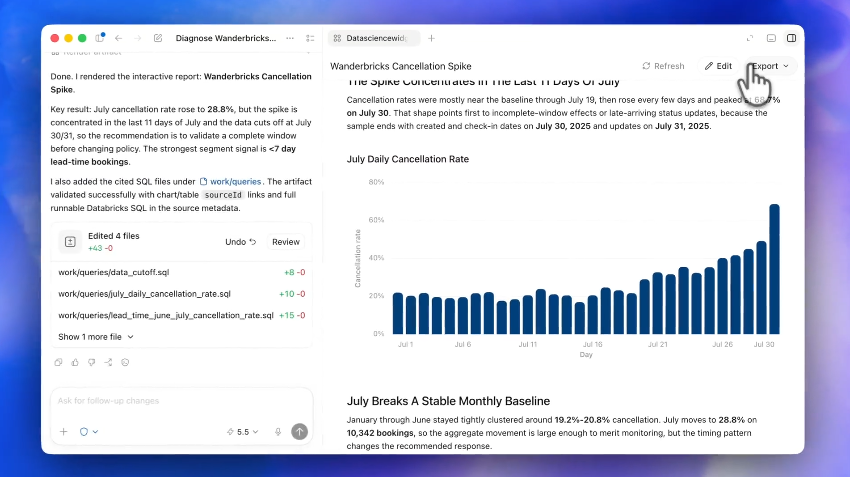
Codex’s new plugin collection is rounded out by two extensions for salespeople and data science teams. Both can automate data analysis tasks such as analyzing customer records for sales signals. The data science plugin includes a broader set of integrations with third-party analytics tools such as Tableau.
The extensions are rolling out alongside two other enhancements to Codex.
The first addition, Sites, enables users to create single-page websites that can be shared via colleagues via a URL. The feature supports a broad range of use cases. A design team could create a single-page site that functions as a file sharing repository and tracks outstanding tasks, while financial analysts can build a dashboard that predicts product demand.
OpenAI is also enhancing an existing Codex feature called Annotations. It enables developers to highlight a section of an application’s interface, type in a prompt that describes how it should be modified and have Codex make the necessary code changes. The feature now works with non-technical assets business documents.
The Sites tool is currently in preview for ChatGPT customers with Business and Enterprise subscriptions, while the new plugins are generally available in a limited number of markets. Over time, OpenAI will add more plugins focused on corporate finance, marketing strategy, private equity investing, strategy consulting and legal use cases.
Support our mission to keep content open and free by engaging with theCUBE community. Join theCUBE’s Alumni Trust Network, where technology leaders connect, share intelligence and create opportunities.
Founded by tech visionaries John Furrier and Dave Vellante, SiliconANGLE Media has built a dynamic ecosystem of industry-leading digital media brands that reach 15+ million elite tech professionals. Our new proprietary theCUBE AI Video Cloud is breaking ground in audience interaction, leveraging theCUBEai.com neural network to help technology companies make data-driven decisions and stay at the forefront of industry conversations.