 AI
AI
AI
AI




AI

As enterprises race to support machine learning, agentic workflows and analytics on the same infrastructure, open data architecture has emerged as the dividing line between platforms that scale and those that stall.
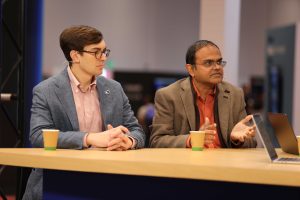
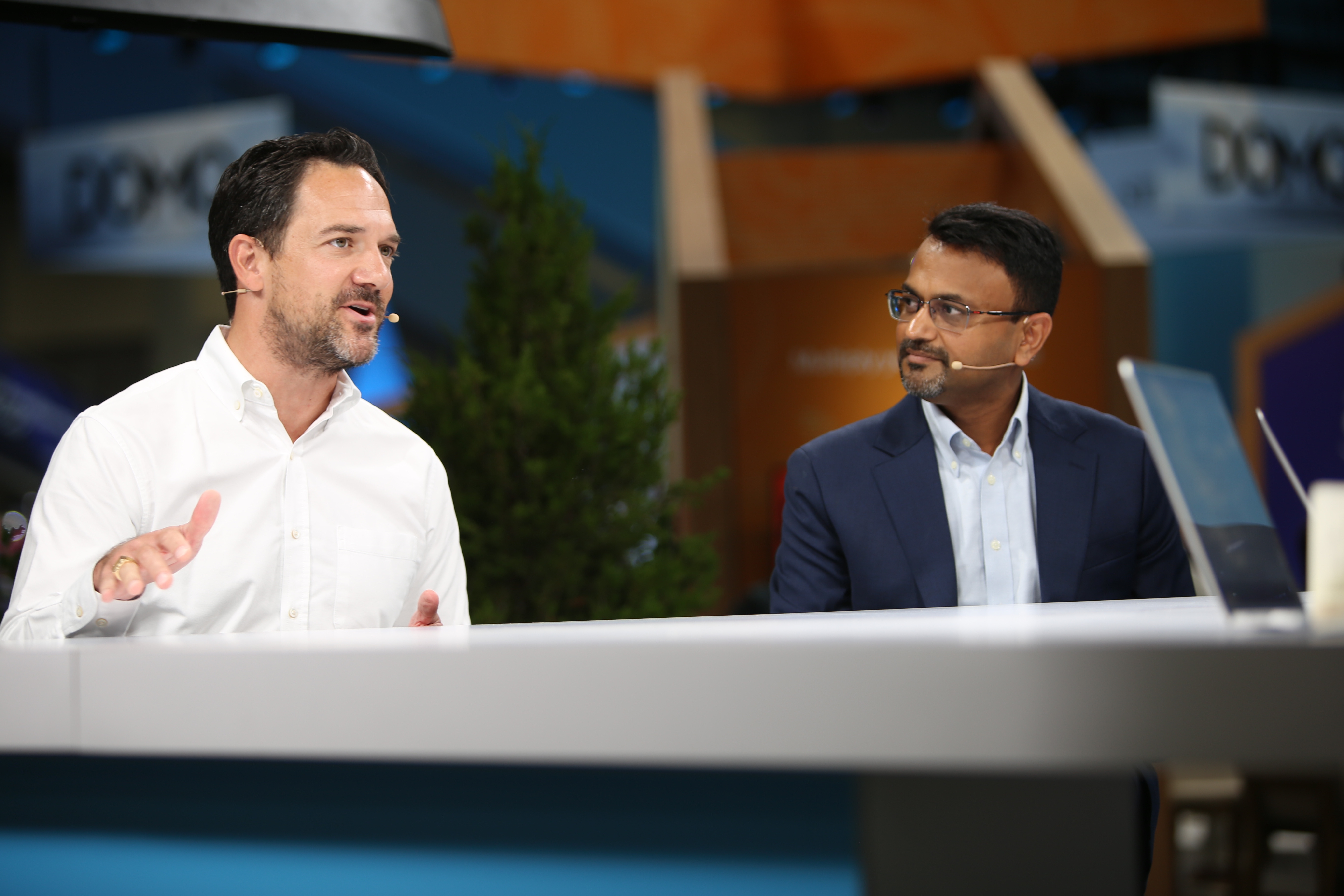
At petabyte scale, logistics platforms can’t afford a monolithic data stack. DoorDash Inc. — one of the world’s largest real-time logistics companies — has spent 10 years building a foundation on open architecture principles: open storage, open compute and compute-agnostic design. The result is an infrastructure capable of serving consumers, merchants and delivery workers simultaneously, while increasingly powering machine learning features and agentic AI workflows, according to Vaibhav “VJ” Jajoo (pictured, right), head of data engineering, data platform and business intelligence at DoorDash.
“What we have learned over time is that the machine user is outpacing the human user in consumption of analytics data,” he said. “The ML features, the feedback loops to production services or the AI agent workflows are outpacing the analytics user. When you do that, you cannot adopt a monolithic environment, which is holding you back and not letting you enable new use cases on top of it.”
Jajoo and Chris Child (left), vice president of product, data engineering at Snowflake Inc., spoke with theCUBE’s Dave Vellante and Rebecca Knight at Snowflake Summit 2026, during an exclusive broadcast on theCUBE, SiliconANGLE Media’s livestreaming studio. They discussed how DoorDash built its open data architecture on Apache Iceberg, how governance scales across a multi-platform estate and how agentic AI is reshaping the evolving data engineer role. (* Disclosure below.)
Iceberg has been central to reducing data movement costs across DoorDash’s multi-platform environment. Before the Iceberg investment, teams were spending significant resources shuttling data into and out of Snowflake across separate tools — each hop adding cost and latency, Child noted.
“We were able to help them adopt Iceberg across not just Snowflake, but their much broader data estate as well,” Child said. “It’s cheaper. It’s faster. They have lower latency on data because there’s not these movement steps in between. And the data engineers are able to focus … on solving business problems rather than building plumbing and moving data around.”
For DoorDash, governance at the storage layer is what makes open data architecture practical at scale. By defining data quality principles and compute authorization once — centrally — the same governance policies apply across every platform simultaneously, Jajoo explained. That single-source-of-truth discipline becomes non-negotiable when agentic workflows are in play: Expose the wrong table to an agent and a hallucinated result arrives with full confidence.
“If you have one proper piece of information about a Dasher, then agentic workflows, ML workflows or everybody should come back to the exact same system of record and make the same exact decision,” he said. “[That way] the human and machines are taking the same exact decision.”
Snowflake’s new CoCo and CoWork tools reflect the same philosophy. They are purpose-built environments for data producers and data consumers, respectively, designed to ensure governed, context-aware data products reach both human analysts and AI agents. Companies that define precise facts about their entities — Dashers, consumers and merchants — are the ones deploying agents fastest, Child added.
“The companies who were able to build the best agents and deploy them are doing that because they’ve been very thoughtful about what data products those agents should be depending on,” he said. “The agent is able to reason much more effectively about it.”
Here’s the complete video interview, part of SiliconANGLE’s and theCUBE’s coverage of Snowflake Summit 2026 event:
(* Disclosure: TheCUBE is a paid media partner for Snowflake Summit event. Neither Snowflake, the sponsor of theCUBE’s event coverage, nor other sponsors have editorial control over content on theCUBE or SiliconANGLE.)
Support our mission to keep content open and free by engaging with theCUBE community. Join theCUBE’s Alumni Trust Network, where technology leaders connect, share intelligence and create opportunities.
Founded by tech visionaries John Furrier and Dave Vellante, SiliconANGLE Media has built a dynamic ecosystem of industry-leading digital media brands that reach 15+ million elite tech professionals. Our new proprietary theCUBE AI Video Cloud is breaking ground in audience interaction, leveraging theCUBEai.com neural network to help technology companies make data-driven decisions and stay at the forefront of industry conversations.