 EMERGING TECH
EMERGING TECH
EMERGING TECH










EMERGING TECH

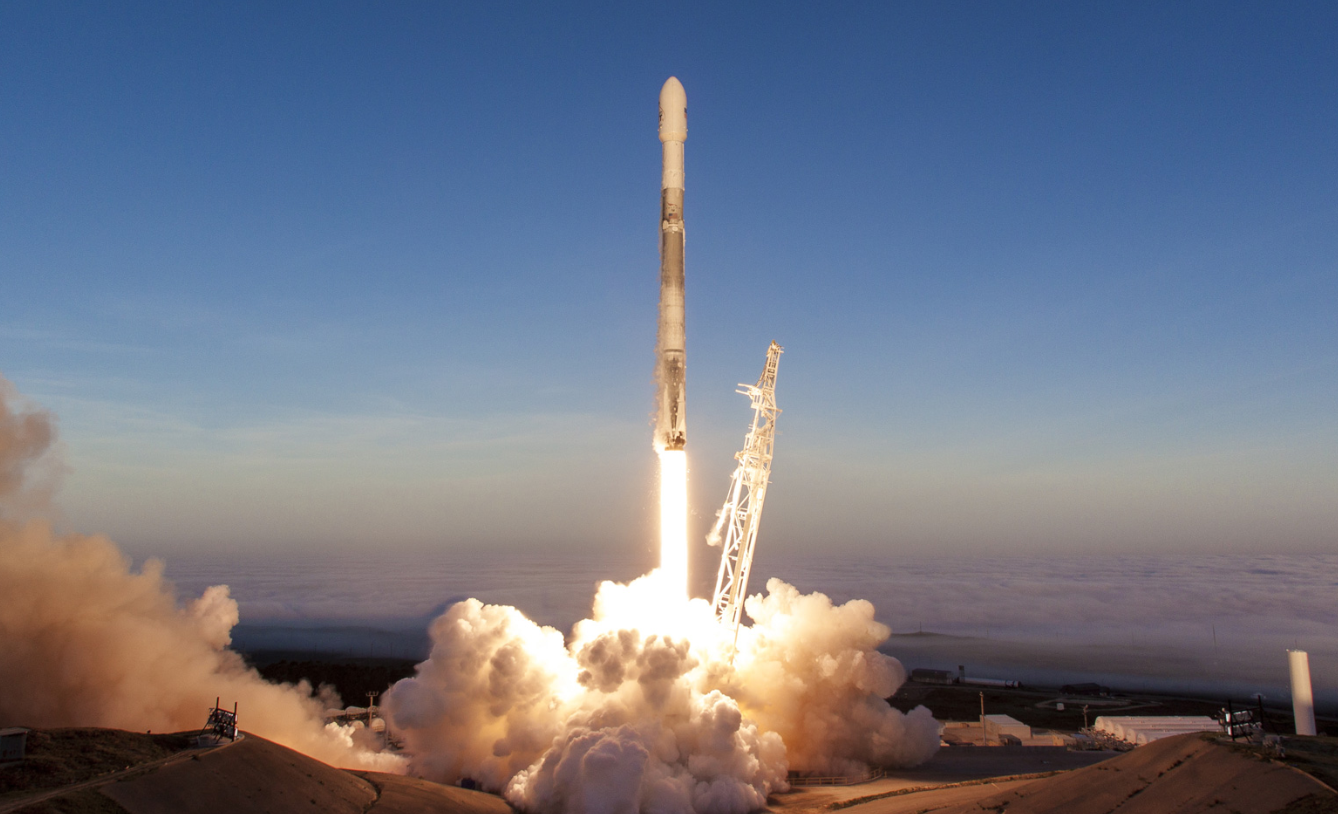
Elon Musk’s Space Exploration Technologies Corp. said today it’s hoping to raise a staggering $75 billion when it goes public later this month, setting the stage for what would be the largest stock market debut in history.
The haul puts Musk on course to become the world’s first trillionaire, based on the estimated value of his assets.
The rocket company plans to sell 555.6 million shares at a price of $135 through its initial public offering. The proceeds of the sale would easily surpass the current IPO world record of $26 billion, which was raised by the Saudi Arabian oil giant Saudi Aramco in 2019. SpaceX would have a market value of $1.77 trillion following the IPO, putting it well into the top 10 most valuable companies. Only six companies in the S&P 500 index currently have a larger value, led by Nvidia Corp. at $5.2 trillion.
In an amended prospectus filed with the Securities and Exchange Commission today, SpaceX also explained exactly how much control Musk will have over the company. As its chairman, chief executive, chief technical officer, his voting power will come from his ownership of 5.22 billion Class B shares. That gives him 10 votes for every share he holds, which amounts of 82.4% of the total voting power in the company. In other words, Musk will always have the final say.
Forbes estimates Musk’s current net worth at around $826 billion, with his stake in SpaceX estimated to be worth around $542 billion, based on the company’s $1.25 trillion valuation. That means that if SpaceX’s valuation increases to $1.77 trillion following the IPO, Musk’s overall net worth would grow by around $233 billion, making him the world’s first-ever trillionaire.
Whether Musk will eventually become a multitrillionaire remains to be seen, but the fantastical plans detailed in SpaceX’s prospectus suggest there’s every chance he will, if the company fulfills its ambitions. The most colorful parts of the document offer a stark contrast to the traditionally dry and overly technical language seen in IPO paperwork. For instance, the company details how the proceeds of the sale will help to return astronauts to the Moon and ultimately put humans on Mars too.
It even outlines Musk’s ultimate ambition to build a “permanent human colony” on the red planet that would be populated by “at least one million inhabitants.” Musk has previously justified the need for a human outpost on Mars, saying that humanity basically needs a backup plan should something catastrophic happen to Earth.
Musk’s other publicly traded company, Tesla Inc., also has grand ambitions, one of its goals being to manufacture fleets of robotaxis that can ferry passengers around cities without human drivers. Tesla has also designed a series of humanoid robots, and it’s thought that they could be used to lay the groundwork and build the initial infrastructure needed for a Mars-based colony. Some analysts, such as Dan Ives of Wedbush Securities, speculate that Musk may ultimately seek to merge SpaceX with Tesla, perhaps as early as next year.
There is a precedent for this. In February, SpaceX merged with another of Musk’s companies, xAI Corp., which owns the X.com social media platform formerly known as Twitter. XAI is Musk’s artificial intelligence company, and it’s set to play a key role in growing SpaceX’s revenue. According to Musk, the rocket maker could eventually generate revenue of up to $26.5 trillion annually, if it succeeds in another ambitious plan to put data centers into low-Earth orbit, where they can tap free and unlimited solar energy.
Constellation Research analyst Holger Mueller said SpaceX’s IPO will be unprecedented, giving birth to a $1 trillion publicly-traded company from the get-go and turning its biggest shareholder a trillionaire. “It’s going to raise a massive amount of money that’s enticed by two things — the company’s massive and bold ambitions and the tangible first advances it has made in terms of revenue generation,” the analyst said. “These are what make Musk’s enterprises so attractive to investors.”
However, Mueller believes that some caution is warranted, and not only because it’s not clear how realistic some of Musk’s ambitions are. “There are questions about the synergy of throwing all of Musk’s enterprises together under one roof, with only Tesla being left out, for now,” he explained. “Investors will need to ask themselves if these companies are more valuable as a unit, or as standalone entities. If the latter turns out to be true, it could result in some parts of SpaceX being sold off later on down the road.”
SpaceX’s initial focus following the IPO will be to use the proceeds to fund expanded infrastructure for both its rocket business and its AI projects, and also to invest further in Starlink Mobile, the satellite service that provides broadband internet connectivity to any part of the planet. The company is expected to list on the Nasdaq exchange under the ticker symbol “SPCX” and could begin trading by the end of next week.
Of course, SpaceX isn’t the only massive market debut expected this summer. Earlier this week, the AI company Anthropic PBC confidentially filed its own IPO paperwork. Although it hasn’t provided any financial details yet, it’s expected that the sale will put its market capitalization above $965 billion. Meanwhile, ChatGPT maker OpenAI Group PBC is also widely expected to file for an IPO soon, because it doesn’t want to be left behind its rivals. It hasn’t done so yet, but most analysts believe that a listing is imminent.
“This listing represents the first major test for public markets after years of muted IPO activity, with SpaceX paving the way for AI giants Anthropic and OpenAI to follow soon after,” Ives said.
Support our mission to keep content open and free by engaging with theCUBE community. Join theCUBE’s Alumni Trust Network, where technology leaders connect, share intelligence and create opportunities.
Founded by tech visionaries John Furrier and Dave Vellante, SiliconANGLE Media has built a dynamic ecosystem of industry-leading digital media brands that reach 15+ million elite tech professionals. Our new proprietary theCUBE AI Video Cloud is breaking ground in audience interaction, leveraging theCUBEai.com neural network to help technology companies make data-driven decisions and stay at the forefront of industry conversations.