 AI
AI
AI
AI



AI

AI is rewriting how software gets built inside large enterprises — not just at the tooling level, but at the levels of culture, governance and organizational change. The rise of vibe coding, where developers describe intent in natural language and let AI generate working code, is collapsing development cycle times and forcing leadership to rethink how engineering teams measure progress, enforce standards and manage resistance to new ways of working.
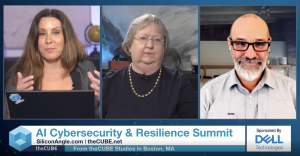
That shift is playing out in real time at both Snowflake Inc. and Clover Network LLC, a Fiserv Inc. company, that serves about one million merchants across 12 countries. Chief information officers at both organizations are discovering that the harder challenge is not getting people to try AI-assisted development — it is managing the cultural transformation once they do, according to Mike Blandina (pictured, right), chief information officer of Snowflake Inc.
“I think you can enforce standards in the model,” Blandina said. “As an example, in CoCo you can just say, ‘In this particular project, anything we build, here’s a set of boundaries that you, as my agent for code development, should not cross. Here’s my standards for the type of artifacts we want to use and the type of code we want to use.’ You can do that upfront, just like you would do on a paper document, and enforce through the software development life cycle.”
Blandina and Vinayak Kagalkar (left), senior vice president, global chief information officer and chief technology officer of Clover, spoke with theCUBE’s Dave Vellante and Rebecca Knight at Snowflake Summit 2026, during an exclusive broadcast on theCUBE, SiliconANGLE Media’s livestreaming studio. They discussed vibe coding adoption, change management and how chief information officers are building AI-native engineering cultures across regulated and software-first organizations. (* Disclosure below.)
The productivity case for vibe coding is well documented. A compilation of statistics from GitHub, McKinsey, Stack Overflow, Gartner and company disclosures published in February 2026 found a 46% reduction in time spent on routine coding tasks across 150 enterprises — but noted the human side of adoption is the real work. Blandina described moving his team to a one-week agile sprint cycle as a deliberate way of forcing function, compressing the previous three-week cadence to make the speed advantage of AI-assisted development tangible to skeptics.
“These are all scary changes for people that have been doing something a certain way for 20 years,” Blandina said. “Early on, it’s sort of a two sticks and a carrot approach. Eventually, you get to one stick and one carrot. We’ve had to push it in terms of ‘We’re going to measure this; it becomes part of what you do.’ But eventually, I think most people get over the hump, and then you stop measuring; you start encouraging, and you start rewarding based on behavior.”
Blandina made the case for vibe coding from the top by building a working system — 60 entities, a React front end and batch processes — across five Sundays using AI tools, then demoing it alongside his team’s effort. Clover, operating in the heavily regulated financial services industry, has found similar adoption momentum by leaning into the productivity evidence and applying the same compliance controls it uses elsewhere to AI-generated code, Kagalkar noted.
“Historically, SDLC processes used to take two to three weeks to make a simple change,” he said. “Now, we are able to do it within a half day and commit it. People have started seeing the advantages of it and … started accepting it.”
Here’s the complete video interview, part of SiliconANGLE’s and theCUBE’s coverage of Snowflake Summit 2026:
(* Disclosure: TheCUBE is a paid media partner for Snowflake Summit event. Neither Snowflake, the sponsor of theCUBE’s event coverage, nor other sponsors have editorial control over content on theCUBE or SiliconANGLE.)
Support our mission to keep content open and free by engaging with theCUBE community. Join theCUBE’s Alumni Trust Network, where technology leaders connect, share intelligence and create opportunities.
Founded by tech visionaries John Furrier and Dave Vellante, SiliconANGLE Media has built a dynamic ecosystem of industry-leading digital media brands that reach 15+ million elite tech professionals. Our new proprietary theCUBE AI Video Cloud is breaking ground in audience interaction, leveraging theCUBEai.com neural network to help technology companies make data-driven decisions and stay at the forefront of industry conversations.