 APPS
APPS
APPS
APPS


APPS

Apple Inc.’s WWDC 2026 keynote today focused on making its software platform feel more polished, more responsive and more tightly managed across the company’s device ecosystem with refinements to the user interface and operating system.
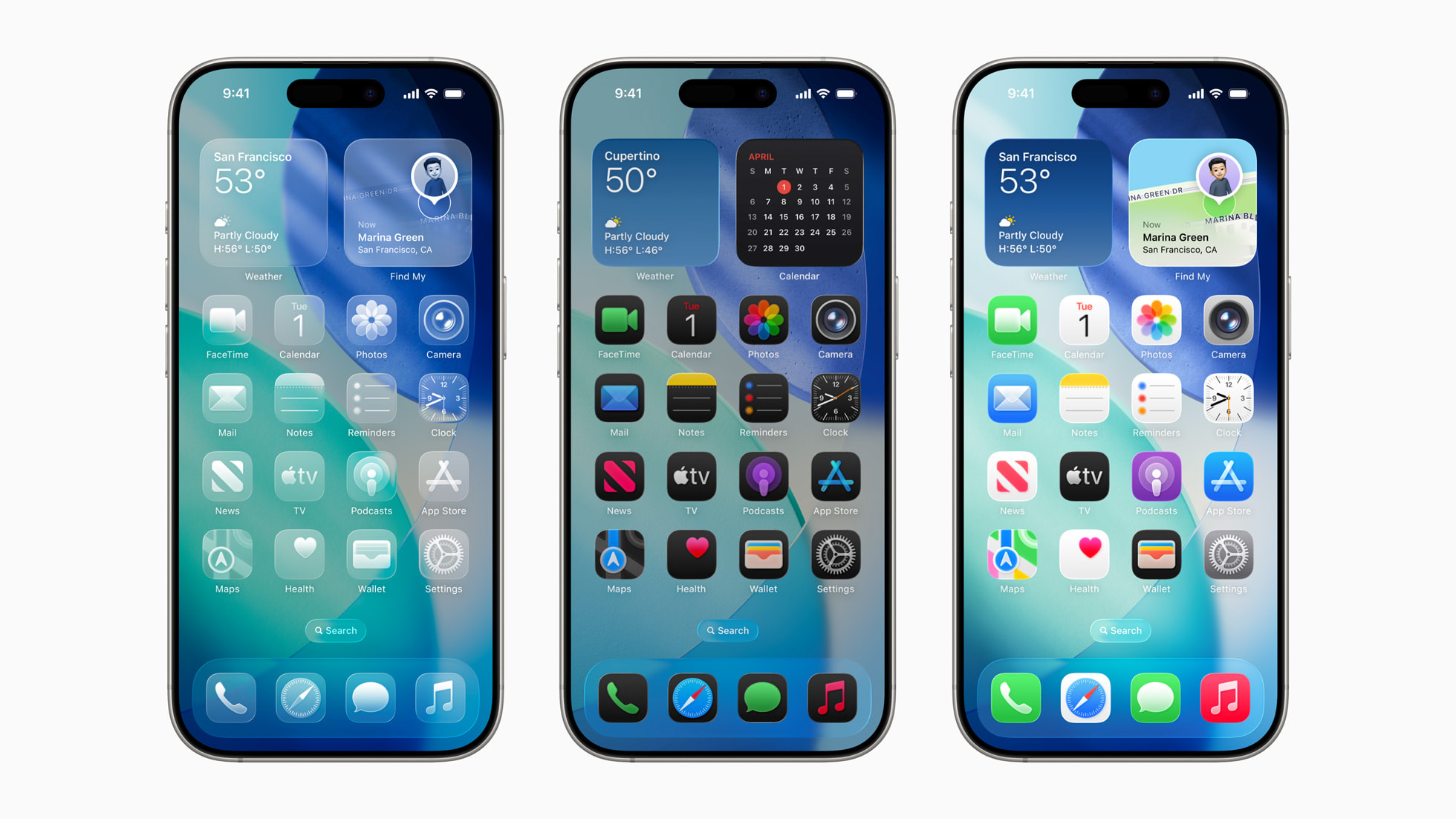
At the forefront, the most visible change centered on a refinement of Liquid Glass, the design language the company introduced last year to unify the look and feel of its software. Heralded as a sea change to the visual appearance of the iPhone and other surfaces, Liquid Glass was met with some controversy at the time. This year’s update appears as less of a dramatic redesign and more like a readability and control pass.
Apple is adding more uniform refraction, improved contrast, sharper icons and a slider that lets users adjust the look from ultraclear to fully tinted. This allows them to control how much “light” appears to pass through the translucent “surface” as if it were an actual pane of glass from above to below.
This makes Liquid Glass behave a bit more like Apple’s broader WWDC approach. After the bigger visual overhaul in 2025, the company appears to be attempting to smooth out the rough edges of its original approach, tuning responsiveness and organizing around feedback on the design, while keeping the more fluid aesthetic. It’s also letting the glass-like appeal remain on iPhone, Mac and other devices.
According to the company, performance was also a major factor. Apple said that iOS 27 would bring faster app launches, quicker photo loading, faster AirDrop transfers, smoother transitions between Wi-Fi and cellular networks, improved Mail search and lower-level system improvements such as an optimized CPU scheduler. In a year dominated by artificial intelligence announcements, Apple still made room for the kind of platform plumbing that directly affects everyday device use.
Pivoting around other announcements, Apple took a long look at its own priorities and spent almost an interminable time talking about child safety. The company is expanding its child safety accounts, setup flows, Ask to Browse, Time Allowances, Schedules and a redesigned Screen Time experience so parents can manage what children see, who they can communicate with and when they can access apps.
As more and more devices proliferate, screens and apps encroach on children’s lives. Our experiences get ever more digital, which also means that we need to learn to become native faster and teach children to participate in these spaces sooner, but at the same time, understand the impact.
In many cases, being digitally literate can help land a good job; it’s also important to prevent kids from taking control of the family credit card and spending money on mobile games that don’t have safe monetization controls.
This part is worth treading through carefully. Apple’s family tools are important for any multi-device household and include expert guidance, but they also deepen Apple’s role as a gatekeeper in children’s digital lives.
Parents should really be using these tools as a way to negotiate how their children are using their devices and educate themselves on how they want to work with their families on how connected they are. Apple is just another corporation that connects them to the world. They shouldn’t be gatekeeping parents or children from the internet or data or become an alternative to parental judgment.
Tools can put parents in the driver’s seat by allowing them to capture and monitor what’s happening in the house, such as filtering and seeing what’s passing through the walls to add a level of safety and discrimination. However, they also can generate a false sense of security.
The tools cannot replace age-appropriate education for everyone – preteens and the aged alike. Even as broadening digital access opens up in a world where friends have social media, cyberbullying happens inside and outside school grounds, and drama is a thing that occurs on Instagram, TikTok and X — even if you don’t have them installed.
Support our mission to keep content open and free by engaging with theCUBE community. Join theCUBE’s Alumni Trust Network, where technology leaders connect, share intelligence and create opportunities.
Founded by tech visionaries John Furrier and Dave Vellante, SiliconANGLE Media has built a dynamic ecosystem of industry-leading digital media brands that reach 15+ million elite tech professionals. Our new proprietary theCUBE AI Video Cloud is breaking ground in audience interaction, leveraging theCUBEai.com neural network to help technology companies make data-driven decisions and stay at the forefront of industry conversations.