 AI
AI
AI
AI



AI

As generative AI accelerates from a product experiment into a core enterprise operating cost, FinOps is evolving rapidly to manage AI spend, introducing a layer of complexity that traditional cloud budgets have never fully prepared practitioners to handle.
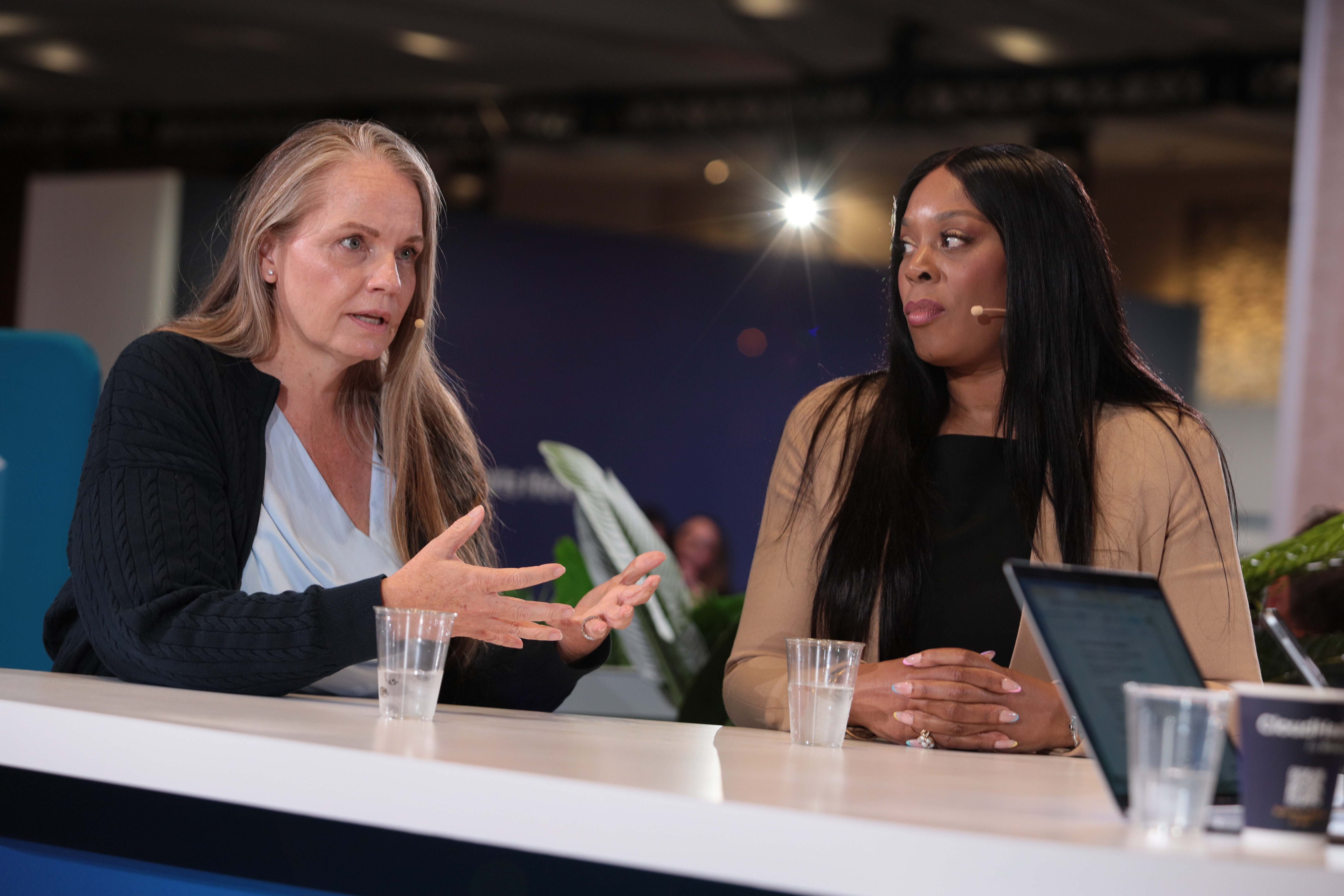
Token economics are forcing organizations to rethink not just how they measure spend, but what costs even count — from inference and database throughput to developer hardware and workforce transformation. That convergence of AI and financial operations is putting FinOps teams at the center of decisions they were not originally chartered to make, according to Jennifer Hays (pictured, left), senior vice president and head of engineering excellence and technology strategy execution at Fidelity Investments.
“You have to get transparency in your token costs, but you have to understand actually how it impacts probably a dozen or more costs around you,” Hays said. “There’s this whole segment of costs that come with it — what is going to happen with your input, your output into your large databases, your Snowflakes and those types of things. You also have things like laptops, even for your developers: Are you going to think about running models locally?”
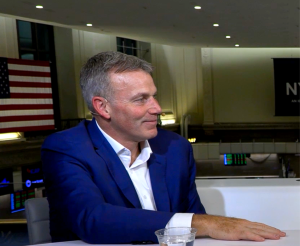
Hays and Natalie Daley (right), director and global head of cloud economics and FinOps at HSBC Holdings PLC, spoke with theCUBE’s John Furrier and Paul Nashawaty as part of a day two keynote analysis at FinOps X 2026, during an exclusive broadcast on theCUBE, SiliconANGLE Media’s livestreaming studio. They discussed how managing AI spend is reshaping FinOps practice, the adjacent cost pressures of token economics and what it means to reimagine workflows rather than replicate them with AI. (* Disclosure below.)
The scale and speed of change are defining challenges for practitioners, and both guests agreed that the old approaches need a fundamental rethink. TheCUBE Research’s 2025 data shows 24% of organizations want to release code on an hourly basis — a cadence driven in part by the pace at which new AI models are reaching production, according to Nashawaty.
“With my experience in technology, which has been over 30 years — you went from life cycles of three to four years within a software and a technology,” Hays said. “As you move to cloud, your life cycles become six to twelve months. We’re seeing … 20 new models within a quarter, and each one of those has incredible new capabilities. The idea of how does an organization actually … create this agnostic framework — that as these models are changing, you can … leverage them, integrate them into workflows, but also protect your enterprise, your customers, your data — is a huge challenge.”
According to the State of FinOps 2026 report, 98% of practitioners now manage AI spend — but raw coverage does not equal mastery, especially for enterprises that risk repeating the mistakes of cloud adoption. People and processes are equally important cost vectors alongside infrastructure when managing AI spend, according to Daley and Hays.
“There were a lot of enterprises and companies that just did a lift and shift [with cloud],” Hays said. “They get the benefits of the cloud, but they do not necessarily take full advantage or the full value out of it. I think we’re going to see the same thing with AI. If you’re using it as augmentation, your value statements are gonna be much smaller. But if you’re thinking about how do you reinvent … workflows … processes, the software development life cycle [and] the different ways that legal or HR use these things — it is about reimagining those workflows. And that is part of the FinOps responsibility to spark that thought process in the business itself.”
The FinOps capability is uniquely positioned to go beyond transparency and guide the decisions that follow — from model selection to trade-offs between cost, speed and execution, according to Daley.
“How do you support the engineers, the developers, the HR teams to actually choose the right models?” Daley said. “What are the right models for the right jobs? What are the trade-offs for costs, speed and execution? All of that is an area that the FinOps capability can really help harness and help the business add value.”
Here’s the complete video interview, part of SiliconANGLE’s and theCUBE’s coverage of FinOps X 2026:
(* Disclosure: TheCUBE is a paid media partner for the FinOps X event. Neither the FinOps Foundation, the sponsor of theCUBE’s event coverage, nor other sponsors have editorial control over content on theCUBE or SiliconANGLE.)
Support our mission to keep content open and free by engaging with theCUBE community. Join theCUBE’s Alumni Trust Network, where technology leaders connect, share intelligence and create opportunities.
Founded by tech visionaries John Furrier and Dave Vellante, SiliconANGLE Media has built a dynamic ecosystem of industry-leading digital media brands that reach 15+ million elite tech professionals. Our new proprietary theCUBE AI Video Cloud is breaking ground in audience interaction, leveraging theCUBEai.com neural network to help technology companies make data-driven decisions and stay at the forefront of industry conversations.