 AI
AI
AI
AI


AI

Anthropic PBC was forced to abruptly pull the plug on foreign access to two of its most powerful artificial intelligence models, Fable 5 and Mythos 5, just days after it launched them.
The sudden decision just before the weekend to do so came shortly after the U.S. Commerce Department issued a sweeping export control order citing urgent security concerns over the models.
The Commerce Department order explicitly bans all “foreign nationals,” including those of allied nations and Anthropic’s own foreign employees, from accessing the Fable 5 and Mythos 5 models. Because of the difficulty in restricting usage based on nationality alone, Anthropic responded in the only way it could – by disabling access globally to ensure it could comply with the order.
In a statement on X, Anthropic said the order came following a “misunderstanding” by U.S. national security authorities over the risks of the new models. It explained that government officials had provided it with “verbal evidence of a potential narrow, non-universal jailbreak.”
It’s believed that the jailbreak relates to a statement from the Red Team lead at the U.K.’s AI Safety Institute, which said four days ago that its cybersecurity team had made “substantial progress” toward a universal jailbreak of Fable 5. Posting on X June 9, Xander Davies of the U.K.’s AISI wrote: “Within a few hours of access, we developed a jailbreak that extracted malicious responses to single-turn question-answering.”
He added: “Over two additional days of dedicated testing, we extended the jailbreak to sometimes allow for multiple steps of malicious agentic tool-calls.”
It was not immediately clear if the export control was issued as a result of the AISI’s jailbreaking efforts. The Wall Street Journal reported that the Commerce Department was, in fact, alarmed by a jailbreak report from Amazon.com Inc., which also had access to the model. According to the Journal, Amazon Chief Executive Andy Jassy personally called Treasury Secretary Scott Bessent and other officials to inform them that his company’s researchers used Fable 5 to obtain “information that could be used in cyberattacks.”
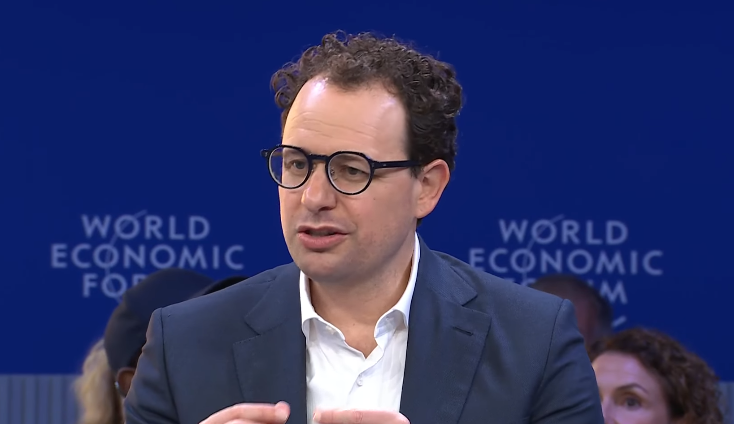
In a post on X, David Sacks, co-chair of the President’s Council of Advisors on Science and Technology, explained that the White House had asked Anthropic Chief Executive Dario Amodei (pictured) last week to patch or de-deploy Fable 5, only for the CEO to decline. Anthropic hit back, saying that the flaw discovered by the U.K. team was only a “minor” risk, and also existed in rival models such as OpenAI Group PBC’s GPT-5.5. It warned that the U.S. government was applying heavy-handed standards that would “essentially halt all new model deployments” for all frontier AI labs.
Anthropic is likely to suffer collateral damage as a result of the decision to roll back Fable 5 and Mythos 5. The incident could dent its reputation as a reliable partner in the eyes of its growing enterprise customer list. Moreover, the ban means that many of Anthropic’s own employees are no longer able to interact with the technology they helped to create.
In Europe, the ban has ignited a firestorm of criticism from America’s allies. European Commission spokesperson Thomas Regnier said the EU is currently assessing the practical consequences of the ban. “We are seeing a new generation of highly capable AI models reach the market,” he said. “These models offer significant benefits, including for cyber-defence, but they also raise serious cybersecurity concerns that need to be addressed. We believe that contingency measures taken in this light should not be discriminatory against partners.”
French and U.K. politicians were even more blunt. British MP Tom Tugendhat complained that dozens of British hospitals and companies that had access to the model and were carrying out vital research had their access cut off overnight. He said that the global ban shows how AI is redefining the geopolitical landscape. “Disabling Fable 5 and other models for foreigners is not a misunderstanding or a mistake, it’s the inevitable result of technology shaping warfare so that sovereignty is more about code than cannons,” he said.
Meanwhile, French political figures Jordan Bardella and Bruno Retailleau said the ban is a “wake-up call” for Europeans, and urged them to back homegrown companies such as Paris-based Mistral AI to ensure that their essential digital infrastructure cannot be switched off on a whim by Washington officials.
The shutdown exacerbates the already strained relationship between Anthropic and the Trump administration. Earlier this year, the Pentagon added the company to a supply chain blacklist following its refusal to give the U.S. military unrestricted access to its AI models so it could be used to automate weapons and perform mass surveillance. Anthropic is currently suing the government over the decision to blacklist it.
From a financial perspective, the timing of the ban could be disastrous, as it comes just days after Anthropic filed documents with the Securities and Exchange Commission ahead of an initial public offering expected in late summer or fall. The company is believed to be racing to list publicly ahead of OpenAI, and is chasing a $1 trillion valuation.
But the ban means it will lose substantial revenue from enterprises. That, combined with the uncertainty of the regulatory environment around AI, is almost certain to dissuade some investors and alter the company’s IPO timeline.
In the longer term, there is a risk of the U.S. creating a serious rift between itself and its allies. By prohibiting them from accessing its most powerful technology, it increases the likelihood that they’ll pivot away from American technology providers and focus on domestic alternatives in order to protect themselves from the kind of disruption this incident has caused.
Support our mission to keep content open and free by engaging with theCUBE community. Join theCUBE’s Alumni Trust Network, where technology leaders connect, share intelligence and create opportunities.
Founded by tech visionaries John Furrier and Dave Vellante, SiliconANGLE Media has built a dynamic ecosystem of industry-leading digital media brands that reach 15+ million elite tech professionals. Our new proprietary theCUBE AI Video Cloud is breaking ground in audience interaction, leveraging theCUBEai.com neural network to help technology companies make data-driven decisions and stay at the forefront of industry conversations.