 EMERGING TECH
EMERGING TECH
EMERGING TECH


EMERGING TECH

Amazon Web Services Inc. has long been at the forefront of a host of companies racing to transform quantum computing from a theory to reality, and it believes it’s finally on course to make that happen thanks to a newly established partnership with QuEra Computing Inc.
The partners are working together to bring the world’s first fault-tolerant quantum computers to the AWS cloud within the next two years. By 2028, AWS promised today, it will make it possible for researchers to tackle some of the world’s most complex scientific problems using quantum machines with unprecedented computing power.
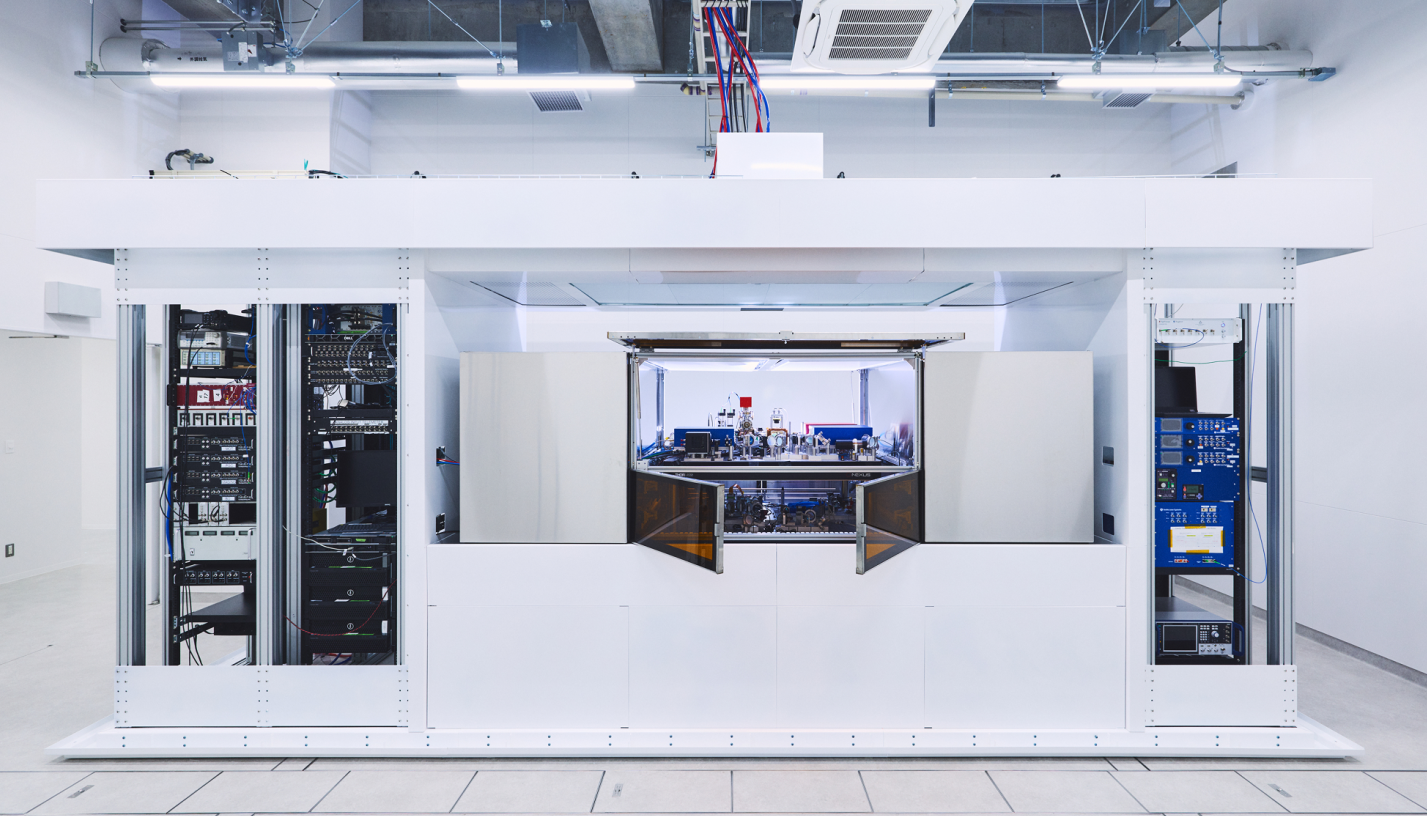
QuEra is a U.S. quantum computing startup founded in 2018 by researchers from Harvard University and the Massachusetts Institute of Technology. It specializes in an approach known as “neural atom” quantum computing, which leverages Rydberg atoms to accelerate quantum calculations. Rydberg atoms are “excited” atoms that have one or more electrons in a highly charged state and are characterized by a very high principal quantum number, which means they can interact strongly with electric and magnetic fields.
This is a key detail because the No. 1 problem with quantum computing is fault tolerance. The “qubits,” which are akin to the “bits” in traditional computers, are notoriously unstable because of the way they’re so sensitive to any force that interacts with them. Something such as the vibration of a needle falling onto the floor, or the fluctuations of the Earth’s magnetic field, is enough to throw them off, resulting in errors in a quantum computer’s calculations. Solving this challenge is critical to building working quantum machines.
While the likes of IBM Corp. and Google LLC are pursuing an approach known as “superconducting circuits,” which keep almost frozen solid at close to absolute zero temperatures, QuEra’s qubits are controlled using tightly focused lasers, which arrange individual Rydberg atoms into stable arrays.
QuEra has been a key strategic partner of AWS for some time already. It launched its first 256-qubit analog Rydberg device, called Aqulia, on AWS bracket back in 2022 as a kind of proof-of-concept. AWS Braket is Amazon’s fully managed quantum computing cloud service, which provides developers and researchers with access to a range of different quantum computers, including IonQ Inc.’s Forte and Aria systems, Rigetti Computing Inc.’s Ankaa and Aspen machines, and Alpine Quantum Technologies GmbH’s IBEX Q1 system. AWS Braket is tightly integrated with AWS’s classical cloud computing resources, enabling so-called “hybrid” classical-quantum workloads.
AWS said the expanded partnership with QuEra is a major step towards fulfilling its broader vision, which sees quantum computing evolving to become a foundational everyday compute modality. In the near future, it believes that it will be common for quantum processors to work alongside standard computing chips and artificial intelligence accelerators to solve challenges that are currently impossible.
The company is targeting 2028 for this to happen. That’s when they plan to launch QuEra’s upcoming Libra system on AWS Braket. It’s a “megaquop-scale” machine that will be able to execute one million quantum operations per second over hundreds of logical, error-corrected qubits, AWS said. It’s an unprecedented number, and if the companies can achieve this, it will pave the way for commercial breakthroughs in areas like advanced materials simulation, high-energy physics and quantum chemistry, they promise.
But to get there, they’re going to need to solve the problem of quantum errors once and for all. QuEra believes it’s on track to do this, and in the last two years has successfully demonstrated the potential of Rydberg atoms to scale in spatial dimensions to support the coherent operation of thousands of qubits simultaneously, in a single computing module.
The lasers in QuEra’s neural-atom architecture act like optical tweezers, and are used to adjust each individual atom on the fly to ensure it doesn’t lose its quantum state. They enable dynamic reconfiguration to ensure quantum stability at the scale of thousands of qubits.
“This is a very special moment,” said QuEra Chief Science Officer Professor Mikhail Lukin. “For the first time, a dream of realizing useful, fault-tolerant quantum computers is in our direct line of sight. Designed to enable quantum computation at an unprecedented scale, these systems should realize truly unique applications.”
The 2028 target date is ambitious, but the partners say that this date is really just the starting point. In future, they plan to optimize and scale the Libra system to support commercial applications in other areas, such as drug design and financial services.
Constellation Research analyst Holger Mueller has long predicted that quantum will become the first mainstream computing platform to be consumed almost completely through cloud-based services. “QuEra’s partnership with Amazon is evidence of this, with the startup planning to launch its services on AWS Braket,” he said. “The sign of maturation in quantum is visible, not only because of the availability of stable qubits, but also through the growth of AWS’s software and partner ecosystem.”
The company doesn’t believe that the quantum computing race will be won by a single company. Just as companies use different types of databases and compute instances, based on the workload they’re running, they’ll likely use different quantum systems for specific applications. It says it’s likely that the competing quantum architectures will eventually find their own niche, which is why it’s pursuing its own initiative based on “cat-qubits” through the AWS Center for Quantum Computing.
Support our mission to keep content open and free by engaging with theCUBE community. Join theCUBE’s Alumni Trust Network, where technology leaders connect, share intelligence and create opportunities.
Founded by tech visionaries John Furrier and Dave Vellante, SiliconANGLE Media has built a dynamic ecosystem of industry-leading digital media brands that reach 15+ million elite tech professionals. Our new proprietary theCUBE AI Video Cloud is breaking ground in audience interaction, leveraging theCUBEai.com neural network to help technology companies make data-driven decisions and stay at the forefront of industry conversations.